Thursday, 9 October 2025

Understanding Blended Families and Marriage Dynamics

Blended Families


Blended families are becoming more common, making up a major part of how modern households look today. Legal frameworks have evolved to protect the rights of stepparents and stepchildren, which sounds like real progress. Yet what surprises many is that no law or piece of paper can sort out the emotional tangle inside these families. The real story is in how love, loyalty, and trust are rebuilt in ways no rulebook can predict.


Table of Contents


Quick Summary


TakeawayExplanation
Understanding blended family dynamics is crucial.Blended families comprise biological parents, stepparents, and multiple connections; navigating this requires emotional intelligence and patience.
Clear expectations help avoid conflicts.Establishing defined roles and communication can reduce ambiguity, fostering a more harmonious family environment.
Emotional complexity is a significant challenge.Family members must manage feelings of loyalty and grief, making emotional navigation essential for maintenance and growth.
Building a unified family identity takes effort.Shared traditions and regular meetings can cultivate emotional connections among blended family members, promoting togetherness.
Adaptive systems enhance relationship dynamics.Successful blended families evolve by leveraging flexibility, open communication, and respect for individual differences to enhance familial harmony.

What Are Blended Families and Their Structure?


Blended families represent a complex and increasingly common family structure where two partners combine their households, bringing children from previous relationships into a new family unit. According to the American Psychological Association, these families emerge through remarriage or partnership after divorce, separation, or widowhood.


Understanding Family Composition


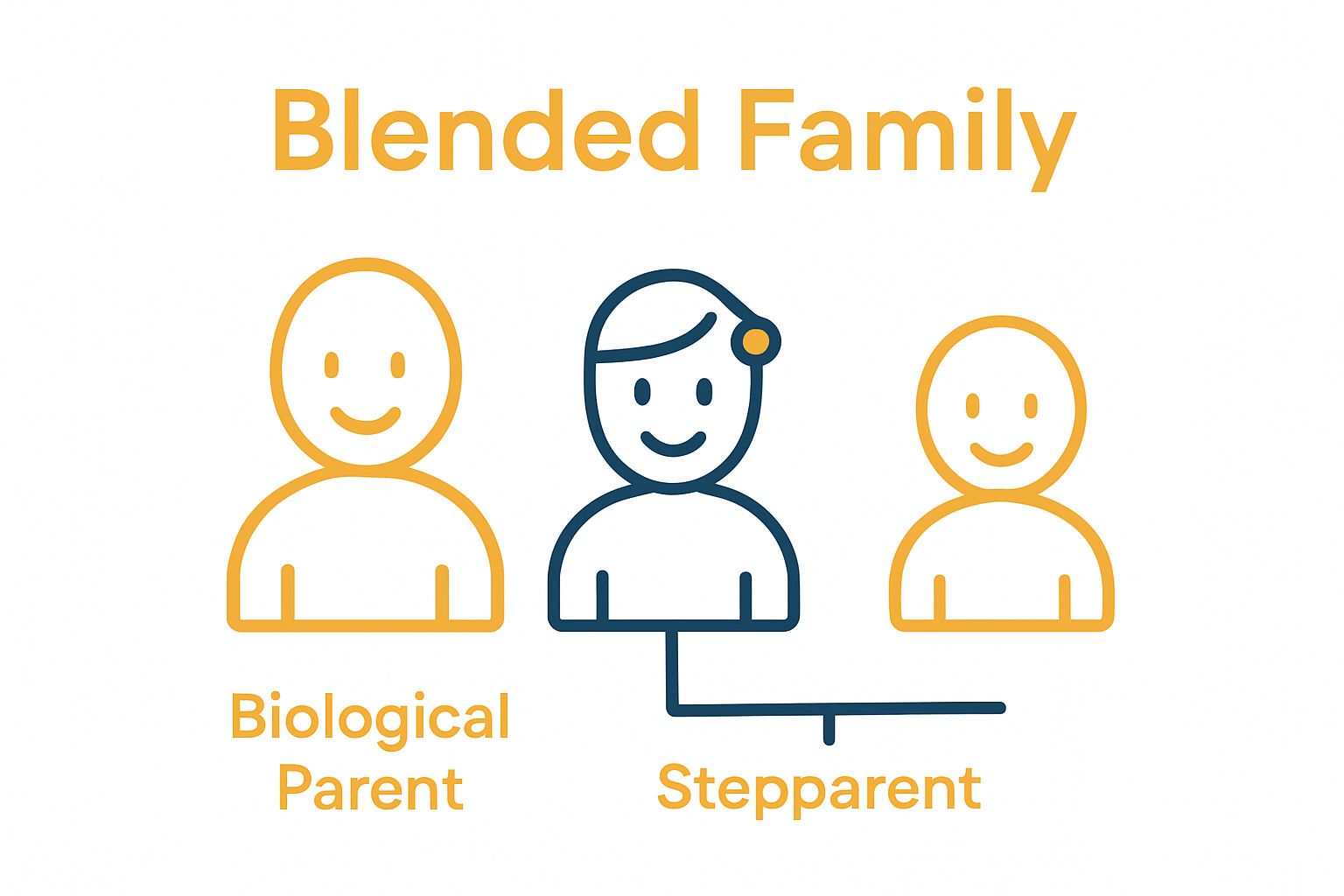
A blended family typically involves biological parents, stepparents, stepsiblings, and half-siblings who live together and function as a unified family system. The structure can vary widely, creating unique dynamics that differ from traditional nuclear families.


Below is a table summarizing the key components often found in blended family structures for quick reference and comparison.


Family RoleDescription
Biological ParentA parent who has a biological connection to one or more children
StepparentA parent married to a biological parent but not biologically related
StepsiblingChild of a stepparent, no biological connection to other children
Half-siblingChild who shares one biological parent with another child
ChildMay refer to biological, step, or half-siblings in the household
Extended FamilyGrandparents, aunts, uncles from either biological or step relations

Infographic showing blended family relationships between biological parent, stepparent, and child Key characteristics include:


  • Multiple parental figures with different biological connections

  • Children adjusting to new family roles and relationships

  • Complex emotional landscapes involving loyalty, acceptance, and integration


Challenges in Blended Family Dynamics


Navigating a blended family requires significant emotional intelligence and patience. Unlike traditional families, these households must manage intricate relationships, potential loyalty conflicts, and varying expectations from different family members. Children may experience complex emotions about accepting new parental figures, while parents must balance nurturing biological and stepchildren equally.


Modern society increasingly recognizes blended families as a legitimate and valuable family structure.


This comparison table highlights the core differences between traditional nuclear families and blended families, emphasizing unique characteristics and challenges.


AspectTraditional Nuclear FamilyBlended Family
Family StructureTwo parents, biological childrenStepparents, stepsiblings, biological children
Emotional ComplexityMore predictable dynamicsIncreased loyalty conflicts and adjustment periods
Legal ConsiderationsStandard parental rightsEvolving legal rights for stepparents and stepchildren
Social PerceptionOften viewed as the standardGrowing acceptance but still faces some stigma
Role ClarityClearer parental rolesAmbiguity in roles and boundaries require negotiation
Adaptability RequirementModerateHigh—requires ongoing negotiation and flexibility
Legal frameworks have evolved to provide protections and rights for stepparents and stepchildren, acknowledging the important emotional bonds that transcend biological connections. Social perspectives have also shifted, reducing stigma and promoting understanding of diverse family configurations.

Blended families demonstrate the remarkable adaptability of human relationships, showing that family is defined not just by blood, but by love, commitment, and mutual support.


Why Blended Families and Marriage Matter in Today’s Society


In an evolving social landscape, blended families represent a profound transformation in how we understand relationships, commitment, and familial bonds. Recent sociological research from the Pew Research Center indicates that traditional family structures are rapidly changing, with blended families becoming increasingly common and socially accepted.


Social and Emotional Significance


Blended families are more than just statistical shifts they are living examples of human adaptability and emotional resilience. They challenge traditional notions of family by demonstrating that love and commitment transcend biological connections. These families represent a complex network of relationships that require:


  • Emotional intelligence and empathy

  • Flexible communication strategies

  • Mutual respect across different family backgrounds


Economic and Psychological Implications


The rise of blended families also carries significant economic and psychological dimensions. Our guide on understanding traditional marriage values explores how these new family structures impact societal norms. Children in blended families often develop stronger interpersonal skills, adaptability, and broader perspectives on relationships due to their diverse family experiences.


Cultural Transformation and Resilience


Today’s blended families symbolize cultural evolution and human resilience. They challenge outdated stereotypes and demonstrate that families can be constructed through love, choice, and mutual understanding rather than solely through biological connections. These families showcase the potential for healing, growth, and rebuilding after significant life transitions like divorce or loss.


Ultimately, blended families remind us that family is not defined by a single model, but by the depth of connection, mutual support, and shared commitment to collective well-being.


How Blended Families Navigate Relationships and Roles


Research from the National Institutes of Health reveals that successful blended families require intentional strategies for managing complex interpersonal dynamics. Navigating relationships and roles demands extraordinary emotional intelligence, patience, and commitment from all family members.


Establishing Clear Expectations and Boundaries


Successful blended families recognize that ambiguous roles create potential conflicts. Family members must proactively define relationship boundaries, communication protocols, and mutual expectations. Our guide on clear roles and responsibilities in marriage provides deeper insights into this critical process.


Key strategies for establishing clarity include:


  • Creating transparent communication channels

  • Defining stepparent roles respectfully

  • Developing consistent disciplinary approaches

  • Allowing space for individual and collective emotional processing


Managing Emotional Complexity


Emotional navigation represents the most challenging aspect of blended family dynamics. Children and adults alike must manage complex feelings of loyalty, potential grief, and adjustment. Stepparents cannot replace biological parents but can develop unique, meaningful relationships through consistent respect, patience, and genuine emotional investment.


Building Unified Family Identity


Transforming a collection of individuals into a cohesive family unit requires deliberate efforts. Shared experiences, family traditions, and mutual respect become the glue binding different backgrounds together. Regular family meetings, collaborative decision making, and creating new shared memories help transform biological strangers into an emotionally connected family system.


Successful blended families understand that relationships are not predetermined but carefully cultivated through continuous communication, empathy, and commitment.
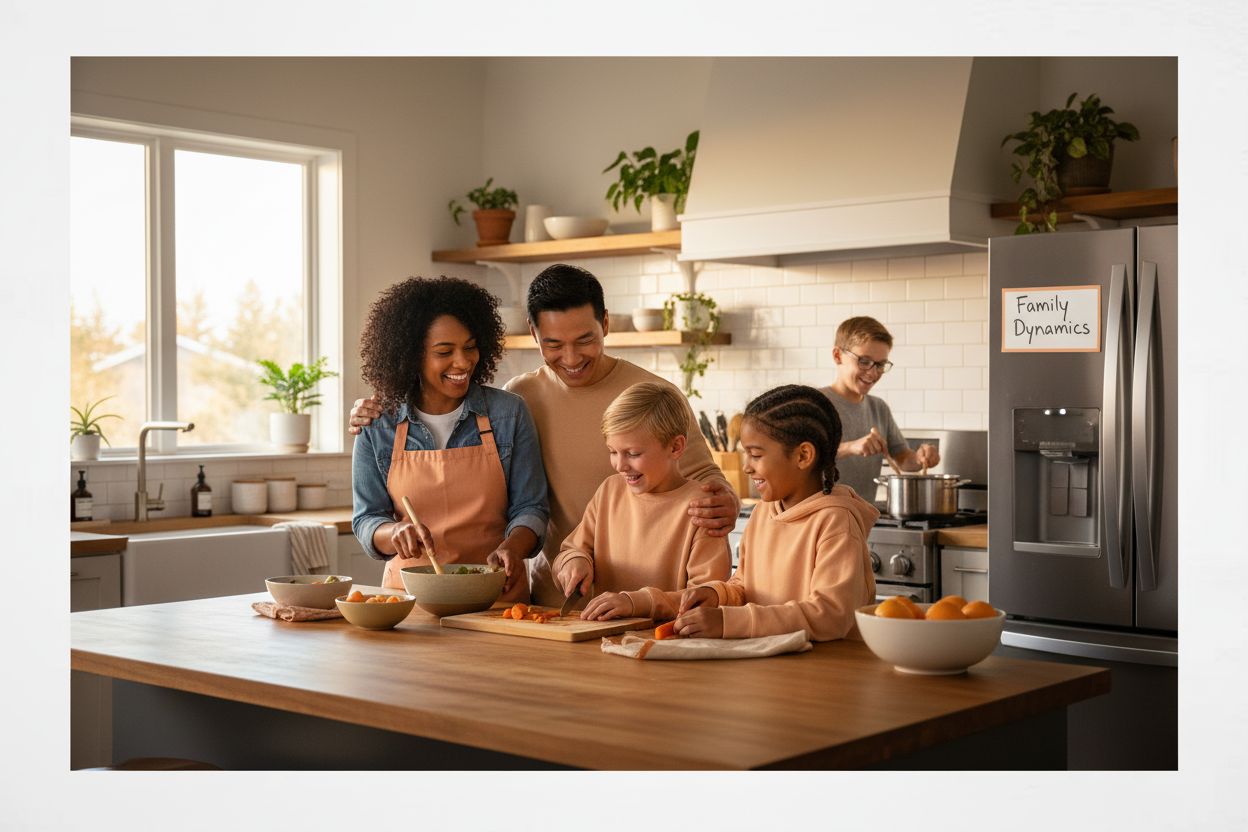

blended families kitchen teamwork


Key Concepts in Blended Families and Marriage Dynamics


According to the American Psychological Association, blended families represent a complex social structure with unique psychological and emotional challenges. Understanding the fundamental dynamics requires exploring nuanced relationship principles that differentiate these families from traditional nuclear households.


Emotional Intelligence and Relationship Mapping


Emotional intelligence becomes the cornerstone of successful blended family integration. Family members must develop sophisticated interpersonal skills to navigate intricate relationship networks. Our guide on understanding remarrying after divorce provides deeper insights into these complex emotional landscapes.


Key relationship mapping strategies include:


  • Recognizing individual emotional boundaries

  • Understanding potential loyalty conflicts

  • Developing empathetic communication patterns

  • Acknowledging each member’s unique emotional journey


Role Negotiation and Power Dynamics


Blended families require continuous negotiation of roles and responsibilities. Stepparents and biological parents must collaborate to create consistent, supportive environments without undermining existing familial connections. This delicate balance involves understanding power dynamics, respecting pre-existing relationships, and creating new family narratives.


Adaptive Family Systems


Successful blended families function as adaptive systems, continuously evolving to meet changing emotional and practical needs. They demonstrate remarkable resilience by transforming potential challenges into opportunities for deeper connection. The ability to create flexible boundaries, maintain open communication, and embrace individual differences becomes crucial for long-term family harmony.


Ultimately, blended families reveal that love transcends traditional biological connections, showcasing human capacity for compassion, understanding, and collective growth.


Ready to Strengthen Your Blended Family Dynamics?


Managing a blended family brings unique emotional challenges, from setting clear roles to balancing loyalty and communication. Pain points like unclear expectations and the struggle to integrate stepparents can leave you feeling uncertain about your role as a leader, husband, or partner. If you are looking for real solutions to build deeper trust and a more connected family life, you do not have to navigate this alone. Tap into proven relationship strategies and practical, everyday insights with our Daily Relationship Wisdom collection to discover what works in real blended households.


https://wisehusband.com/


Join the community at WiseHusband.com and access guidance tailored to men who want to thrive as confident partners in complex family structures. Take the next step now and give your marriage the wisdom it deserves for lasting love and respect.


Frequently Asked Questions


What defines a blended family?


A blended family is formed when two partners merge their households, including children from previous relationships. This family structure may consist of biological parents, stepparents, stepsiblings, and half-siblings.


What challenges do blended families face?


Blended families encounter unique challenges such as managing complex relationships, potential loyalty conflicts, and differing expectations among family members, requiring emotional intelligence and patience to navigate.


How can blended families establish clear roles and expectations?


Successful blended families can define clear roles and expectations by creating open communication channels, establishing stepparent roles, and developing consistent disciplinary approaches to avoid ambiguity in relationships.


Why is emotional intelligence important for blended families?


Emotional intelligence is crucial for blended families as it helps family members navigate complex interpersonal dynamics, manage emotions regarding loyalty and adjustment, and develop meaningful relationships despite varied family backgrounds.


Get the Wise Husband Book


https://wisehusband.com/understanding-blended-families-and-marriage/?fsp_sid=1323

How to Be a Better Husband in 2025: Practical Tips for Dads

How to Be a Better Husband


Being a good husband and dad isn’t about big dramatic gestures. It’s about the small things you do every day that make your relationship stronger. Most blokes reckon they’re doing enough, but studies show that modern Aussie dads now spend an average of 7.8 hours a week on childcare—double what it was just a generation ago. Surprised? It turns out your impact as a husband depends less on grand acts and more on how you show up during the tough, messy, real moments at home.

Table of Contents

Quick Summary

TakeawayExplanation
Master effective communication techniquesUse ‘I’ statements and active listening to enhance understanding with your partner.
Prioritise quality family timeEngage fully during family moments and establish consistent activities to strengthen bonds.
Support your partner emotionally during parentingBe present and validate your wife’s feelings, sharing responsibilities to navigate challenges together.
Focus on mutual self-improvementSet shared goals and regularly check in on personal growth to enhance both partnership and individual development.
Advocate for family-friendly workplace policiesEncourage flexibility at work to better balance professional duties and family life.

Building Stronger Communication With Your Partner

Communicating effectively with your partner is more than just talking - it’s about creating genuine understanding and connection. Most men struggle with communication because they approach conversations like problem solving missions rather than emotional exchanges.

Understanding Her Communication Style

Women typically communicate differently from men. Learn more about relationship communication strategies reveals that men often focus on solutions while women prioritize emotional validation. According to the Journal of the American Board of Family Medicine, successful couples use structured communication exercises that go beyond surface level interactions.

Key differences in communication styles include:

  • Emotional Depth: Women tend to explore feelings more extensively
  • Context Matters: Tone and non verbal cues are crucial
  • Listening Beyond Words: Understanding underlying emotions

Dr. John Gottman’s research from the Social Science LibreTexts library suggests maintaining a 5:1 ratio of positive to negative comments during interactions.

Practical Communication Techniques

The Human Performance Resource Center recommends specific strategies to enhance couple communication:

  • Use ‘I’ Statements: Express feelings without blame. Instead of saying “You never listen,” try “I feel unheard when…”
  • Active Listening: Summarize and restate what your partner says to demonstrate understanding
  • Nonverbal Attentiveness: Maintain open body language and genuine eye contact

Effective communication requires patience, empathy, and a genuine commitment to understanding your partner’s perspective. It’s not about winning arguments but creating a supportive emotional environment where both partners feel heard and valued.

Remember that communication is a skill that improves with practice. Be kind to yourself as you learn and grow together.

Balancing Work, Family, and Quality Time

Modern fatherhood demands a delicate balance between professional responsibilities and family commitments. Unlike previous generations, today’s fathers are expected to be actively engaged in both earning income and nurturing their families.

Understanding Modern Fatherhood Dynamics

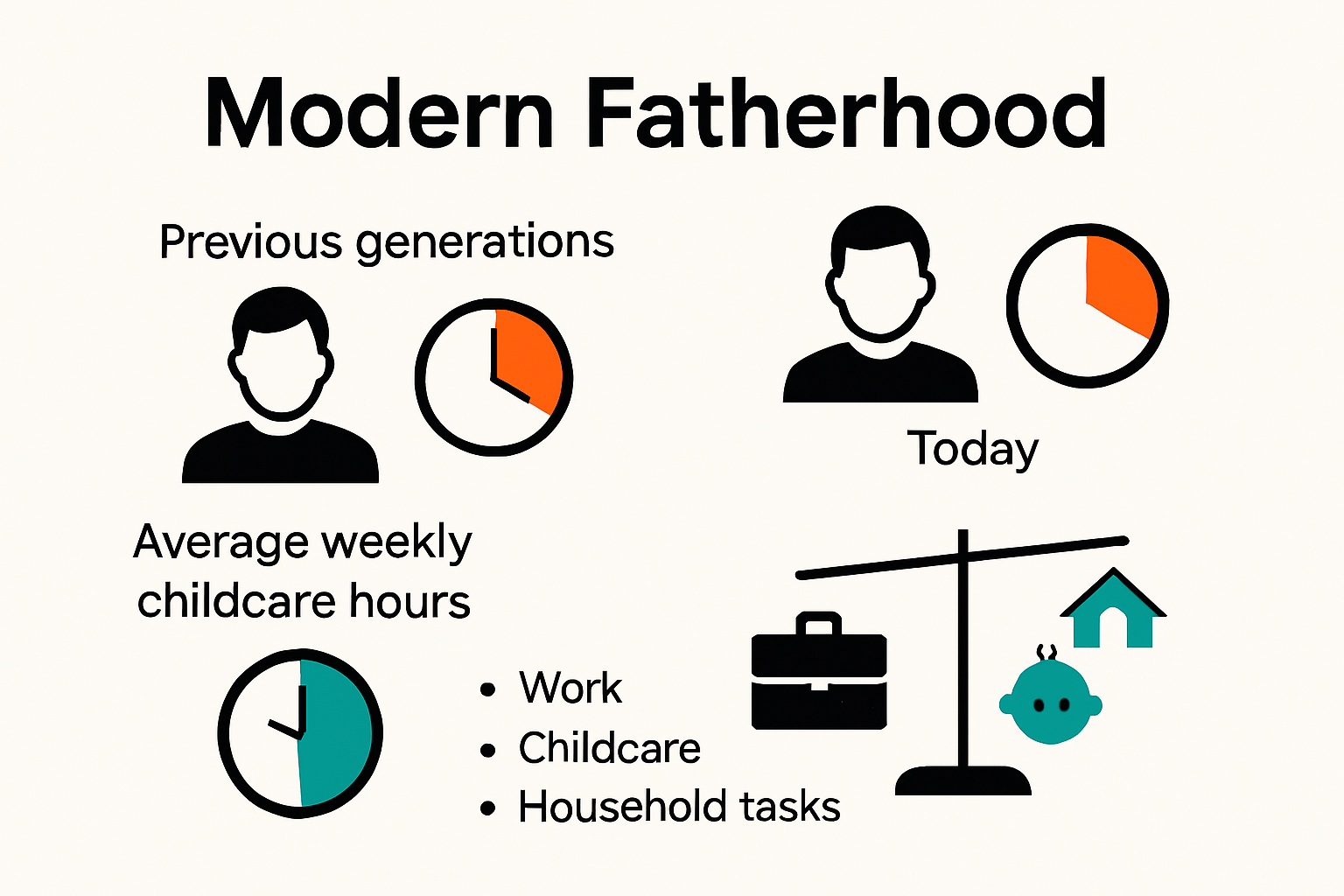
Research from the Institute for Family Studies reveals that contemporary fathers are dedicating an average of 7.8 hours per week to childcare, demonstrating a significant shift from traditional family roles. This increased involvement requires strategic planning and intentional time management.

Infographic comparing modern and traditional father roles

To illustrate the significant changes in fatherhood roles and time spent on childcare across generations, here’s a table comparing average weekly childcare hours:

GenerationAverage Weekly Childcare Hours
Fathers (Past Generation)3.9
Fathers (Modern/2025)7.8

According to Cornell Cooperative Extension, avoiding gender stereotypes in family roles is crucial. Fathers should actively participate in both wage-earning and family-maintaining tasks to create a balanced household dynamic.

Practical Strategies for Quality Time

Effective time management isn’t about spending every moment with your family but about creating meaningful interactions. Consider these approaches:

  • Intentional Presence: Quality trumps quantity. Focus on being fully engaged during the time you spend with your family.
  • Structured Family Rituals: Establish consistent activities like weekly game nights or weekend breakfasts.
  • Technology Boundaries: Set clear limits on work communications during family time.

Learn more about creating meaningful family connections by developing intentional relationship rituals that strengthen family bonds.

Workplace and Policy Considerations

The Center for American Progress highlights that only 12% of workers have access to paid family leave, creating challenges for fathers seeking work-family balance. This statistic underscores the importance of advocating for family-friendly workplace policies and negotiating flexible work arrangements.

Successful work-family balance requires continuous adjustment. Be patient with yourself, communicate openly with your partner, and remain committed to your family’s well-being. Remember that being a present, engaged father is more important than achieving perfect balance every single day.

Supporting Your Wife Through Parenting Challenges

Parenting is a complex journey that tests the resilience and partnership of every couple. As a husband, your role extends far beyond financial support - you are a critical emotional anchor for both your wife and children during challenging times.

Understanding Emotional Labor in Parenting

Research from the National Institutes of Health emphasizes the importance of sensitive and responsive parenting. This means recognizing that parenting challenges aren’t just about solving problems, but about providing consistent emotional support.

Most women experience significant emotional and physical strain during parenting. Learn more about building emotional connection to understand how your support can make a profound difference in your family’s dynamics.

Practical Support Strategies

Effective support involves more than just helping with tasks. Key strategies include:

  • Active Listening: Create safe spaces for your wife to express her frustrations and fears without judgment
  • Shared Responsibility: Proactively engage in childcare and household management
  • Emotional Validation: Acknowledge her feelings and experiences, even when you might not fully understand them

The National Center for Biotechnology Information highlights the significance of integrated support and peer networks in helping parents navigate challenges more effectively.

To help you quickly assess practical support strategies for your partner, the table below summarises key actions and their specific impact:

Support StrategyWhat It Looks LikeImpact on Relationship
Active ListeningGive undistracted attention, reflect feelingsBuilds trust and intimacy
Shared ResponsibilityTake initiative with childcare/household tasksReduces stress, increases teamwork
Emotional ValidationValidate her feelings even if you don’t fully understandProvides emotional safety

Creating a Supportive Partnership

Successful parenting is a collaborative effort. This means being present not just physically, but emotionally. Recognize that your wife’s challenges are your challenges. Develop a team approach where you both feel supported, heard, and valued.

supportive husband parenting teamwork

Remember, supporting your wife through parenting challenges isn’t about being perfect. It’s about being consistently present, empathetic, and committed to growing together as parents and partners.

Prioritising Self-Improvement and Shared Goals

Personal growth and mutual development are critical components of a thriving marriage. As a husband, your commitment to self-improvement directly influences your relationship’s quality and your family’s overall well-being.

Understanding Personal and Relational Growth

Research published in PubMed reveals that partner support plays a crucial role in successful self-improvement. Nurturing and action-facilitating support positively impacts personal development, while criticism can hinder progress. This means your approach to supporting your wife’s and your own growth matters significantly.

Learn more about developing meaningful relationship strategies to understand how intentional personal development can transform your marriage.

Strategies for Mutual Self-Improvement

Effective self-improvement in marriage involves collaborative efforts and mutual support. According to research from the National Center for Biotechnology Information, spousal support is fundamental in achieving personal and shared goals. Consider these approaches:

  • Shared Goal Setting: Develop both individual and collective objectives that support each other’s growth
  • Regular Check-ins: Schedule monthly discussions about personal development and relationship progress
  • Supportive Accountability: Create mechanisms to encourage and track each other’s goals

Building a Culture of Continuous Growth

The Journal of Family Issues highlights that marital quality improves when partners are satisfied with their shared responsibilities and mutual support. This means viewing self-improvement not as a solitary journey, but as a collaborative adventure.

Remember, true self-improvement isn’t about becoming perfect, but about consistently growing, learning, and supporting each other through life’s challenges. Embrace vulnerability, communicate openly, and commit to developing not just as individuals, but as a united partnership.

Frequently Asked Questions

How can I improve communication with my wife?

Effective communication involves understanding your partner’s communication style, using ‘I’ statements, practicing active listening, and maintaining open body language. Focus on creating a supportive emotional environment where both partners feel heard and valued.

What are some practical ways to spend quality time with my family?

Prioritise quality over quantity by being fully engaged during family interactions. Establish regular family rituals, such as game nights or weekend breakfasts, and set boundaries around technology during family time to enhance connection.

How can I support my wife with parenting challenges?

Support your wife by actively listening to her concerns, sharing parenting responsibilities, and validating her feelings. Being present and engaged emotionally can significantly strengthen your partnership during tough parenting moments.

What strategies can help me and my spouse in mutual self-improvement?

To foster mutual self-improvement, set shared goals, schedule regular check-ins to discuss progress, and establish supportive accountability mechanisms. Embrace each other’s growth and view self-improvement as a collaborative journey.

Ready for Real Change? Take the Next Step Towards Being a Better Husband

You have just read how small daily actions, open communication and shared goals can transform your marriage and family life. Like many dads, you might struggle with truly connecting, balancing work and home, or supporting your partner emotionally. If you found yourself nodding along to these pain points, you are definitely not alone. These challenges hold back a lot of Aussie dads from building the stronger relationships they really want.

https://wisehusband.com

Why let old habits slow you down any longer? Get actionable support and personalised guidance from experts dedicated to men and marriage. Visit Wise Husband today for online advice and practical tools tailored for Aussie dads. If you want deeper insight, our in-depth guides like how to be a better husband and relationship communication strategies will help you grow as a partner. Take the next step now and invest in a stronger future for your family.


Get the Wise Husband Book


https://wisehusband.com/how-to-be-a-better-husband-2025/?fsp_sid=1313

Wednesday, 8 October 2025

7 Healthy Marriage Habits Every Couple Should Practice

Healthy Marriage Habits


Do you want to discover healthy marriage habits? Strong marriages are built on more than just love and shared memories. Couples who communicate openly and practice gratitude report up to 23 percent higher relationship satisfaction. That sounds simple enough, right? Most think it’s all about grand romantic gestures or big promises, but the real magic comes from small, everyday actions that anyone can start using together.

Table of Contents

Quick Summary

TakeawayExplanation
Prioritize open communicationCreate a safe space for dialog, encouraging honesty and active listening.
Foster mutual respectTreat each other as equals, valuing personal boundaries and individual growth.
Schedule regular quality timeDedicate intentional, distraction-free moments to reconnect and nurture emotional intimacy.
Practice active listeningUnderstand your partner’s feelings by listening attentively without formulating your reply.
Manage conflicts constructivelyApproach disagreements as opportunities for understanding, focusing on collaboration over winning.

1: Prioritize Open Communication

Communication is the foundational bedrock of any thriving marriage. Without honest, transparent dialogue, relationships slowly erode into silence, misunderstanding, and emotional distance. Open communication means creating a safe space where both partners can share their thoughts, feelings, and concerns without fear of judgment or ridicule.

Successful couples understand that communication is more than just talking - it’s about active listening and genuine understanding. This involves not just hearing words, but comprehending the emotions and intentions behind them. Learn more about effective communication strategies to transform your relationship.

Key elements of open communication include:

  • Practicing vulnerability by sharing your authentic feelings

  • Maintaining respectful tone even during disagreements

  • Committing to regular, uninterrupted conversation time

Research from the American Psychological Association highlights that couples who communicate effectively experience significantly higher relationship satisfaction. They are more likely to resolve conflicts constructively, support each other’s personal growth, and maintain emotional intimacy.

Building open communication requires intentional effort. It means setting aside distractions, putting away electronic devices, and creating dedicated time to truly connect with your partner. Active listening involves maintaining eye contact, offering verbal and non-verbal acknowledgments, and reflecting back what you’ve heard to ensure complete understanding.

2: Foster Mutual Respect

Respect is the invisible thread that binds a marriage together, transcending simple politeness to become a profound acknowledgment of each partner’s inherent worth and dignity. Mutual respect means treating your spouse as an equal partner, valuing their perspectives, emotions, and individual autonomy, even when disagreements arise.

In a truly respectful relationship, partners recognize that differences are not threats but opportunities for growth and understanding. Explore our guide on building deeper marital connections to strengthen your partnership.

Key dimensions of mutual respect include:

  • Honoring each other’s personal boundaries

  • Avoiding contemptuous language or dismissive behaviors

  • Supporting individual dreams and personal development

According to research from The Gottman Institute, couples who consistently demonstrate respect are 5 times more likely to successfully navigate challenging life transitions and maintain long-term relationship satisfaction. Respect manifests through actions, not just words.

This means actively listening without interrupting, validating your partner’s feelings, and showing appreciation for their contributions. It involves making decisions collaboratively, respecting each other’s time, and maintaining a partnership where both individuals feel valued and heard. Mutual respect transforms marriage from a contractual arrangement into a genuine, supportive collaboration where both partners can thrive and grow together.

3: Schedule Regular Quality Time Together

In the whirlwind of daily responsibilities, marriages can easily become transactional partnerships focused on managing household duties and logistics. Quality time is the deliberate antidote to this gradual disconnection, providing an opportunity to reconnect, nurture emotional intimacy, and remember why you chose each other in the first place.

Learn more about creating meaningful connection rituals to keep your relationship vibrant and engaging. Research from the National Marriage Project demonstrates that couples who consistently invest time in shared experiences report significantly higher relationship satisfaction and emotional closeness.

Strategic approaches for scheduling quality time include:

  • Establishing weekly “date nights” without digital interruptions

  • Creating shared experiences that don’t revolve around household management

  • Alternating planning responsibilities to keep things fresh and exciting

Quality time is not about quantity, but intentionality. This means being fully present - putting away smartphones, maintaining eye contact, and engaging in genuine conversation. Whether it’s a weekly dinner date, a weekend adventure, or simply sharing morning coffee without distractions, the goal is meaningful connection.

Successful couples understand that relationships require ongoing investment. By prioritizing dedicated time together, you signal to your partner that your relationship is a living, breathing entity that deserves continuous nurturing and attention. The most profound connections are often cultivated through simple, consistent moments of genuine presence and shared experience.

4: Practice Active Listening

Active listening transforms communication from a passive exchange into a profound connection of understanding. More than hearing words, it involves comprehending the emotions, intentions, and unspoken messages behind what your partner is expressing.

Discover advanced techniques for deeper marital communication to elevate your relationship’s emotional intelligence. According to research from the Journal of Marriage and Family, couples who practice genuine active listening report 40% higher relationship satisfaction and emotional intimacy.

Key components of active listening include:

  • Maintaining consistent eye contact

  • Providing verbal and non-verbal affirmation

  • Reflecting back what you’ve heard without judgment

Active listening requires surrendering the urge to interrupt or formulate a response while your partner is speaking. It means creating a safe emotional space where your spouse feels fully heard and validated. This practice demands genuine curiosity, empathy, and the willingness to suspend your own narrative temporarily.

Successful active listening involves body language that communicates engagement - leaning slightly forward, nodding, and offering subtle verbal acknowledgments like “I hear you” or “Tell me more.” By demonstrating that you are fully present and committed to understanding your partner’s perspective, you build trust, reduce misunderstandings, and create a foundation of mutual respect and emotional connection.

5: Support Each Other’s Goals and Dreams

A thriving marriage is not about two people becoming identical, but about creating a partnership that amplifies individual potential. Supporting each other’s goals and dreams means recognizing that personal growth enhances, rather than threatens, the relationship’s strength.

Learn strategies for nurturing individual aspirations within marriage, understanding that true connection involves celebrating each other’s unique paths. Research from the American Psychological Association indicates that couples who actively support individual goals experience deeper emotional intimacy and longer-lasting relationships.

Effective support strategies include:

  • Providing emotional encouragement during challenging moments

  • Offering practical assistance when pursuing personal objectives

  • Celebrating individual achievements without competitive undertones

Supportive partnerships require genuine curiosity and investment in your partner’s aspirations. This means listening without judgment, offering constructive feedback, and being willing to make personal sacrifices to help your spouse achieve their dreams. It’s about creating an environment where both individuals feel empowered to take risks, explore personal potential, and grow both individually and together.

The most resilient marriages understand that personal development is not a zero-sum game. When one partner succeeds, both benefit from increased confidence, expanded perspectives, and the mutual respect that comes from genuine, unconditional support. By championing each other’s goals, couples transform their relationship from a mere partnership into a powerful, collaborative journey of mutual growth and fulfillment.

6: Show Appreciation Daily

Appreciation is the oxygen that breathes life into relationships, transforming routine interactions into moments of genuine connection. It goes far beyond occasional grand gestures, focusing instead on consistent, meaningful acknowledgment of your partner’s daily contributions and inherent worth.

Explore simple yet powerful ways to express gratitude and reinvigorate your marital bond. According to research from the Journal of Positive Psychology, couples who regularly practice gratitude report 23% higher relationship satisfaction and emotional intimacy.

Strategies for showing daily appreciation include:

  • Verbal affirmations that are specific and heartfelt

  • Small, unexpected acts of kindness

  • Acknowledging efforts that often go unnoticed

Meaningful appreciation requires genuine observation - it’s about recognizing the intricate ways your partner contributes to your shared life. This might mean thanking them for managing household chores, supporting your personal goals, or simply being a consistent emotional anchor during challenging times.

The most powerful expressions of appreciation are authentic, spontaneous, and tailored to your partner’s unique personality. They communicate a deep understanding that goes beyond surface-level recognition, demonstrating that you truly see and value the person you’ve chosen as your life partner. By making appreciation a daily practice, you create a positive feedback loop of mutual respect, love, and emotional connection that continually strengthens your relationship.

7: Manage Conflicts Constructively

Conflict is inevitable in marriage, but the way couples navigate disagreements determines the relationship’s long-term health and resilience. Constructive conflict management transforms potential relationship fractures into opportunities for deeper understanding and growth.

Learn advanced strategies for resolving marital tensions and strengthening your partnership. Research from the Gottman Institute reveals that couples who handle conflicts effectively are 69% more likely to maintain long-term relationship satisfaction.

Critical principles of constructive conflict resolution include:

  • Focusing on the issue, not attacking the person

  • Using “I” statements to express feelings

  • Maintaining emotional regulation during disagreements

Successful conflict management requires emotional intelligence and a commitment to understanding rather than winning. This means listening actively, acknowledging your partner’s perspective, and being willing to compromise. It’s about creating a safe emotional space where both partners feel heard, respected, and valued.

Effective couples recognize that conflicts are not battles to be won, but collaborative problem-solving opportunities. They approach disagreements with curiosity, empathy, and a shared commitment to the relationship’s well-being. By treating each conflict as a chance to understand each other more deeply, couples can transform potential sources of division into moments of profound connection and mutual growth.

Ready to Build Strong Marriage Habits That Last?

Many couples struggle with keeping healthy marriage habits strong day after day. You may feel frustrated by tough communication issues or worn down by routine and the lack of deeper connection. The article you just read highlights core challenges like losing quality time, feeling unappreciated, or struggling to resolve conflict in a healthy way. If you recognize these patterns in your own relationship, you are not alone—consistent, intentional effort is what truly turns habits into a lasting, loving marriage.

Explore more Daily Relationship Wisdom and start applying practical steps that matter right now.

https://wisehusband.com/

Learn how other men are strengthening their marriages one habit at a time. Visit WiseHusband.com for real-world marriage support, insightful tips, and clear principles to become the husband your partner deserves. Make today the day you invest in your relationship and discover Daily Wisdom for Happier Marriages. The best habits start with a single step—take yours now.

Below is a comprehensive table summarizing the 7 healthy marriage habits discussed in the article and the key benefits and strategies associated with each.

Habit/PracticeKey Strategies & ActionsBenefits for the Relationship
Open CommunicationHonest dialogue, vulnerability, active listening, regular dedicated talk timeIncreased satisfaction, emotional intimacy, better conflict resolution
Mutual RespectHonor boundaries, treat as equals, validate feelings, support growthGreater trust, resilience, long-term satisfaction
Quality Time TogetherIntentional, distraction-free activities, establish rituals like date nightsDeeper connection, emotional closeness, strengthened partnership
Active ListeningEye contact, reflect understanding, avoid interrupting, verbal and non-verbal feedbackHigher intimacy, fewer misunderstandings, greater emotional safety
Support Each Other’s Goals & DreamsEncourage, celebrate achievements, offer practical help, show curiosityEnhanced personal growth, mutual respect, shared fulfillment
Show Appreciation DailyGenuine affirmations, acts of kindness, recognize everyday effortsBoosted gratitude, stronger emotional bonds, increased satisfaction
Manage Conflicts ConstructivelyUse “I” statements, focus on issues, emotional regulation, seek to understandHealthier conflicts, collaborative problem-solving, greater relationship durability

Frequently Asked Questions

What are some effective communication strategies for couples?

Open communication involves practicing vulnerability, maintaining a respectful tone, and dedicating time for uninterrupted conversations. Active listening, where each partner truly hears and understands the other’s feelings, is a key strategy.

How can couples show appreciation for each other daily?

Daily appreciation can be expressed through specific verbal affirmations, small acts of kindness, and recognition of efforts that often go unnoticed. Authentic and spontaneous expressions of gratitude strengthen emotional connections in a marriage.

What are constructive ways to manage conflicts in a marriage?

Constructive conflict management focuses on addressing issues without attacking each other. Using “I” statements, maintaining emotional regulation, and approaching conflicts with empathy and curiosity can help couples resolve disagreements more effectively.

Why is scheduling regular quality time important for couples?

Scheduling regular quality time helps couples reconnect amidst daily responsibilities. It nurtures emotional intimacy, fosters genuine connections, and reinforces the partnership, signaling that the relationship deserves continuous nurturing.


Get the Wise Husband Book


https://wisehusband.com/7-healthy-marriage-habits/?fsp_sid=1303

Mates or Rivals: Rediscovering True Partnership


https://youtu.be/r-sGfwd4eeQ

Mates or Rivals: Rediscovering the True Partnership Between Men and Women

Are you and your wife teammates or rivals? It’s a question that hits home for many husbands. In today’s world, conversations about gender often sound like a competition. Men versus women. Oppressors versus victims. Toxic masculinity versus feminism. The narrative can feel exhausting, and it pushes couples into opposite corners instead of bringing them closer together. But what if that entire framing is wrong? What if, from the very beginning, men and women were never meant to be rivals—but true mates in the deepest sense of the word?

That’s the heart of the “Mates or Rivals” conversation. It’s about rediscovering the beauty of partnership and understanding how men and women evolved as allies who shaped one another for survival, growth, and love.


A New Perspective on Gender

At the recent International Positive Psychology Conference, Professor Roy Baumeister presented a talk that caught a lot of attention. The title was Rethinking Gender Relations, and his message was surprisingly refreshing. He encouraged us to move away from blame and competition, and to start seeing men and women as teammates who adapted together to meet the challenges of life.

Baumeister’s point was simple: humanity didn’t survive by competing between sexes but by cooperating. Men and women have always been part of the same story, facing the same struggles—just with different strengths and roles.


Evolution’s Team Effort

According to Baumeister, the story of human progress is a shared one. Every trait we have, male or female, developed because it helped our ancestors survive and thrive. Men evolved to provide, protect, and take risks. Women evolved to nurture, sustain, and choose wisely in relationships.

When you think about it, our ancestors didn’t have the luxury of rivalry. They needed each other. The hunter depended on the gatherer. The protector relied on the nurturer. Humanity walked forward like two feet—right and left—each one essential to balance and progress.

Without cooperation between men and women, civilization wouldn’t exist.


Seeing Men Through a Balanced Lens

One of Baumeister’s boldest challenges was to reexamine how we see men. Are men inherently oppressive, or are they primarily driven to protect and provide? For most of human history, men’s purpose was deeply tied to caring for women and children. Men built shelters, hunted for food, and defended their communities.

Even today, that drive hasn’t disappeared. Many men still find their greatest fulfillment in serving their families—working long hours, taking on risks, and striving to create stability. Yet society often overlooks this devotion, focusing more on criticism than appreciation.

When we talk about “toxic masculinity,” it’s easy to forget that most men’s actions are rooted in love and duty. The instinct to protect, to lead, and to sacrifice are not signs of dominance, but of care.


The Overlooked Strength of Women

Baumeister also reminded listeners that women were never passive victims in history. Women have always held enormous influence, especially through one of their greatest powers—the power of choice. For generations, women selected mates who could provide, protect, and cooperate.

In doing so, women shaped men into the kind of protectors and providers we see today. That’s an incredible achievement. Far from being victims, women were active partners in shaping human evolution. They encouraged men to rise, to build, to fight for something bigger than themselves.

Seeing women only as victims doesn’t honor their true power. It misses the point that women were co-creators in the story of civilization.


Mates or Rivals | Wise HusbandFrom Competition to Cooperation

When we start to see men and women as partners rather than opponents, something powerful happens. The tension softens. The resentment fades. Gratitude grows.

In the home, this shift is life-changing. A husband who sees his wife as his teammate will communicate differently. He’ll listen more, criticize less, and focus on shared goals instead of personal wins. A wife who sees her husband not as a rival but as a teammate will feel safer, more supported, and more willing to trust.

The “Mates or Rivals” perspective is not about pretending differences don’t exist. It’s about seeing those differences as strengths that balance each other. Where one is strong, the other complements. Where one is weak, the other uplifts.


The Modern Misunderstanding

Our culture often celebrates independence over interdependence. We hear phrases like “you don’t need anyone” or “be your own hero.” But the truth is, humanity was never built to go solo. Every healthy relationship, whether in marriage or community, thrives on cooperation.

When couples fall into rivalry, marriage becomes a power struggle instead of a partnership. Decisions turn into battles. Love turns into scorekeeping. But when couples see themselves as mates, everything changes. Disagreements become discussions. Challenges become teamwork. Success becomes something shared.


Gratitude Over Blame

Baumeister’s research invites both men and women to replace blame with gratitude. Instead of saying, “You don’t understand me,” we can say, “Thank you for trying.” Instead of focusing on what’s unfair, we can focus on what’s shared.

When you start viewing your wife as a teammate, you begin to notice the little things she does that hold your world together. When she sees you the same way, she recognizes the sacrifices you make every day—many of which go unseen.

Gratitude builds bridges. Blame burns them.


The Real Gift of Partnership

When men and women unite as teammates, they create something powerful: stability. Children grow up in homes where love and respect are visible. Families thrive. Communities strengthen.

The “Mates or Rivals” message reminds us that marriage isn’t a contest—it’s a covenant. It’s about using our unique strengths to lift each other up, not tear each other down. The world may try to divide us into sides, but the truth is simple: humanity moves forward only when we walk side by side.


Final Thoughts: Choose to Be Mates

Every husband faces moments when he feels misunderstood, unappreciated, or even opposed. But before assuming you and your wife are on different teams, pause and remember the bigger story. Men and women were made to cooperate, not compete.

In your marriage, the choice between being mates or rivals is made every day—in your tone, your words, your priorities. Choose teamwork over tension. Choose understanding over argument. Choose gratitude over blame.

Because when husbands and wives see themselves as true mates, everyone wins—the marriage, the family, and the next generation watching how love really works.


Get the Wise Husband Book


https://wisehusband.com/mates-or-rivals-rediscovering-true-partnership/?fsp_sid=1291

Tuesday, 7 October 2025

How to Reconnect with Your Husband: Strengthen Your Bond

How to Reconnect with Your Husband

Trying to reconnect with your husband can feel overwhelming, especially when daily routines seem to pull you further apart. Research shows that couples who consistently invest in quality time together report up to 60 percent higher relationship satisfaction compared to those who do not. Most people think you need grand romantic gestures to revive intimacy, but genuine reconnection often starts with a simple, honest look at your relationship’s emotional patterns. Surprising shifts happen when small steps lead to big changes.

Table of Contents

Quick Summary

Key PointExplanation
1. Self-Reflect on Relationship DynamicsAssess your marriage’s emotional landscape through honest self-reflection to understand connection points and disconnection zones.
2. Identify Shared Interests and GoalsEngage in open conversations to discover mutual passions and align future aspirations, strengthening your partnership.
3. Schedule Intentional Quality TimeDedicate regular, distraction-free time for shared experiences to deepen emotional intimacy and connection.
4. Communicate Openly and HonestlyFoster transparent dialogue through regular emotional check-ins to enhance understanding and vulnerability in your relationship.
5. Reinforce Positive Interactions RegularlyPractice daily expressions of appreciation and acknowledgment to create a nurturing emotional environment and strengthen bonds.

Step 1: Assess Your Current Relationship Dynamics

Reconnecting with your husband starts with honest self-reflection and understanding your current relationship landscape. This critical first step involves examining your marriage’s emotional terrain without judgment or defensiveness. Many couples struggle to rebuild intimacy because they skip this foundational assessment.

Mapping Your Relationship Dynamics

Begin by creating a comprehensive emotional inventory of your marriage. Think of this as a relationship diagnostic process where you objectively evaluate connection points, communication patterns, and potential disconnection zones. Ask yourself critical questions: When was the last time you and your husband felt truly connected? What specific interactions trigger distance between you? Are there recurring communication breakdowns that prevent genuine understanding?

Carry out this assessment through intentional self-observation. Notice your emotional reactions during interactions with your husband. Track moments of tension, disconnect, and potential misunderstandings. Read our guide on nurturing your marriage for additional insights into relationship mapping.

Documenting your observations can be transformative. Consider keeping a private journal where you record interaction patterns without blame or criticism. Focus on understanding rather than proving who is right or wrong. Write down specific scenarios that create emotional distance and moments of genuine connection.

Identifying Relationship Roadblocks

Understanding potential roadblocks requires vulnerability and courage. Common barriers include unresolved resentments, different communication styles, unmet emotional needs, and accumulated stress. Recognize that identifying these barriers is not about assigning fault but creating pathways for healing.

As you assess your relationship dynamics, remain compassionate with yourself and your husband. The goal is not perfection but genuine understanding. By carefully mapping your relationship’s emotional landscape, you create a strategic foundation for meaningful reconnection. Your honest self-reflection becomes the first powerful step toward rebuilding intimacy and strengthening your marital bond.

Successful completion of this step means you have:

Here is a checklist table summarizing key completion criteria for each step in reconnecting with your husband.

StepCompletion Criteria
Step 1: Assess Relationship DynamicsDocument interaction patterns, identify triggers and disconnection zones, develop a non-judgmental perspective, create a roadmap for improvement
Step 2: Identify Common Interests and GoalsFind 2-3 mutual interests, create a vision board, understand personal aspirations, set framework for planning together
Step 3: Schedule Quality Time TogetherSet a weekly connection time, rotate planning, create framework for meaningful interactions, protect shared time
Step 4: Communicate Openly and HonestlyHold regular check-ins, practice active listening, express feelings constructively, build safe communication space
Step 5: Reinforce Positive Interactions RegularlyStart gratitude practice, create appreciation rituals, increase positive interactions, acknowledge contributions
  • Objectively documented relationship interaction patterns
  • Identified specific emotional triggers and disconnection zones
  • Developed a compassionate, non-judgmental perspective on your marriage’s current state
  • Created a personal roadmap for potential areas of improvement

Step 2: Identify Common Interests and Goals

Reigniting connection with your husband requires discovering and nurturing shared passions that transcend daily routines. This step transforms disconnected coexistence into intentional partnership by uncovering mutual interests and aligning future aspirations.

Start by scheduling a dedicated conversation outside your normal environment. Choose a neutral setting like a quiet cafe or peaceful park where you can speak without household distractions. Approach this dialogue with genuine curiosity and openness. Your goal is not to compete or debate but to understand and explore.

Exploring Shared Passions

Begin by reflecting on experiences you both enjoyed in the past. What activities made you laugh together? When did you feel most connected? These memories are crucial signposts pointing toward rekindled intimacy. Some couples discover shared interests in unexpected places - perhaps a forgotten hobby, a travel dream, or a mutual skill you could develop together.

Explore our guide on building trust in marriage to understand how shared goals create deeper emotional bonds. Mutual interests act as relationship glue, providing opportunities for joint experiences and meaningful conversation.

Consider creating a shared vision board representing collective dreams. This could include travel destinations, personal development goals, family objectives, or creative projects. Visual representations help transform abstract discussions into tangible, exciting possibilities.

Strategic Goal Alignment

Beyond recreational interests, discuss long-term life goals. Where do you both see yourselves in five or ten years? What personal and collective achievements matter most? Genuine alignment happens when individual aspirations complement rather than compete.

Communicate your individual goals transparently. Listen without judgment. Your objective is discovering intersection points where your personal dreams can harmonize. This might involve career support, financial planning, parenting strategies, or personal growth commitments.

Successful completion of this step means you have:

  • Identified at least 2-3 mutual interests or potential shared activities
  • Created a preliminary vision board representing collective goals
  • Developed a deeper understanding of each other’s personal aspirations
  • Established a framework for future collaborative planning

Remember, reconnection is a journey of continuous discovery. Approach this process with patience, empathy, and genuine enthusiasm for growing together.

Step 3: Schedule Quality Time Together

Reconnecting requires deliberate, structured investment in shared experiences that go beyond routine interactions. Quality time is not about grand gestures but consistent, meaningful engagement that rebuilds emotional intimacy.

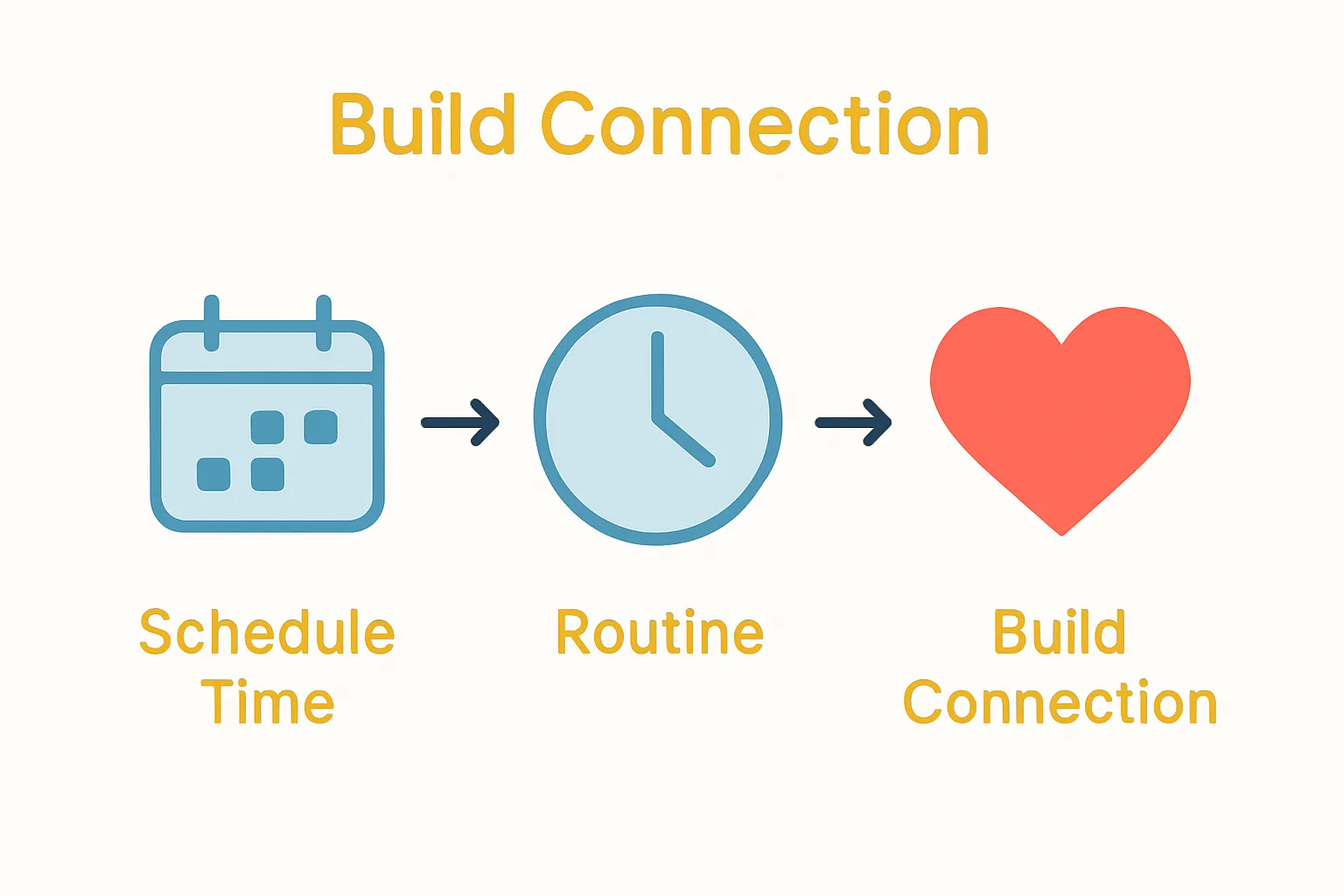
Start by creating a dedicated relationship calendar - a strategic planning tool for intentional connection. This isn’t about scheduling every minute but establishing predictable opportunities for genuine interaction. According to research from the National Institutes of Health, consistent quality time significantly enhances relationship satisfaction.

Simple diagram showing routine quality time builds connection

Designing Meaningful Interactions

Implement a weekly “connection date” that alternates planning responsibilities between you and your husband. The planner designs an experience focusing on mutual enjoyment, not just entertainment. These dates can range from low-key activities like cooking together to more elaborate outings. The key is maintaining flexibility and genuine engagement.

Consider creating a framework for your connection dates:

  • One partner plans the activity completely
  • No work or household discussions allowed
  • Electronic devices remain silent or off
  • Focus on enjoying each other’s company

Be creative with your time together. Shared experiences don’t always require leaving home. Some of the most profound connections happen through simple, intentional activities like preparing a meal together, taking an evening walk, or learning a new skill as partners.

Overcoming Common Connection Barriers

Recognize that scheduling quality time might feel awkward initially. Many couples struggle with feeling forced or artificial when first implementing structured connection time. Embrace this discomfort as part of the rebuilding process. The goal is not perfection but consistent effort.

Explore our guide on building trust in marriage for additional strategies in creating meaningful interactions. Remember that quality time is about presence, not performance. Listen actively, share vulnerably, and remain open to spontaneous moments of connection.

Successful completion of this step means you have:

  • Established a weekly dedicated connection time
  • Created a rotating planning system for dates
  • Developed a framework for meaningful interactions
  • Committed to protecting and prioritizing this shared time

Approach these connection opportunities with curiosity, patience, and a genuine desire to rediscover your partner. Consistent, intentional time together becomes the foundation for deeper understanding and renewed intimacy.

Reconnect with Your Husband | Wise Husband

Step 4: Communicate Openly and Honestly

Authentic communication transforms relationship dynamics, turning disconnection into genuine understanding. This step involves creating a safe emotional landscape where vulnerability becomes strength and honest dialogue replaces surface-level interactions.

According to research from the American Psychological Association, effective communication is the cornerstone of relationship health. Begin by establishing a judgment-free dialogue zone where both partners feel secure expressing emotions without fear of criticism or immediate problem-solving.

Creating Safe Communication Spaces

Design intentional communication rituals that move beyond routine conversations. Schedule weekly “emotional check-in” sessions where each partner gets uninterrupted time to share feelings, concerns, and aspirations. The listener’s role is pure reception - no interrupting, defending, or offering immediate solutions.

Learn more about communication techniques for couples to enhance your dialogue skills. Practice active listening techniques: maintain eye contact, use affirming body language, and reflect back what you’ve heard to demonstrate genuine understanding.

Develop a communication framework that prioritizes emotional transparency. Use “I” statements that express personal feelings without accusation. Instead of saying “You never listen,” try “I feel unheard when our conversations seem one-sided.” This approach invites collaboration rather than triggering defensive responses.

Recognize that honest communication includes discussing uncomfortable topics. Challenging conversations are opportunities for growth, not relationship threats. Approach sensitive subjects with compassion, acknowledging that vulnerability requires courage from both partners.

Create ground rules for difficult discussions:

  • Set a specific time and neutral location
  • Commit to respectful dialogue
  • Take breaks if emotions become overwhelming
  • Focus on understanding, not winning

Successful completion of this step means you have:

  • Established regular emotional check-in sessions
  • Practiced active, non-defensive listening
  • Developed skills for expressing feelings constructively
  • Created a safe space for authentic communication

Remember, rebuilding communication is a skill that improves with consistent, patient practice. Approach each conversation as an opportunity to reconnect and understand each other more deeply.

Step 5: Reinforce Positive Interactions Regularly

Rebuilding connection requires intentional celebration of small, meaningful moments. This step transforms relationship dynamics by systematically amplifying positive interactions, creating a nurturing emotional environment that naturally draws partners closer.

According to research from the National Institutes of Health, consistent expressions of appreciation significantly enhance relationship satisfaction. The goal is to create a positive feedback loop that gradually rewires your relationship’s emotional infrastructure.

Designing Intentional Appreciation Strategies

Implement a daily gratitude practice specifically focused on your husband. This goes beyond generic compliments - acknowledge specific actions, character traits, and efforts that often go unrecognized. Notice and verbalize moments of competence, kindness, and support that demonstrate his unique value.

Explore our guide on building trust in marriage to understand how consistent positive reinforcement transforms relationships. Create personalized appreciation rituals that feel authentic to your connection. This might involve morning text messages highlighting something you admire, unexpected notes of recognition, or verbal acknowledgments during shared moments.

Develop a systematic approach to positive reinforcement. Track and celebrate small wins - whether it’s handling a challenging work situation, supporting family needs, or demonstrating emotional intelligence. Your consistent recognition builds emotional safety and motivates continued positive behavior.

Creating Meaningful Positive Interactions

Positive reinforcement extends beyond verbal appreciation. Design physical and experiential ways of showing connection. Unexpected gestures like spontaneous hugs, surprise date nights, or supporting his personal goals communicate deeper levels of commitment.

Establish clear appreciation practices:

  • Daily verbal or written acknowledgment
  • Weekly intentional connection moments
  • Monthly celebration of mutual achievements
  • Consistent physical affection

Successful completion of this step means you have:

  • Developed a consistent gratitude practice
  • Created personalized appreciation rituals
  • Increased frequency of positive interactions
  • Demonstrated tangible recognition of your husband’s contributions

Remember, positive reinforcement is a skill that deepens with practice. Approach this step with genuine curiosity and warmth, allowing your appreciation to become a natural, transformative force in your relationship.

Ready to Rebuild Your Marriage Connection?

If you feel the distance growing between you and your husband, you are not alone. Many readers struggle with emotional disconnect, communication barriers, and the challenges of rebuilding intimacy. The article you just explored gives you real steps for mapping your relationship dynamics, aligning your goals, prioritizing quality time, and learning open communication. But sometimes, knowing how to start is not enough. You need daily encouragement and practical examples to keep moving forward.

Explore Daily Relationship Wisdom for proven insights and strategies specifically designed to help men reconnect with their partners and strengthen lasting bonds.

https://wisehusband.com/

Join the movement at WiseHusband.com and take advantage of our collection of Daily Wisdom articles. Discover actionable tools to reinforce positive interactions, break unhealthy cycles, and become the wise husband your marriage deserves. Do not let another day pass without investing in the connection that means the most. Start your journey to a stronger, more fulfilling partnership now.

Frequently Asked Questions

How can I assess my current relationship dynamics with my husband?

Begin by reflecting on your emotional interactions and evaluating your connection points, communication patterns, and disconnection zones. Keeping a private journal can help document these observations objectively without judgment.

What activities can help rekindle our connection?

Consider exploring shared interests and hobbies that you both enjoyed in the past. Schedule conversations to discuss these mutual passions, and think about creating a shared vision board to visualize your goals together.

How often should we schedule quality time together?

Aim for a weekly dedicated connection time. Establish a routine to engage in meaningful activities that foster genuine interaction, ensuring to alternate planning responsibilities between you and your husband.

What are the best ways to foster open communication with my husband?

Create a safe space for dialogue by scheduling regular emotional check-in sessions. Use active listening techniques and focus on expressing your feelings through ‘I’ statements to promote understanding and connection.


Get the Wise Husband Book


https://wisehusband.com/how-to-reconnect-with-your-husband-naturally/?fsp_sid=1279

Gender Differences in Marriage


Gender Differences in Marriage: Insights for Husbands

It is indeed very strange that acknowledging and discussing gender differences have become a sensitive issue. As a service tailored for Husbands and Fathers I trust you understand the different perspective we take here. Yet, it should be clear that differences do NOT mean inequality or traditional roles. Wise Husband program passionately promotes democratic values in families.

https://youtu.be/qQK57LCdMQY

Gender Differences in Marriage: Embracing Our Strengths Without Judgment

Let’s face it—talking about gender differences in marriage has become a touchy subject. But as husbands and fathers committed to building strong families, we have to talk about what actually works in real life. The Wise Husband program doesn’t aim to push outdated roles or reinforce inequality. On the contrary, it promotes balance, mutual respect, and the kind of understanding that allows both partners to thrive.

This isn't about superiority or submission. It’s about complementing each other. As John Gottman, one of the most respected relationship researchers, put it: “Gender differences are clearly important in understanding how marriages function and dysfunction.” So let’s explore those differences with open minds and honest hearts.

Why Gender Differences Matter in Family Life

Nowhere are gender differences in marriage more visible than during dating and while raising children. Think about it—dating tends to highlight courtship behaviors driven by biology and evolutionary instincts. Once children enter the picture, those natural tendencies often intensify.

This isn’t because couples suddenly become traditional by choice. It’s because parenting brings out deeply rooted instincts—nurturing, protecting, organizing, and leading. And yes, babies are usually the ones to “blame” for this shift! As sleep-deprived parents, we fall into patterns that work. Often, those patterns reflect time-tested masculine and feminine responses to stress, caregiving, and emotional bonding.

 Key Gender Differences

 
Feminine
Masculine 
Evolutionary purpose
reproduce and raise babies provide and protect 
Primal needs 
to feel secure, desired, connected, and supported to feel appreciated, sexually fulfilled, respected, valued
Expression
connect, nurture, feel,
be attractive
do, perform, act
Self-worth is affected by 

relationships,

 appearance, body image 

performance, achievement 
Values
care for others, justice, equality, community, serving othersindividual rights and freedom, self-expression, accomplishment
Interest
PeopleThings
Traits 
people-oriented, focused on the private worlds of family and personal relationships, warmth, empathy,
sensitivity to others
goal-oriented, focused on the external world of work, independence, assertiveness, dominance,
leadership
In conflicts
AgreeableAssertive
Communication style
indirect, elaborative, emotional direct, succinct, instrumental 
Vulnerability
anxiety, moodsanger, aggression
Threats in marriage
rejection, loss of connection failure, shame

The Risk of Talking About Gender Differences

Let’s be real. Talking about gender differences in marriage can get you into hot water these days. Ideology and politics have clouded honest scientific research. Take, for example, the case of a Google engineer who was fired for stating what biology and psychology have long confirmed: men and women tend to differ in preferences and abilities, in part due to biology.

That statement wasn’t hateful or even new—it was grounded in science. Yet it was labeled offensive. That tells us a lot about how charged this topic has become.

But here’s the truth: if we allow political correctness to silence honest conversation, we miss out on valuable insights. Families need wisdom, not dogma. You, as a committed husband and father, are capable of thinking critically and compassionately at the same time.

Applying Wisdom in Real Life

The goal isn’t to box anyone into rigid roles. Everyone expresses masculinity and femininity in unique ways. Biology is not destiny. We all have the power to adapt, shift, and evolve. But context matters.

Raising kids is a prime example of how certain behaviors become more helpful based on our natural inclinations. A man may discover that his calm under pressure, problem-solving mindset, or protective instinct becomes incredibly useful when raising a family. Likewise, a woman’s sensitivity, patience, and emotional intuition may shine in the same context.

That doesn’t mean either role is fixed or exclusive. But it does mean that honoring these gender differences in marriage can help couples divide responsibilities more efficiently and with less resentment.

Masculine Archetypes in Action

In the Wise Husband program, we often refer to the four key masculine archetypes: King, Lover, Magician, and Warrior. These aren’t fantasy figures—they’re practical ways to frame healthy masculinity within marriage and parenting.

  • The King leads with wisdom and fairness, protecting and providing.

  • The Lover connects emotionally and physically, keeping the relationship alive.

  • The Magician brings insight, learning, and strategic thinking.

  • The Warrior acts with courage, discipline, and resilience.

In parenting and partnership, these traits are essential. They balance and support the feminine traits your wife brings. When both partners are empowered to lean into their strengths, the family unit becomes stronger.

Gender Differences In Marriage | Wise HusbandAcceptance Builds Connection

There’s one thing that kills relationships faster than anything: judgment. Shaming your partner for being “too emotional” or “too rigid” shuts down communication and trust. Instead of trying to mold your spouse into a carbon copy of yourself, choose acceptance.

Self-acceptance is just as important. Many men struggle with guilt over not being more emotionally expressive or nurturing. But being a good man doesn’t mean becoming someone you’re not. It means becoming the best version of who you are—and encouraging your partner to do the same.

Gender differences in marriage are not obstacles. They’re invitations to build a better partnership by embracing complementarity.

Use Differences to Your Advantage

If you’re feeling tension in your marriage over parenting styles, emotional expression, or household roles, try reframing the issue. Ask yourself:

  • How are our strengths different?

  • Where do we complement each other?

  • How can I respect my wife’s feminine traits while standing strong in my masculine traits?

This shift in mindset removes blame and invites teamwork. It helps couples navigate tough seasons—like raising toddlers or dealing with financial stress—by focusing on usefulness instead of ideology.

Conclusion: Understanding Before Reacting

Discussing gender differences in marriage isn’t about drawing lines in the sand. It’s about learning how to work together more effectively. Couples who acknowledge and honor their differences tend to communicate better, experience less resentment, and raise more secure kids.

Remember: wisdom always beats dogma. And compassion always beats control. The sooner we stop trying to erase the differences between men and women, the sooner we can start appreciating how those differences make our marriages—and our families—stronger.

Final Thought:
You don’t have to agree with every theory. But as a husband and father, you owe it to your family to seek understanding. Because when you embrace your masculine role with intention and respect your partner’s feminine essence, your marriage can thrive—even through the chaos of parenting.


Get the Wise Husband Book


https://wisehusband.com/gender-differences-in-marriage/?fsp_sid=1267

Husband Archetypes From Wife’s View: Complete Guide

Did you know that over 60 percent of couples feel their relationship style doesn’t fit traditional husband stereotypes? Understanding husban...