Tuesday, 14 October 2025

Understanding the Signs of An Unhealthy Marriage: Key Insights

Signs of An Unhealthy Marriage:


Most people think a rocky marriage is just some bickering or drifting apart and nothing too dramatic. But research shows chronic marital stress can actually increase your risk of heart disease and faster cognitive decline. Not many realise the real warning signs hide in plain sight every day. The biggest danger is not fighting too much but missing those early hints that trouble is brewing.

Table of Contents

Quick Summary

TakeawayExplanation
Recognise communication breakdowns.Persistent negative interactions erode trust and intimacy, signalling serious marital issues.
Acknowledge emotional disconnection.Feeling misunderstood or unappreciated weakens the fundamental bond between partners.
Identify power imbalances and disrespect.Consistent manipulation or dominance indicates underlying fractures in the relationship.
Understand the health impacts of dysfunction.Poor marital quality can lead to significant physical and mental health issues.
Seek professional help for healing.Counseling provides structured support to deconstruct unhealthy patterns and rebuild connections.

Identifying the Hallmarks of an Unhealthy Marriage

Recognising the signs of an unhealthy marriage requires understanding complex emotional and relational dynamics. While no relationship is perfect, certain patterns consistently indicate deeper systemic problems that can erode marital satisfaction and intimacy.

To help readers easily identify behaviours that signal an unhealthy marriage, here is a table summarising the key warning signs discussed in this section.

Warning SignExample BehavioursTypical Impact
Communication BreakdownCriticism, defensiveness, stonewalling, contemptErodes trust and understanding
Emotional DisconnectionFeeling misunderstood, lack of support, reduced intimacyWeakens partnership bond
Power Imbalances & Loss of RespectDominating decisions, belittling, financial control, gaslightingUndermines equality and safety
Inability to Resolve ConflictsUnresolved arguments, unwilling to compromiseProlonged tension and frustration
Manipulation & Conditional RespectWithholding affection, emotional manipulationDestroys genuine understanding

Communication Breakdown: The Silent Destroyer

Communication problems represent the foundational indicator of an unhealthy marriage. According to research from the International Journal of Environmental Research and Public Health, marriages deteriorate when couples exhibit persistent negative interaction patterns such as:

  • Constant criticism and defensiveness
  • Stonewalling or emotional withdrawal
  • Expressing contempt or disrespect towards each other
  • Inability to resolve conflicts constructively

These communication issues create emotional distance, gradually destroying trust and mutual understanding. Partners stop genuinely listening and start protecting themselves, transforming marriage from a collaborative partnership into an adversarial relationship.

Emotional Disconnection and Intimacy Erosion

Beyond communication challenges, emotional disconnection signals a marriage’s declining health. When partners feel consistently misunderstood, unappreciated, or emotionally unsupported, the relationship’s fundamental bond weakens. This disconnection manifests through reduced physical and emotional intimacy, decreased vulnerability, and a sense of living parallel lives rather than sharing a meaningful journey.

Couples experiencing this disconnection often describe feeling like roommates rather than romantic partners. Intimacy becomes transactional, conversations remain superficial, and genuine emotional sharing becomes rare. Learn more about rebuilding marital connections.

Power Dynamics and Respect Erosion

Unhealthy marriages frequently reveal imbalanced power dynamics where one partner consistently dominates decision making, dismisses the other’s feelings, or uses manipulation tactics. Respect becomes conditional, with emotional manipulation replacing genuine understanding.

Key warning signs include:

  • Consistent belittling or undermining
  • Financial control or restricted personal autonomy
  • Persistent gaslighting or denial of partner’s experiences
  • Unwillingness to compromise or consider alternate perspectives

Recognising these hallmarks is crucial. They represent not just surface-level disagreements but fundamental relationship fractures that require intentional, compassionate intervention to heal and restore.

The Importance of Recognizing Relationship Red Flags

Recognising relationship red flags is not about casting blame or seeking perfection, but understanding critical indicators that signal potential systemic relationship problems. Early detection enables proactive intervention, potentially preventing long-term emotional damage and relationship deterioration.

The Health Impact of Relationship Dysfunction

Research published in medical journals reveals that poor marital quality is not merely an emotional challenge but a significant health concern. Unhealthy relationships can profoundly impact physical and psychological well-being, creating a cascade of negative health outcomes.

Individuals in chronically distressed marriages experience:

  • Increased stress hormone levels
  • Higher risk of cardiovascular complications
  • Compromised immune system functioning
  • Higher rates of depression and anxiety
  • Accelerated cognitive decline

These health consequences underscore why identifying relationship red flags goes beyond emotional intelligence—it becomes a critical aspect of personal wellness.
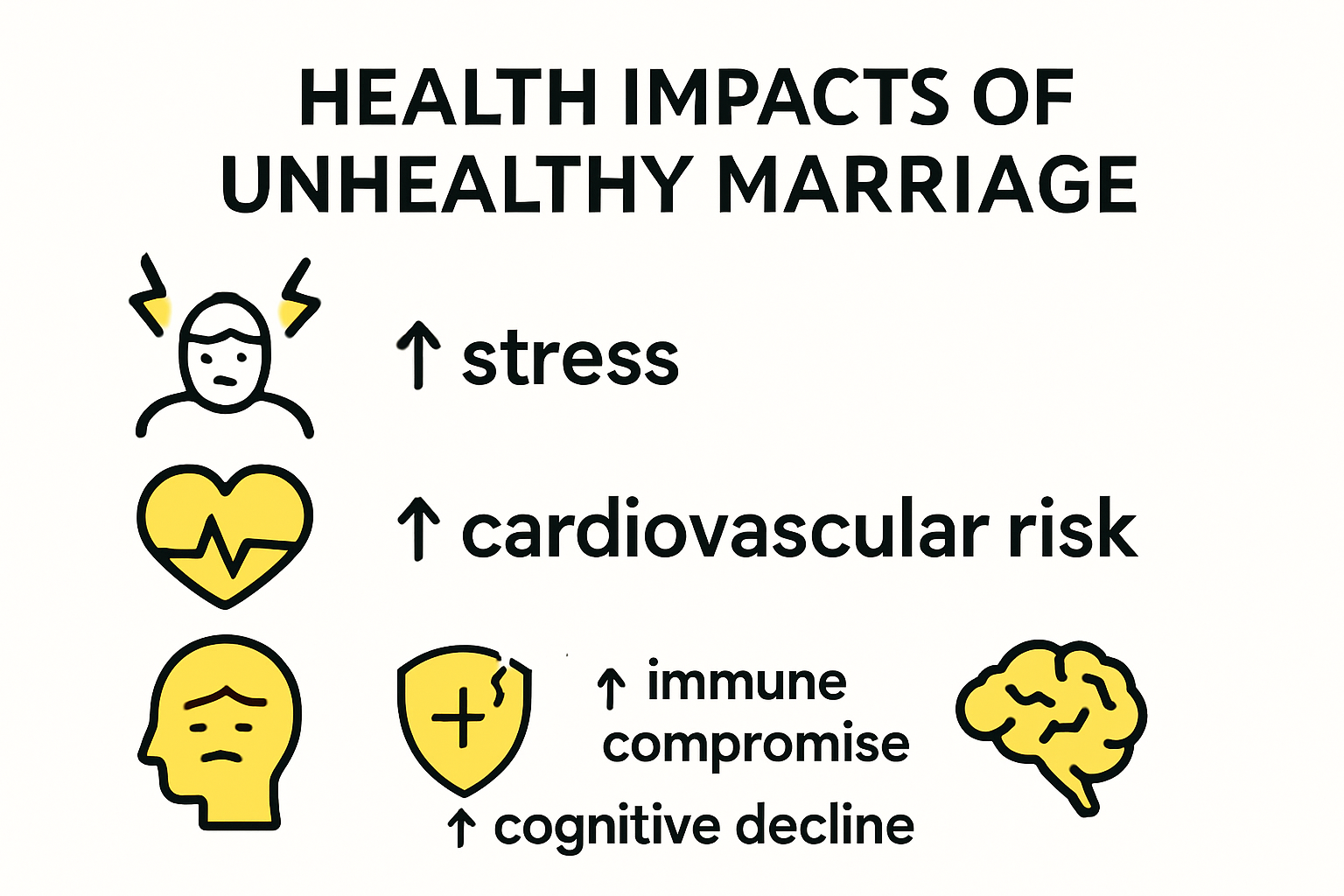
Infographic showing health risks from unhealthy marriage

Psychological Mechanisms of Relationship Deterioration

Relationship red flags operate through complex psychological mechanisms. When negative interaction patterns become normalized, they create neurological pathways of emotional disconnection. Partners gradually lose the ability to communicate authentically, replacing genuine connection with defensive strategies.

Critical psychological processes include:

  • Trauma bonding
  • Cognitive dissonance
  • Emotional suppression
  • Learned helplessness

Explore strategies for rebuilding marital connections to interrupt these destructive patterns and restore healthy relationship dynamics.

Recognising red flags requires emotional intelligence, self-awareness, and a commitment to personal and relational growth. It represents not a failure, but an opportunity for transformative change and deeper understanding.

The Emotional and Psychological Impact on Family Dynamics

Unhealthy marriages create profound ripple effects that extend far beyond the relationship between partners, fundamentally reshaping family psychological landscapes. The family unit operates as an interconnected emotional ecosystem, where tension and dysfunction in one relationship dramatically influence all members’ psychological well-being.

Signs of An Unhealthy Marriage | Wise Husband

Intergenerational Transmission of Relationship Patterns

Children are remarkably sensitive emotional receivers, unconsciously absorbing relationship dynamics that become foundational blueprints for their future interactions. According to research published by the National Institutes of Health, children raised in high-conflict households develop complex psychological adaptations that can persist across generations.

Key developmental impacts include:

  • Heightened emotional hypervigilance
  • Difficulty establishing healthy relationship boundaries
  • Increased vulnerability to anxiety and depression
  • Compromised attachment and trust mechanisms
  • Reduced emotional regulation capabilities

These patterns represent more than learned behaviors—they constitute neurological imprinting that shapes fundamental emotional responses and relationship expectations.

Psychological Survival Mechanisms in Dysfunctional Families

Family members develop sophisticated psychological survival strategies when confronted with consistent emotional instability. Children particularly create intricate emotional navigation systems, often becoming parentified or emotionally suppressed to maintain family equilibrium.

The impacts of an unhealthy marriage extend far beyond the couple themselves. This table outlines the common psychological adaptation strategies developed by children and family members in response to chronic family dysfunction, as explained in the article.

Psychological StrategyDescriptionTypical Expression in Families
Emotional DissociationDetaching from feelings to reduce emotional painAppearing numb or disconnected
Hypervigilant MonitoringConstantly watching others’ moods for signs of conflictHeightened alertness, anxiety
ParentificationChildren taking on caregiving rolesActing mature beyond age, suppressing needs
Emotional SuppressionActively hiding feelings to avoid conflictBottling up emotions, few emotional outlets
Complex Coping MechanismsDeveloping intricate patterns to manage instabilityUsing avoidance, humour, or perfectionism

Psychological adaptation strategies frequently manifest as:

  • Emotional dissociation
  • Hypervigilant monitoring of parental moods
  • Development of complex coping mechanisms
  • Premature emotional maturation

Learn more about breaking negative family relationship cycles and creating healthier interpersonal dynamics.

Recognising these profound psychological impacts underscores the critical importance of addressing relationship challenges proactively. The goal is not merely personal healing, but interrupting intergenerational patterns of emotional dysfunction and creating environments of genuine emotional safety and connection.

Common Misunderstandings About Relationship Issues

Relationship dynamics are complex, nuanced ecosystems that defy simplistic interpretations. Popular myths and misconceptions frequently obstruct genuine understanding, creating barriers to meaningful connection and effective problem solving.

The Myth of Conflict Avoidance

Research in psychology journals reveals that avoiding conflict is not a sign of a healthy relationship, but potentially a dangerous mechanism of emotional suppression. Many couples mistakenly believe that absence of arguments indicates relationship harmony.

Common misconceptions about conflict include:

  • Believing silence means peace
  • Assuming disagreements are inherently destructive
  • Thinking that perfect couples never argue
  • Equating emotional suppression with maturity
  • Perceiving conflict as a threat to relationship stability

In reality, constructive conflict represents a vital communication mechanism that allows partners to express needs, negotiate differences, and develop deeper mutual understanding.

Misinterpreting Emotional Signals

Couples frequently misread emotional communications, creating unnecessary tension and misunderstanding. Emotional intelligence requires nuanced interpretation, moving beyond surface-level interactions to comprehend underlying relational dynamics.

Widespread emotional misinterpretations include:

  • Confusing criticism with feedback
  • Mistaking withdrawal for indifference
  • Interpreting vulnerability as weakness
  • Perceiving compromise as defeat
  • Generalizing individual incidents as persistent patterns

Discover strategies for improving relationship communication and breaking destructive interpretative cycles.

Recognising and challenging these misconceptions represents a crucial step towards building authentic, resilient relationships. True connection emerges not from avoiding challenges, but from developing sophisticated emotional understanding and responsive communication strategies.

Strategies for Addressing Unhealthy Marital Signs

Addressing unhealthy marital dynamics requires a sophisticated, multilayered approach that combines emotional intelligence, intentional communication, and strategic intervention. Transformation begins with conscious, systematic effort to recognize, understand, and systematically restructure relationship patterns.

Professional Intervention and Counseling

Professional counseling represents a critical pathway for couples navigating complex relationship challenges. Therapeutic environments provide neutral, structured spaces where partners can explore underlying dynamics without defensive posturing.

Key benefits of professional intervention include:

  • Objective third-party perspective
  • Advanced communication skill development
  • Trauma-informed relationship healing
  • Personalized strategy development
  • Safe emotional exploration framework

Therapeutic approaches help couples deconstruct destructive patterns and rebuild connection through guided, intentional processes.

Self-Directed Relationship Rehabilitation

While professional support is invaluable, couples can also implement self-directed strategies to interrupt negative interaction cycles. Personal commitment becomes the foundational mechanism for relational transformation.

Effective self-directed strategies encompass:

  • Regular, structured emotional check-ins
  • Active listening without defensive reactions
  • Practicing vulnerability and emotional transparency
  • Developing individual and collective emotional intelligence
  • Establishing clear, respectful communication boundaries

Explore comprehensive marriage rebuilding techniques that empower couples to take proactive steps towards healing.

Successful relationship rehabilitation demands patience, mutual commitment, and a genuine willingness to understand and grow together. The journey involves continuous learning, empathy, and a shared vision of reconnection and mutual support.

Reclaim Connection and Strengthen Your Marriage Today

Are you noticing the early signs of communication breakdown, emotional distance, or escalating conflict in your marriage? The article explored how recognising unhealthy patterns can be the difference between slow drift and true reconnection. Many men feel stuck when trust fades, intimacy wanes, or each conversation seems to end in frustration. You do not have to face these challenges alone. WiseHusband.com is dedicated to helping you break negative cycles and rediscover a sense of partnership. Our practical guidance helps you move past common traps like stonewalling, criticism, and emotional disconnection.

https://wisehusband.com/

It is time to build the habits that renew your bond and restore respect at home. Find encouraging marriage help for men that goes beyond theory, backed by real solutions for lasting change. Take your first step to becoming the man your relationship deserves by visiting WiseHusband.com now. Learn how small shifts in communication, empathy, and mindset can turn unhealthy patterns into new opportunities for trust and connection.

Frequently Asked Questions

What are the common signs of an unhealthy marriage?

Common signs include communication breakdown, emotional disconnection, power imbalances, and persistent conflict patterns. These indicators can erode trust and intimacy over time.

How does poor communication affect a marriage?

Poor communication creates emotional distance between partners, leading to misunderstandings, unresolved conflicts, and overall dissatisfaction in the relationship. It can transform a partnership into an adversarial dynamic.

What impact does an unhealthy marriage have on children?

Children raised in high-conflict marriages may experience heightened anxiety, difficulty establishing healthy boundaries, and compromised emotional well-being, which can affect their future relationships.

How can couples address unhealthy relationship patterns?

Couples can seek professional counselling for objective guidance or engage in self-directed strategies, like structured emotional check-ins and practicing active listening, to improve communication and rebuild connections.


Get the Wise Husband Book


https://wisehusband.com/signs-of-an-unhealthy-marriage/?fsp_sid=1391

Monday, 13 October 2025

What Does Masculine Husband Mean

Masculine Husband

What does Masculine Husband mean to you?


What Does Masculine Husband Mean: Embracing Your Role with Confidence

What does masculine husband mean in today’s world? That question hits deeper than most people realize. If you’re like many family men, the word “masculine” might feel like a loaded term. Especially when society often ties masculinity to toxicity. But let’s stop right there. Your masculinity isn’t something to hide—it’s something to understand, strengthen, and express proudly.

It’s time to unpack what a masculine husband really is and why those traits matter more than ever in your marriage and family life.

https://youtu.be/DmIoNmxvpSQ

Why Masculinity Feels Under Attack

Let’s start with the elephant in the room: many men feel uncomfortable identifying as masculine because that word is often paired with “toxic.” Maybe you've felt hesitant to express leadership or decisiveness. Maybe you’re cautious when trying to be strong or assertive around your partner or kids. If you feel that way, you’re not alone.

But here’s the truth: shaming men for expressing their masculinity is not just unfair—it’s harmful. It strips away a core part of a man’s identity. Cracking down on your nature isn’t progress. It’s emotional abuse dressed up as cultural critique.

You and your family lose out when your masculine strengths are buried. So let’s talk about what those strengths actually are.

Evolutionary Roots of Masculinity

Evolutionary psychology explains that masculine traits evolved to meet one major demand: the survival and well-being of your family. Males developed strengths to provide resources, security, and dependable parenting. And here’s the kicker—those traits still matter today.

Across different cultures and time periods, women consistently look for traits in men that signal leadership, stability, and protection. Things like ambition, industriousness, dependability, and emotional control are high on that list. It doesn’t matter if a woman is highly successful or not—our ancient instincts remain deeply rooted.

So if you’ve ever wondered whether your drive to lead or your sense of duty is “outdated,” science says otherwise.

Strength as Safety

Let’s go deeper. One of the core answers to what does masculine husband mean is this: you are your family’s protector.

Throughout history, safety has been one of the biggest concerns for women. They’re more vulnerable, physically speaking, and being desirable means they’re also more exposed. That’s why traits like courage, assertiveness, and physical strength have always been so valued.

You, as a husband, show your masculinity by drawing the line—by being the one who says, “This far, no further.” That boundary-setting strength, even if never used in physical conflict, sends a powerful signal of safety and dependability to your family.

What Does Masculine Husband MeanMasculine Personality Traits

Masculinity is not just about muscles or deep voices. Studies show that masculine personality traits include assertiveness, competitiveness, directness, and the ability to stay grounded under pressure.

Ever heard of the Carnegie Medal for heroism? Over 95% of recipients are men who risked their lives to save others. That’s masculinity in action—acting with strength and selflessness when it matters most.

Leadership is another big one. To lead, you need to be determined, decisive, and focused on your vision. These aren’t traits to suppress—they’re ones to lean into. They help build the kind of life you want for your wife and kids.

Masculine Energy Is Goal-Oriented

Researchers describe the masculine style as instrumental—meaning it's about doing, fixing, solving. In contrast, the feminine style is more about connection and emotion. Both are essential. But in your role, being a doer—someone who acts and builds—is a huge asset.

You are the one who gets things done. Who keeps the family car running. Who plans the budget, tackles the projects, and makes sure the future is secure. You’re not just a worker—you’re a strategist, focused on outcomes that matter.

So what does masculine husband mean in this context? It means being the one who brings structure, direction, and tangible progress to your family life.

Agency: The Core of Masculinity

One of the most important masculine traits is agency—your ability to control your actions, goals, and life. When you act with agency, you’re not a victim. You believe that what happens to you starts with you.

Traits like self-discipline, motivation, and being solution-focused are all signs of agency. This is what makes you dependable in a crisis and solid when your wife or kids are looking for stability.

Research confirms this too. Since the 1970s, men have consistently scored higher on agency-related traits like independence, ambition, and toughness under pressure. These aren’t relics of the past. They’re survival tools for the modern family man.

Emotional Strength Isn’t Coldness

Now let’s clear something up. Being stoic doesn’t mean being distant or uncaring. It means regulating your emotions, not ignoring them.

Your family needs you to be the emotional anchor. During times of chaos—tantrums, teenage drama, financial stress—you don’t spiral. You stay calm, centered, and measured. That’s emotional strength.

Being masculine doesn’t mean you don’t feel. It means you know how to feel without letting your emotions control the room. That ability to observe, reflect, and respond (instead of react) is a gift to your wife and children.

Masculinity Is Also Honor and Purpose

In a global study of over 27,000 men, most defined masculinity in terms of honor, self-reliance, and being respected as a man in control of his life.

But this isn’t about ego. It’s about responsibility. Your role as a masculine husband means holding space for your family. Being a man of honor doesn’t mean being perfect. It means being devoted to your mission—your duty, your people, your principles.

Honor also means knowing your place in the world—not in a hierarchy, but as someone who contributes, protects, and builds. You’re not just a cog in a machine. You’re the foundation.

Your Masculine Traits Are a Gift

So let’s ask again—what does masculine husband mean?

It means you are a man of action and resolve. It means you protect your family and lead them with clarity. It means you show emotional discipline and strength under pressure. And it means you live with honor, responsibility, and purpose.

None of that is toxic. It’s essential.

When you step into your masculine role, everyone wins. Your wife gets a partner she can rely on. Your children get a father they can look up to. And you, you get to live with integrity—aligned with your deepest nature.

Final Thought

The next time someone uses “masculine” like it’s a dirty word, remember this: your masculinity is not a problem. It’s a pillar. One that your family needs—and one you should feel proud to stand tall on.

So don’t apologize for being a man. Embrace it, refine it, and live it. That’s what a masculine husband means.


Get the Wise Husband Book


https://wisehusband.com/what-does-masculine-husband-mean/?fsp_sid=1382

Sunday, 12 October 2025

Understanding Marriage and Mental Health: The Connection

Marriage and Mental Health


Marriage often gets all the attention for its social perks but the real story goes deeper. Shockingly, studies show that married people experience far less anxiety and depression than singles or those divorced. What turns heads is that not all marriages are helpful and sometimes a relationship can do more psychological harm than good if it’s missing connection or support.


Table of Contents


Quick Summary


TakeawayExplanation
Healthy marriages boost mental health.Stable marriages provide emotional support, reducing anxiety and depression levels among partners.
Focus on marital quality, not just existence.High levels of communication and respect improve psychological outcomes, while conflicts damage mental health.
Effective communication is crucial.Clear and empathetic communication strengthens relationships and safeguards mental well-being.
Recognize and address marital stressors.Financial instability and communication breakdowns can lead to serious mental health issues over time.
Cultivate emotional support actively.Partners should engage in supportive interactions, enhancing psychological resilience and well-being.

What is the Relationship Between Marriage and Mental Health?


Marriage represents a complex social and emotional relationship with profound implications for mental health and psychological well-being. While traditional perspectives viewed marriage primarily as a social contract, contemporary psychological research reveals a far more nuanced and intricate connection between marital dynamics and mental health outcomes.


Emotional Support and Psychological Resilience


Healthy marriages serve as critical buffers against psychological distress. Research from the National Institutes of Health demonstrates that stable marriages provide significant emotional support, which directly contributes to mental health protection. Married individuals consistently report lower levels of anxiety and depression compared to single or divorced counterparts.


Key mechanisms of emotional support include:


  • Consistent companionship and emotional validation

  • Shared problem-solving capabilities

  • Economic and practical resource sharing

  • Mutual psychological safety and trust


Psychological Impact of Marital Quality


The quality of a marriage matters as much as its existence. Not all marriages provide equal mental health benefits. Marriages characterized by high levels of communication, mutual respect, and emotional attunement generate positive psychological outcomes. Conversely, marriages marked by persistent conflicts, lack of intimacy, or emotional disconnection can significantly harm mental health.


Individuals in supportive marriages experience:


  • Enhanced stress management capabilities

  • Increased sense of personal security

  • Improved self-esteem and personal confidence

  • Better emotional regulation skills


For couples seeking to understand and improve their marital dynamics, learn more about professional marriage counseling strategies.


Understanding the intricate relationship between marriage and mental health requires recognizing marriage as a dynamic, reciprocal system where both partners continuously influence each other’s psychological well-being. It is not merely a static relationship but an ongoing process of emotional exchange, mutual growth, and shared resilience.


Why Mental Health Matters in Marriage Dynamics


Mental health is not a peripheral aspect of marriage but a fundamental cornerstone that profoundly shapes relationship dynamics, communication patterns, and overall marital satisfaction. Understanding the intricate interplay between mental health and marriage reveals how psychological well-being directly influences the quality and sustainability of intimate partnerships.


Psychological Interdependence in Marriage


Research in the Journal of Family Psychology demonstrates that mental health is a critical factor in marital interactions. Couples experience a bidirectional psychological ecosystem where individual mental states continuously impact and are impacted by the relationship.


Key psychological interactions include:


  • Emotional regulation and mutual support

  • Stress transmission and psychological resonance

  • Shared coping mechanisms

  • Reciprocal psychological influence


Impact of Mental Health on Relationship Dynamics


Mental health challenges can significantly alter relationship patterns. Conditions like depression, anxiety, or unresolved psychological trauma can create complex communication barriers, reduce emotional intimacy, and generate persistent relationship tensions.


Potential relationship challenges arising from mental health issues:


  • Reduced emotional availability

  • Increased likelihood of misunderstandings


Explore strategies for understanding common marriage challenges to develop more resilient relationship skills.


Recognizing mental health as a crucial component of marital dynamics empowers couples to approach challenges collaboratively, fostering mutual understanding, compassion, and psychological growth. It transforms mental health from a potential obstacle into an opportunity for deeper connection and shared emotional resilience.


How Communication Affects Mental Health in Marriage


Communication represents the fundamental lifeline of marital relationships, serving as a critical mechanism through which partners negotiate emotions, resolve conflicts, and maintain psychological well-being. The quality, frequency, and depth of communication directly influence both individual and collective mental health within a marriage.


The Psychological Mechanics of Marital Communication


Research from the Journal of Education and Health Promotion reveals that effective communication skills are essential in preventing marital burnout and protecting mental health. Communication operates as a complex psychological exchange where verbal and non-verbal signals transmit emotional states, needs, and relational expectations.


Key communication mechanisms impacting mental health include:


  • Emotional validation and empathetic listening

  • Transparent expression of personal vulnerabilities

  • Constructive problem-solving dialogue

  • Consistent emotional attunement


Negative Communication Patterns and Mental Health Risks


Detrimental communication strategies can significantly undermine marital mental health. Patterns such as persistent criticism, defensiveness, stonewalling, and contempt create psychological barriers that erode relationship satisfaction and individual emotional resilience.


Potential mental health consequences of poor communication:


  • Increased anxiety and depressive symptoms

  • Reduced sense of emotional safety

  • Chronic relationship stress

  • Diminished self-esteem


Discover practical strategies for improving marital communication and protecting your psychological well-being.


Ultimately, communication in marriage transcends mere information exchange. It represents a sophisticated psychological process where partners continuously negotiate emotional landscapes, build mutual understanding, and cultivate a shared sense of psychological safety and connection.


Key Concepts: Emotional Support and Mental Well-being in Relationships


Emotional support represents a critical psychological resource within intimate relationships, functioning as a fundamental mechanism for maintaining mental health and relationship resilience. Understanding the intricate dynamics of emotional support provides profound insights into how partners can nurture each other’s psychological well-being.


The Architecture of Emotional Support


Research from the International Journal of Environmental Research and Public Health reveals that emotional support is not a singular action but a complex, multidimensional psychological process. It involves intricate exchanges of empathy, validation, and psychological responsiveness between partners.


Core components of effective emotional support include:


  • Active and non-judgmental listening

  • Genuine empathy and compassionate understanding

  • Consistent psychological availability

  • Validation of partner’s emotional experiences


Psychological Mechanisms of Supportive Interactions


Emotional support operates through sophisticated psychological mechanisms that transcend mere verbal reassurance. These interactions create neurochemical and psychological responses that directly influence mental health, stress resilience, and overall relationship satisfaction.


Key psychological impacts of emotional support:


  • Reduction of stress hormones

  • Enhanced emotional regulation

  • Increased sense of personal security

  • Improved self-esteem and confidence


Explore deeper insights into emotional intimacy and learn how to strengthen your relationship’s emotional foundation.


Ultimately, emotional support represents a dynamic, reciprocal process where partners become psychological resources for each other. By understanding and intentionally cultivating these supportive interactions, couples can create a resilient psychological ecosystem that protects and enhances mental well-being.


Real-World Impacts: Marriage Stressors and Mental Health Outcomes


Marital relationships are not immune to psychological pressures, and chronic stressors can profoundly impact mental health. Understanding the real-world consequences of sustained marital tension provides critical insights into how relationship dynamics directly influence individual psychological well-being.


Identifying Significant Marriage Stressors


Research from the International Journal of Environmental Research and Public Health highlights that certain marital stressors have more substantial mental health implications than others. These stressors create complex psychological landscapes that can trigger or exacerbate mental health challenges.


Most impactful marriage stressors include:


  • Financial instability and economic pressures

  • Persistent communication breakdowns

  • Unresolved personal traumas

  • Lack of emotional intimacy

  • Unequal distribution of domestic responsibilities


Psychological Consequences of Chronic Marital Stress


Prolonged exposure to marital stress generates significant mental health risks. The psychological toll extends beyond temporary emotional discomfort, potentially leading to more severe and long-lasting mental health disorders.


Potential mental health outcomes of sustained marital stress:


  • Increased risk of clinical depression

  • Elevated anxiety levels

  • Compromised immune system functioning

  • Potential development of chronic stress disorders

  • Reduced overall life satisfaction


Discover strategies for understanding and managing marital conflicts to mitigate potential mental health risks.


Recognizing these impacts is not about assigning blame but understanding the intricate psychological interplay within marriages.


The table below summarises how various common marital stressors mentioned in the article can affect mental health outcomes, highlighting the potential psychological consequences for each.


Marital StressorMental Health Impact
Financial instability or pressuresIncreased anxiety, depression, reduced sense of security
Persistent communication breakdownsChronic stress, emotional disconnection, lowered relationship satisfaction
Unresolved personal traumasHeightened emotional tension, risk of depression or anxiety disorders
Lack of emotional intimacyFeelings of isolation, reduced self-esteem, higher likelihood of depressive symptoms
Unequal domestic responsibilitiesResentment, ongoing stress, decreased overall life satisfaction
By acknowledging how marital dynamics influence mental health, couples can proactively develop strategies to create more supportive, resilient relationships that prioritize psychological well-being. 

marriage and mental health | Wise Husband


Take Charge of Your Mental Health and Marriage


Struggling with the pressure of marriage and mental health? Many men face challenges like communication breakdowns, ongoing stress, and the frustration of feeling disconnected despite their commitment. The article revealed how mental well-being and relationship satisfaction are deeply connected, and living with unresolved tension can undermine both your confidence and the bond you share with your partner. If you relate to any of these pain points, there is a way to create positive change starting today. For daily guidance and proven strategies, explore Daily Wisdom where you can find insights to support your mindset and relationship habits.


https://wisehusband.com/


Do not let another day pass just coping with the pressures of marriage alone. Join a community of men at Wise Husband who are mastering the skills of communication, support and personal growth for a healthier mind and a stronger marriage. Take your first step and discover real-world marriage help for confident and lasting connection.


Frequently Asked Questions


What is the relationship between marriage and mental health?


Marriage significantly impacts mental health by providing emotional support and a sense of security. Healthy marriages can reduce anxiety and depression, while poor marital quality can lead to increased psychological distress.


How does communication affect mental health in marriage?


Communication is crucial in marriage as it influences emotional intimacy and conflict resolution. Effective communication enhances mental health by fostering understanding and emotional validation, while negative communication can lead to relationship discord and increased anxiety.


What role does emotional support play in marital mental health?


Emotional support within a marriage is vital for maintaining mental health. It operates as a psychological resource, helping partners manage stress, enhancing emotional resilience, and boosting self-esteem through empathy and validation.


What are common marital stressors that affect mental health?


Common marital stressors include financial instability, communication breakdowns, lack of emotional intimacy, and unequal sharing of domestic responsibilities. These stressors can lead to significant mental health risks, including depression and anxiety.


Get the Wise Husband Book


https://wisehusband.com/understanding-marriage-and-mental-health/?fsp_sid=1373

Saturday, 11 October 2025

Understanding Gratitude in Marriage for Lasting Bonds

Gratitude in Marriage


Gratitude in marriage sounds simple, like saying thank you after your spouse does the dishes or brings you coffee. Yet studies have shown that couples who practice gratitude experience measurable boosts in emotional intimacy and even lower stress hormone levels. It might seem like a small habit, but research suggests it rewires the brain and holds the power to transform even the toughest relationships.


Table of Contents


Quick Summary


TakeawayExplanation
Gratitude strengthens emotional connections.Practicing gratitude fosters deeper emotional ties, enhancing relationship satisfaction and mutual respect between partners.
Express appreciation intentionally.Establishing regular appreciation rituals helps make gratitude a consistent part of marital interactions, enhancing emotional intimacy.
Gratitude improves communication and vulnerability.Genuine expressions of appreciation break down emotional barriers, paving the way for deeper, more open communication.
Focus on specific contributions.Recognizing specific partner actions transforms superficial thanks into meaningful gestures that reinforce love and commitment.
Model gratitude for your family.Practicing gratitude as parents teaches children the importance of emotional awareness and resilience in relationships.

Defining Gratitude in the Context of Marriage


Gratitude in marriage represents more than a simple “thank you” or occasional acknowledgment. It is a profound emotional and psychological practice that fundamentally transforms relationship dynamics. Research from the National Institutes of Health suggests that gratitude acts as a powerful relational mechanism, strengthening emotional connections between partners.


The Psychological Essence of Marital Gratitude


At its core, gratitude in marriage involves recognizing and appreciating your partner’s consistent efforts, sacrifices, and contributions. This goes beyond surface level gestures and penetrates deeper emotional territories. When partners actively practice gratitude, they create a positive feedback loop that reinforces mutual respect, love, and commitment.


Below is a table summarizing the key characteristics of meaningful marital gratitude, as discussed earlier in the section, to help readers quickly grasp its core elements and their explanations.


CharacteristicExplanation
Genuine recognitionAcknowledging your partner’s unique contributions with authenticity, beyond routine or forced politeness.
Consistent verbal and nonverbal expressionsRegularly communicating appreciation through both words and actions.
Understanding emotional laborDemonstrating awareness of the unseen efforts and emotional work your partner performs.
Specific acknowledgmentFocusing on actual behaviors or contributions rather than generic praise.
Mutual respect reinforcementRecognizing and validating each other’s efforts, which fosters a positive cycle of respect and gratitude.

Key characteristics of meaningful marital gratitude include:


  • Genuine recognition of your partner’s unique contributions

  • Consistent verbal and non verbal expressions of appreciation

  • Demonstrating understanding of the emotional labor performed


Transformative Power of Appreciative Awareness


Gratitude transcends mere politeness. It represents a deliberate choice to focus on your partner’s positive attributes and actions rather than dwelling on shortcomings. This perspective shift can dramatically alter relationship satisfaction. Read our guide on powerful ways to appreciate your partner to understand practical implementation strategies.


By cultivating a gratitude mindset, couples develop emotional resilience. They become better equipped to navigate challenges, communicate effectively, and maintain a strong sense of partnership. The practice of gratitude essentially becomes a relationship maintenance tool that prevents resentment, reduces conflict, and promotes mutual understanding.


Ultimately, gratitude in marriage is not about keeping score or expecting immediate reciprocation. It is about creating an environment of consistent emotional validation, where both partners feel seen, valued, and genuinely appreciated for who they are and what they contribute to the relationship.


The Psychological Benefits of Practicing Gratitude Together


Gratitude in marriage is not merely an emotional luxury but a scientifically validated psychological intervention that significantly enhances relationship quality. Research published in the National Institutes of Health demonstrates that couples who consistently practice gratitude experience profound psychological transformations.


Neurological Foundations of Shared Gratitude


When partners regularly express appreciation, they activate specific neural pathways associated with positive emotional processing. This neurological response triggers the release of oxytocin, often called the “bonding hormone,” which promotes feelings of trust, connection, and emotional intimacy. The brain literally rewires itself to strengthen relationship bonds through consistent grateful interactions.


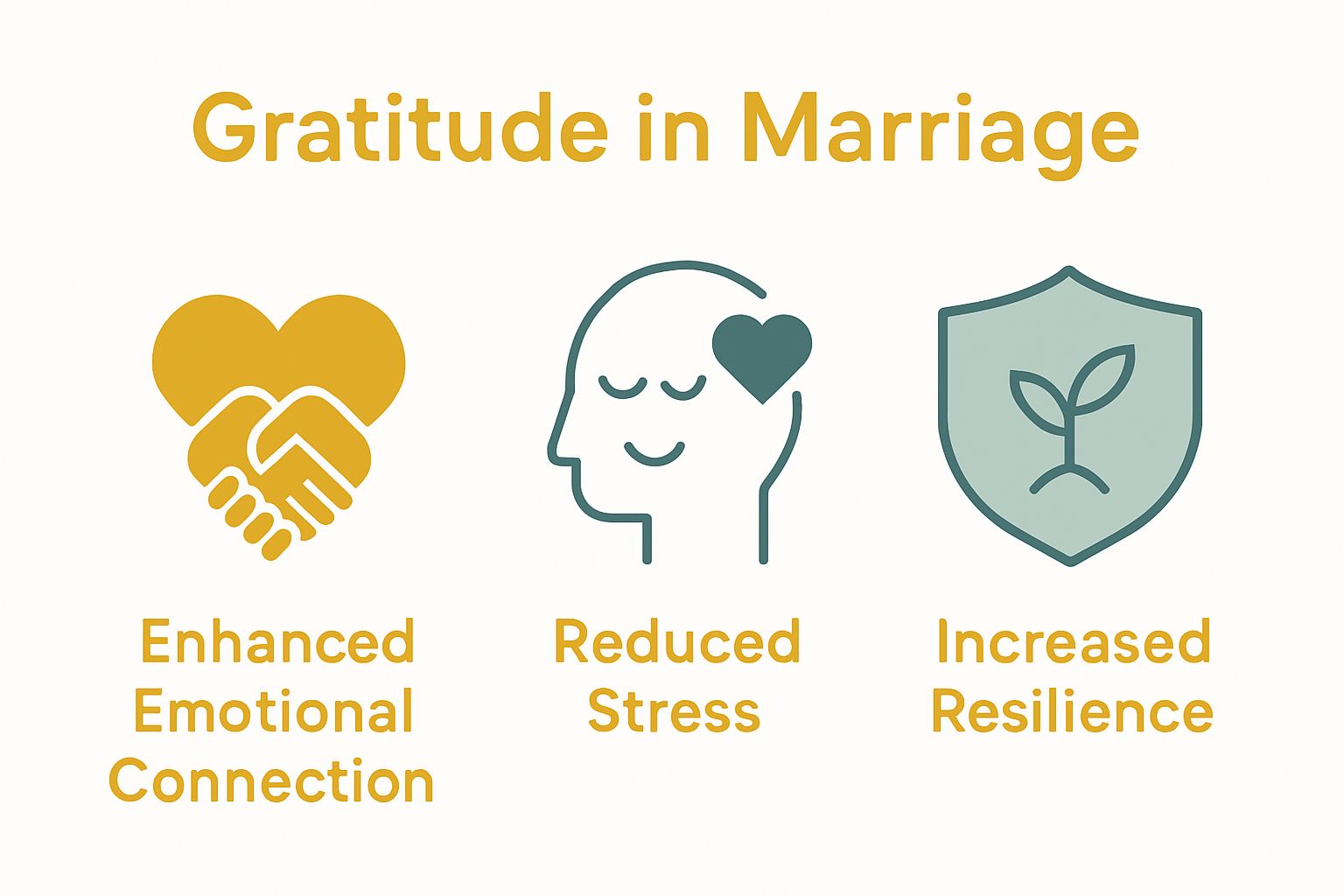
Infographic: psychological benefits of gratitude in marriage


Key neuropsychological impacts include:


  • Enhanced emotional synchronization between partners

  • Increased production of feel good neurotransmitters

  • Reduced stress hormone cortisol levels


Emotional Resilience and Relationship Fortification


Practicing gratitude together serves as a powerful psychological buffer against relationship challenges. Couples who cultivate a gratitude mindset develop greater emotional resilience, enabling them to navigate conflicts more constructively. This practice transforms potential negative interactions into opportunities for deeper understanding and connection. Learn more about healthy marriage habits that complement gratitude practices.


Beyond immediate emotional benefits, shared gratitude creates a long term psychological framework for relationship sustainability. Partners who consistently acknowledge each other’s contributions develop a more robust emotional infrastructure, making their relationship more adaptable and resistant to external stressors.


Ultimately, gratitude functions as a psychological maintenance system for marriages. It recalibrates individual and collective perspectives, shifting focus from perceived shortcomings to genuine appreciation.


The following table organizes the major psychological benefits of practicing gratitude together, making it easier to see at a glance how shared appreciation impacts couples emotionally and neurologically.


BenefitDescription
Enhanced emotional synchronizationPartners become more attuned to each other’s emotions, deepening their emotional connection.
Increased “bonding hormone” (oxytocin)Gratitude actions increase oxytocin, fostering trust, intimacy, and a sense of partnership.
Reduced stress hormone (cortisol)Consistent appreciation helps lower relationship-related stress for both partners.
Greater resilience to challengesCouples can better navigate conflicts and setbacks through the emotional buffer of gratitude.
Long-term relationship satisfactionOngoing gratitude practice maintains higher satisfaction and emotional well-being.

How Gratitude Fosters Stronger Connections Between Partners


Gratitude operates as a powerful relational catalyst, transforming mundane interactions into meaningful exchanges that deepen emotional intimacy. Psychological research from the American Psychological Association reveals that consistent expressions of appreciation create cyclical patterns of mutual investment and emotional connectivity.


Communication and Emotional Transparency


Gratitude serves as a communication bridge, enabling partners to articulate their recognition of each other’s efforts in profound and nuanced ways. When partners feel genuinely seen and appreciated, they become more willing to be vulnerable, sharing deeper emotional landscapes that might otherwise remain unexpressed. This vulnerability creates a feedback loop of trust and openness.


Key communication dynamics facilitated by gratitude include:


  • Breaking down emotional barriers

  • Creating safe spaces for authentic sharing

  • Reducing defensive communication patterns


Rebuilding Relationship Emotional Infrastructure


Beyond communication, gratitude acts as an emotional repair mechanism. Partners who consistently practice appreciation develop the capacity to reframe challenges and setbacks as opportunities for growth. This perspective shift transforms potential conflict zones into moments of mutual understanding. Check out our guide on simple ways to show appreciation to understand practical implementation strategies.


The cumulative effect of sustained gratitude practice is remarkable. It gradually reconstructs relationship dynamics, replacing criticism and resentment with genuine acknowledgment and respect. Partners learn to view each other not through a lens of expectations, but through a perspective of genuine appreciation for individual contributions.


Ultimately, gratitude is more than a technique it is a profound relational philosophy. By consistently choosing to recognize and celebrate each other’s efforts, partners create a dynamic of mutual respect that transcends daily challenges. This approach does not eliminate conflicts but provides a robust emotional framework for navigating them with compassion, understanding, and genuine connection.


The Role of Gratitude in Family Dynamics and Parenting


Gratitude extends far beyond marital interactions, serving as a transformative force in overall family dynamics and parenting approaches. Research published in the National Institutes of Health demonstrates that gratitude significantly influences family cohesion, emotional well-being, and interpersonal relationships.


Intergenerational Emotional Learning


Parents who consistently practice and model gratitude create powerful emotional learning environments for their children. Children observe and internalize these interactions, developing emotional intelligence and empathy through direct exposure. This process of emotional transmission goes beyond verbal instruction, embedding gratitude as a fundamental relational skill that children naturally absorb.


Key developmental impacts of parental gratitude include:


  • Enhanced emotional regulation skills

  • Improved ability to recognize and appreciate others

  • Increased resilience during challenging family interactions


Family Resilience and Conflict Resolution


Gratitude acts as a critical buffer against family stress and potential conflicts. By maintaining a perspective of appreciation, parents can reframe challenging situations, transforming potential negative interactions into opportunities for growth and understanding. Learn more about family leadership that builds respect to complement gratitude practices.


When parents consistently acknowledge each other’s efforts and contributions, they create a supportive ecosystem that models healthy relationship dynamics for their children. This approach does not eliminate family challenges but provides a robust framework for navigating them with empathy, respect, and mutual understanding.


Ultimately, gratitude in parenting is about creating a family culture of appreciation. It transcends individual interactions, becoming a fundamental philosophy that shapes how family members perceive, communicate, and support one another. By prioritizing gratitude, parents can cultivate an environment of emotional safety, mutual respect, and continuous personal growth.


family gratitude parenting


Strategies for Cultivating Gratitude in Your Marriage


Cultivating gratitude requires deliberate practice and intentional communication strategies that transform mundane interactions into meaningful connections. Research from the National Institutes of Health demonstrates that consistent gratitude practices can significantly enhance marital satisfaction and emotional intimacy.


Creating Intentional Appreciation Rituals


Successful gratitude cultivation involves establishing deliberate practices that make appreciation a regular part of relationship dynamics. These rituals transform gratitude from an occasional gesture into a fundamental relationship language.


Partners who consistently create structured opportunities for expressing appreciation develop deeper emotional understanding and connection.


Effective appreciation ritual strategies include:


  • Daily acknowledgment of specific partner contributions

  • Weekly reflection conversations about mutual support

  • Maintaining a shared gratitude journal


Communication Techniques for Genuine Appreciation


Authentic gratitude goes beyond superficial “thank you” statements. It requires vulnerable, specific communication that demonstrates genuine recognition of a partner’s efforts and unique qualities. Partners must learn to articulate appreciation in ways that feel meaningful and deeply personal. Explore our guide on relationship connection rituals to enhance your communication strategies.


The most powerful appreciation involves three critical components: recognizing the specific action, understanding the effort behind it, and expressing the emotional impact. This approach transforms gratitude from a transactional interaction into a profound emotional exchange that reinforces relationship bonds.


Ultimately, gratitude is a skill that requires ongoing practice and commitment. By approaching appreciation as a continuous journey of mutual recognition, couples can create a relationship culture characterized by respect, empathy, and genuine emotional connection.


Here is a table summarizing effective strategies for cultivating gratitude in marriage, highlighting both ritual and communication techniques mentioned in the strategies section.


Strategy TypeExample PracticePurpose
Appreciation RitualDaily acknowledgment of partner contributionsMakes gratitude a consistent habit in daily interactions.
Appreciation RitualWeekly reflection conversationsProvides structured space for mutual appreciation and support.
Appreciation RitualShared gratitude journalEncourages collaborative recognition of positive moments.
Communication TechniqueSpecific acknowledgment of actionsDeepens sincerity and meaning of appreciation.
Communication TechniqueExpressing emotional impactTransforms gratitude from transaction to heartfelt connection.

Ready to Transform Gratitude Into Lasting Connection?


Struggling to turn small moments of gratitude into a powerful connection with your spouse? Many men discover that, even when they know appreciation matters, old habits and lack of clear guidance make true transformation difficult. The article explored how practicing meaningful gratitude can shift your relationship, spark deeper communication, and create unshakeable bonds. If you are searching for practical ways to make gratitude part of your daily life and truly see results in your marriage, Wise Husband has exactly what you need. For daily encouragement and actionable advice, explore Daily Relationship Wisdom and start making these habits second nature.


https://wisehusband.com/


Now is the moment to break out of routine and invest in the marriage you want. Visit Wise Husband for more strategies, guides, and real-world advice designed for men who want to lead with gratitude and build unbreakable trust. Start making small changes today, see the difference, and become the best partner your marriage deserves.


Frequently Asked Questions


How can I practice gratitude in my marriage?


To practice gratitude in your marriage, start by acknowledging specific contributions your partner makes daily. Make a habit of sharing at least one positive statement each day about your spouse to reinforce appreciation and build emotional intimacy.


What are some effective strategies for cultivating gratitude in a relationship?


Effective strategies include creating intentional appreciation rituals, such as weekly reflection conversations or maintaining a shared gratitude journal. Commit to a consistent practice that fosters meaningful interactions and strengthens your emotional connection over time.


How does expressing gratitude affect the emotional climate of a marriage?


Expressing gratitude enhances the emotional climate by fostering trust and reducing conflict. Aim to regularly communicate your appreciation, which can lead to improved relationship satisfaction and emotional resilience within 30 days.


What role does gratitude play in enhancing communication between partners?


Gratitude serves as a communication bridge that encourages vulnerability and deeper emotional sharing. By regularly expressing appreciation, partners can create safe spaces for authentic conversations, which can reduce misunderstandings and promote a supportive environment.


How can I teach my children about the importance of gratitude in relationships?


You can teach children about gratitude by modeling appreciative behaviors within your family. Involve them in daily discussions about what they are thankful for, which strengthens their emotional intelligence and builds a foundation for recognizing and valuing contributions in their own relationships.


How can gratitude improve my marriage in times of conflict?


Practicing gratitude during conflicts can shift your focus from blame to understanding, transforming negative interactions into opportunities for growth. Commit to acknowledging each other’s efforts and reframing challenges; this approach can significantly enhance your ability to navigate disagreements constructively.


Get the Wise Husband Book


https://wisehusband.com/understanding-gratitude-in-marriage/?fsp_sid=1341

Friday, 10 October 2025

10 Essential Tips for First Time Dads

Tips for First Time Dads


Are you looking for tips for first time dads? Every first-time dad feels the pressure to step up, but most have no clue where to even begin. Here is the twist. Research shows that involved fathers can boost their children’s IQ by up to 12 points compared to less engaged dads. So the real secret is not about having all the answers from day one, but about showing up, learning as you go, and letting small actions stack into life-changing results.

Table of Contents

Quick Summary

TakeawayExplanation
Embrace your role as a partnerEngage actively in parenting and share all responsibilities with your spouse for a stronger family dynamic.
Communicate openly with your spouseFoster emotional transparency through effective communication to manage stress and deepen your connection.
Educate yourself on parenting basicsGain knowledge on child development and care techniques to build confidence and competence in parenting.
Create a support network of other dadsConnect with other fathers for emotional validation, advice, and shared experiences to enhance your parenting journey.
Prioritize your health and well-beingMaintain physical and mental health to ensure you can be the best father and partner for your family.

1: Embrace Your Role as a Partner

Becoming a first-time dad is more than just biological reproduction. It’s about understanding and actively participating in a profound partnership with your spouse. Your role extends far beyond financial provision or occasional childcare.

According to Family Science Research Institute, involved fathers create significant positive impacts on child development and family dynamics. This means your engagement isn’t optional - it’s essential.

Key aspects of embracing your partner role include:

  • Emotional availability beyond traditional provider stereotypes

  • Active listening and genuine communication with your partner

  • Shared responsibility in childcare and household management

Practical involvement means being present physically and emotionally. This includes changing diapers, participating in midnight feedings, attending pediatrician appointments, and providing consistent emotional support to both your child and partner.

Your partnership is a dynamic collaboration, not a hierarchical structure. Learn more about building healthy relationship dynamics to strengthen your family’s foundation.

Remember, great fatherhood isn’t about perfection. It’s about consistent effort, genuine commitment, and willingness to grow alongside your family. Every small action of support and understanding contributes to creating a nurturing environment for your child’s development.

2: Communicate Openly with Your Spouse

Open communication is the cornerstone of a strong partnership, especially during the challenging transition to parenthood. As a first-time dad, your ability to communicate effectively with your spouse will determine the quality of your family’s emotional landscape.

Research from the Journal of Marriage and Family demonstrates that couples who communicate transparently experience significantly lower stress levels during early parenting stages.

Effective communication involves more than just talking. It requires active listening, empathy, and vulnerability. Some critical communication strategies include:

  • Express your feelings without defensiveness

  • Listen to understand, not just to respond

  • Share household responsibilities and parenting challenges openly

Men often struggle with emotional expression, falling into traditional patterns of suppressing vulnerability. Breaking these communication barriers is crucial. Your partner needs to hear about your fears, challenges, and emotional experiences.

Explore our comprehensive guide on communication in marriage to develop deeper connection strategies. Remember, communication is a skill that improves with practice. You won’t be perfect immediately, but consistent effort matters more than flawless execution.

Practical tips include scheduling regular check-ins, creating a judgment-free dialogue space, and being honest about your limitations. Parenthood is a shared journey, and transparent communication transforms challenges into opportunities for mutual growth and understanding.

3: Educate Yourself on Parenting Basics

Parenthood is a profound journey that requires continuous learning and preparation. As a first-time dad, your commitment to understanding child development can transform your parenting experience from overwhelming to empowering.

According to American Academy of Pediatrics, understanding developmental milestones is crucial for providing appropriate care and support. Knowledge isn’t just power - it’s a fundamental tool for effective parenting.

Key areas to focus on include:

  • Infant care techniques like proper feeding and safe sleep practices

  • Child development stages and age-appropriate interactions

  • Emotional intelligence and nurturing communication skills

Don’t rely solely on instinct. Read credible parenting books, attend prenatal classes, and seek advice from experienced parents. Modern resources offer extensive insights into child psychology and practical parenting strategies.

Discover practical parenting strategies for new dads to build your confidence and competence. Remember, being a great dad is a skill you develop, not a talent you’re born with.

Technology and online resources have made parenting education more accessible than ever. Leverage podcasts, online courses, and reputable websites to continuously expand your knowledge. Your willingness to learn demonstrates commitment to your child’s well-being and sets a powerful example of lifelong learning.

4: Create a Support Network of Other Dads

Becoming a first-time dad can feel isolating, but you don’t have to navigate this journey alone. Building a support network of other fathers provides emotional strength, practical advice, and shared understanding that no parenting book can fully capture.

Research from the American Psychological Association highlights that fathers with strong peer networks experience lower stress levels and more confidence in parenting roles.

Strategies for creating your dad support network include:

  • Join local dad groups in your community

  • Participate in online parenting forums

  • Attend fathers’ meetups and parenting workshops

Vulnerability is strength, not weakness. Sharing experiences with men who understand your challenges creates profound connections. These networks offer more than just advice - they provide emotional validation and practical problem-solving strategies.

Learn how to cultivate meaningful connections with other dads and transform your parenting experience. Remember, great fatherhood isn’t about doing everything perfectly, but about growing together and supporting one another.

Don’t limit yourself to traditional meetups. Explore workplace dad groups, community center programs, and digital platforms designed specifically for fathers. Your support network can include experienced fathers, new dads, and mentors who can offer diverse perspectives on parenting challenges.

5: Prioritize Your Health and Well-being

As a first-time dad, your physical and mental health isn’t a luxury - it’s a critical responsibility for your family’s well-being. Neglecting self-care doesn’t make you a better father. In fact, it undermines your ability to be present and engaged.

Centers for Disease Control and Prevention emphasizes that fathers who maintain personal health are more effective parents and partners.

Comprehensive health strategies include:

  • Regular physical exercise to maintain energy levels

  • Mental health check-ins and stress management techniques

  • Adequate sleep and nutrition

Burnout is real, and fathers are particularly susceptible. The transition to parenthood can create physical and emotional strain that requires intentional self-maintenance. This means scheduling regular medical check-ups, managing stress, and creating boundaries.

Discover strategies for maintaining personal wellness as a new dad to ensure you’re showing up as your best self. Remember, taking care of yourself isn’t selfish - it’s a fundamental aspect of responsible fatherhood.

Consider mental health as important as physical health. Professional counseling, mindfulness practices, and connecting with support networks can provide crucial emotional resilience. Your children need a healthy, balanced father more than a perfect one. Prioritizing your well-being sets a powerful example of self-respect and emotional intelligence for your family.

6: Learn About Baby Care Essentials

Confidence in baby care doesn’t emerge overnight. Practical knowledge and hands-on experience are essential for first-time dads navigating the complex world of infant care. Understanding fundamental care techniques transforms anxiety into competence.

American Academy of Pediatrics recommends fathers actively participate in direct infant care to develop critical bonding skills and parental competence.

Critical baby care skills include:

  • Safe diaper changing techniques

  • Proper infant feeding and burping methods

  • Understanding infant sleep patterns and safety

Technical proficiency matters, but emotional connection is paramount. Approach baby care as an opportunity to build deep, meaningful connections with your newborn. Each diaper change, feeding session, and gentle interaction represents a chance to communicate love and security.

Explore comprehensive baby care techniques for new dads to build your confidence. Don’t be intimidated by initial awkwardness. Every expert was once a beginner, and your willingness to learn is what truly defines great fatherhood.

Consider attending hands-on parenting workshops, watching instructional videos, and practicing techniques with your partner. Remember that muscle memory develops through consistent practice. Your initial fumbles will quickly transform into smooth, confident care routines that will strengthen your bond with your child.

7: Spend Quality Time with Your Child

Quality time isn’t about perfection or elaborate plans. It’s about intentional presence and genuine connection with your child. Every moment matters, from simple diaper changes to playful interactions.

Child Development Research Institute confirms that consistent, engaged fathers significantly impact child developmental outcomes.

Strategies for meaningful engagement include:

  • Uninterrupted daily interaction without digital distractions

  • Active listening and responsive play

  • Creating routine bonding moments

Physical proximity isn’t connection. True quality time requires emotional availability and genuine interest in your child’s world. This means putting away smartphones, making eye contact, and being fully present.

Discover relationship rituals to connect amid life’s chaos and strengthen your family bonds. Remember, your child doesn’t need a perfect father. They need a present, authentic one.

Consider integrating small, consistent interactions into daily routines. Sing during diaper changes, narrate your activities, or simply hold your baby. These seemingly mundane moments create the foundation of lifelong emotional connection. Your consistent, loving presence is the most powerful gift you can offer your child.

8: Master the Art of Diaper Changing

Diaper changing might seem intimidating, but it’s an essential skill that transforms from daunting to routine with practice. Confidence comes through repetition, and every diaper change is an opportunity to bond with your child.

Centers for Disease Control and Prevention emphasizes the importance of proper hygiene and technique during infant care routines.

Essential diaper changing considerations include:

  • Create a safe, organized changing station

  • Have all supplies within immediate reach

  • Practice gentle, swift movements

Efficiency and gentleness are key. Approach diaper changing not as a chore, but as an intimate interaction. Maintain eye contact, speak softly, and use this time to communicate affection. Your calm demeanor will help your baby feel secure during the process.

Learn practical strategies for seamless infant care to build your confidence. Remember that mistakes happen, and each diaper change is an opportunity to improve your technique.

Consider practicing when your partner is nearby for initial guidance. Watch instructional videos, ask experienced parents for tips, and don’t be afraid to ask questions. Your willingness to learn and participate actively in childcare demonstrates commitment to your family’s well-being.

9: Balance Work and Family Life

Balancing professional responsibilities with family commitments is a complex challenge for modern fathers. Intentional strategies are crucial to ensure you’re present both at work and at home without compromising your performance or family connections.

Harvard Business Review reports that successful fathers who maintain work-life harmony demonstrate higher job satisfaction and stronger family relationships.

Key strategies for effective balance include:

  • Set clear boundaries between work and home

  • Create dedicated family time without digital interruptions

  • Communicate expectations with your partner and workplace

Technology can be both a blessing and a curse. While remote work offers flexibility, it also blurs professional and personal boundaries. Be deliberate about creating transition rituals that help you mentally shift between work and family modes.

Discover practical approaches to balancing work and marriage to maintain harmony in all aspects of life. Remember, balance isn’t about perfect equal time, but about meaningful engagement in both domains.

Consider negotiating flexible work arrangements, using productivity techniques to maximize work efficiency, and being fully present during family moments. Your ability to navigate these competing demands demonstrates true leadership both at home and in your professional life.

10: Enjoy the Journey of Fatherhood

Fatherhood is not a destination but a continuous, transformative journey filled with unexpected moments of joy, challenge, and profound growth. Embracing this perspective allows you to navigate parenthood with curiosity, compassion, and genuine wonder.

Child Development Research Institute emphasizes that fathers who approach parenting with joy and curiosity create more resilient, emotionally intelligent children.

Key principles for enjoying fatherhood include:

  • Embrace imperfection and learn from mistakes

  • Celebrate small victories and moments of connection

  • Maintain a sense of humor during challenging times

Your attitude shapes your experience. Each diaper change, sleepless night, and messy moment is an opportunity for growth and connection. Perfection is not the goal - genuine, loving presence is what matters most.

Discover the essential role of fathers in family dynamics and understand the profound impact of your journey. Remember that fatherhood is less about doing everything right and more about showing up consistently with love and authenticity.

Treat this journey as an adventure of continuous learning. Be patient with yourself, present with your child, and open to the transformative power of fatherhood. Your willingness to grow, adapt, and love unconditionally will be the greatest gift you can offer your child.

Below is a comprehensive table summarizing the key tips, benefits, and core actions for first-time dads covered in this article.

Tip/SectionKey Actions & ConceptsBenefits for Dads & Families
Embrace Your Role as a PartnerActively participate, listen, share responsibilities, foster dynamic partnershipStronger family bonds, positive child development
Communicate Openly with Your SpousePractice active listening, share challenges, express vulnerabilityReduced stress, improved emotional connection
Educate Yourself on Parenting BasicsLearn child development, attend classes, seek advice, read credible resourcesIncreased confidence, effective parenting, preparedness
Create a Support Network of Other DadsJoin dad groups/forums, share experiences, seek mentorshipEmotional support, reduced isolation, practical advice
Prioritize Your Health and Well-beingExercise, manage stress, prioritize mental health, balance self-careGreater energy, emotional resilience, role modeling
Learn About Baby Care EssentialsMaster diapering, feeding, sleep routines; attend workshops; practice techniquesIncreased competence, improved bonding with child
Spend Quality Time with Your ChildEngage daily, minimize distractions, foster responsive playDeeper connections, positive child developmental gains
Master the Art of Diaper ChangingSet up organized station, practice techniques, prioritize hygiene and gentlenessBuilds confidence, smoother routines, bonding moments
Balance Work and Family LifeSet boundaries, schedule family time, communicate with employer and partnerBetter work satisfaction, stronger relationships
Enjoy the Journey of FatherhoodEmbrace imperfection, celebrate small wins, keep a sense of humorGreater joy, resilience, positive family atmosphere

Ready to Be a Confident First-Time Dad?

Becoming a new father brings excitement and uncertainty. If you feel overwhelmed by the pressure to support your spouse, communicate better, and master these parenting basics, you are not alone. Many first-time dads worry about work-life balance, building true partnerships, and growing into their roles as loving leaders. This moment is your opportunity to learn, lead, and connect for your family’s future.

Tips for First Time Dads | Wise Husband

Discover step-by-step guidance, proven relationship tips, and the supportive community you need at WiseHusband.com. Take the next step toward being the man your marriage and your child need. Visit our homepage now to start your journey and unlock even more practical parenting advice for dads. Your family deserves your best version today.

Frequently Asked Questions

What should first-time dads focus on to support their partner during pregnancy?

Becoming a first-time dad involves understanding the importance of emotional availability and active participation in the relationship. Focus on sharing responsibilities in childcare, communicating openly, and providing emotional support to your partner.

How can I improve my communication skills with my partner during parenting?

Improving communication involves actively listening, expressing your feelings without defensiveness, and openly discussing parenting challenges. Regular check-ins and creating a judgment-free dialogue space can also foster better understanding and connection.

What are some essential skills I need to learn for baby care as a first-time dad?

Key skills include safe diaper changing techniques, proper feeding methods, and understanding infant sleep patterns. Educating yourself on these basics can build confidence and improve your ability to bond with your baby.

How can I balance work and family life effectively as a new dad?

To balance work and family, set clear boundaries between work and home environments, dedicate uninterrupted family time, and communicate expectations with your partner and employer. Creating transition rituals can help you switch between professional and personal roles more smoothly.


Get the Wise Husband Book


https://wisehusband.com/10-essential-tips-for-first-time-dads/?fsp_sid=1332

Husband Archetypes From Wife’s View: Complete Guide

Did you know that over 60 percent of couples feel their relationship style doesn’t fit traditional husband stereotypes? Understanding husban...