Friday, 26 September 2025

Understanding Healthy Marriage Boundaries for Lasting Love

Healthy Marriage Boundaries


Every marriage needs clear boundaries, yet many couples never actually talk about what those should look like. Most think boundaries are about walls or rules, making love feel strict. But studies actually show that relationships with strong boundaries see much higher levels of satisfaction and trust. Turns out, healthy boundaries are what let couples protect their own space while building a better connection together.


Table of Contents


Quick Summary


TakeawayExplanation
Establish clear boundaries for emotional safetyHealthy boundaries protect individual identities and foster mutual respect in a partnership.
Communicate needs openly and vulnerablyEffective communication about personal needs reduces misunderstandings and reinforces trust.
Recognise and address boundary violationsIdentifying subtle breaches is crucial to prevent conflicts and maintain relationship integrity.
Engage in regular relationship check-insConsistent communication fosters emotional connection and ensures boundaries evolve with the relationship.
Value mutual respect and trustBuilding a respectful environment enhances emotional security and strengthens the partnership over time.

Defining Healthy Marriage Boundaries and Their Importance


Healthy marriage boundaries represent the foundational guidelines that define acceptable behaviours, emotional limits, and personal respect within an intimate partnership. These boundaries are not rigid walls but flexible frameworks that protect individual identities while nurturing mutual understanding and connection.


Understanding the Core Concept of Marriage Boundaries


At its essence, healthy marriage boundaries are psychological and emotional guidelines that partners establish to maintain individual autonomy while fostering intimacy. Research from the International Journal of Environmental Research and Public Health highlights that effective boundaries contribute significantly to relationship satisfaction and personal well-being.


Key characteristics of healthy marriage boundaries include:


  • Mutual respect for individual needs and personal space

  • Clear communication about comfort levels and expectations

  • Ability to say “no” without feeling guilty or experiencing punishment

  • Protecting emotional and physical personal limits


Why Boundaries Matter in Marriage


Boundaries are not about creating distance but establishing a framework of mutual respect. They serve multiple crucial functions in maintaining relationship health:
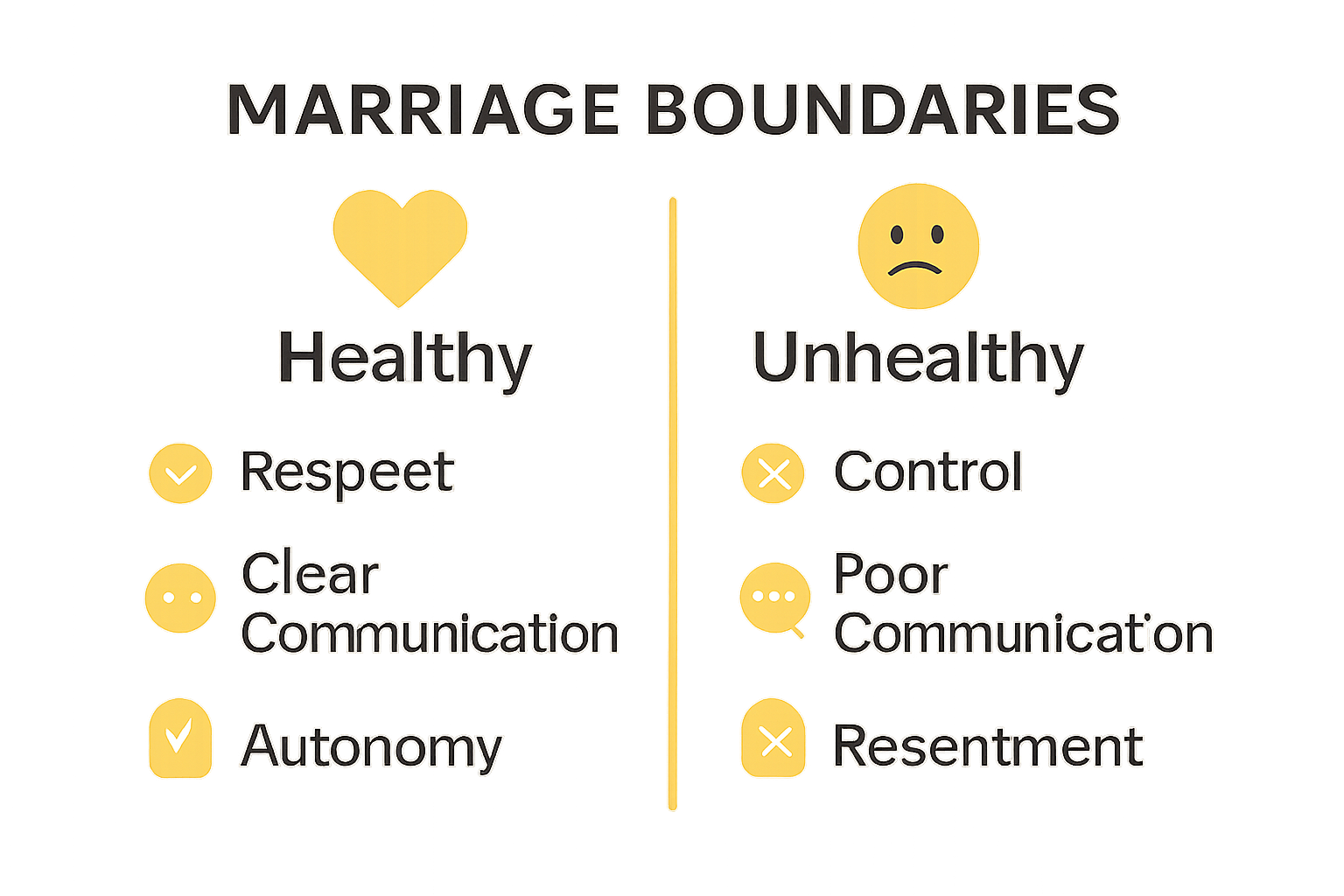

Infographic comparing healthy versus unhealthy marriage boundaries


  • Preventing resentment by ensuring individual needs are acknowledged

  • Promoting personal growth and independence within the relationship

  • Reducing potential conflicts by establishing clear expectations


In practical terms, boundaries might involve agreeing on financial decisions, respecting privacy, managing external relationships, or defining acceptable communication styles. Learn more about building a strong marital foundation with our guide on healthy marriage principles.


Understanding and implementing healthy marriage boundaries requires ongoing dialogue, mutual empathy, and a commitment to preserving both individual and collective well-being. It is not about restricting love but creating a sustainable, respectful partnership where both individuals can thrive.


The Role of Communication in Establishing Boundaries


Communication serves as the fundamental mechanism through which marriage boundaries are negotiated, understood, and maintained. It transforms abstract concepts of personal limits into tangible, shared understanding between partners.


Transparent Communication as a Boundary Foundation


Effective boundary communication requires more than simple dialogue it demands vulnerability, active listening, and genuine mutual respect. Research from the National Institutes of Health emphasises that clear communication about individual needs and expectations prevents misunderstandings and reduces potential relationship conflicts.


Key elements of effective boundary communication include:


  • Expressing personal needs without accusation or blame

  • Using “I” statements that describe feelings and experiences

  • Listening with empathy and genuine curiosity

  • Acknowledging your partner’s perspective without becoming defensive


The Language of Emotional Safety


Boundary communication is fundamentally about creating emotional safety. Partners must develop a shared language that allows them to discuss sensitive topics without triggering defensive reactions. This involves creating an environment where both individuals feel heard, validated, and respected.


Strategic communication approaches involve:


  • Choosing appropriate timing for difficult conversations

  • Maintaining a calm and non-confrontational tone

  • Demonstrating willingness to compromise

  • Recognising and respecting each other’s emotional limits


Explore our comprehensive guide on understanding healthy marriage communication to develop more nuanced communication skills.


Ultimately, communication about boundaries is an ongoing process that requires patience, empathy, and a genuine commitment to mutual understanding. It is not about winning arguments but about creating a partnership where both individuals feel respected, heard, and emotionally secure.


Understanding Emotional and Physical Boundaries


Emotional and physical boundaries represent interconnected layers of personal protection within marriage, defining individual comfort zones and preserving personal autonomy while maintaining intimate connection.


The Essence of Emotional Boundaries


Emotional boundaries protect an individual’s psychological well-being by establishing limits around personal feelings, experiences, and vulnerabilities. Research from the National Institutes of Health highlights that these boundaries are crucial for maintaining individual identity and relationship satisfaction.


Key characteristics of healthy emotional boundaries include:


  • Recognising and communicating personal emotional needs

  • Protecting oneself from manipulation or emotional exploitation

  • Maintaining individual identity within the relationship

  • Respecting partner’s emotional experiences without absorbing them completely


Physical Boundaries in Marital Intimacy


Physical boundaries extend beyond mere physical touch, encompassing personal space, privacy, and bodily autonomy. They represent a critical aspect of mutual respect and consent within marriage.


Important considerations for physical boundaries involve:


  • Establishing comfort levels with physical affection

  • Respecting personal space and privacy

  • Seeking explicit consent for intimate interactions

  • Understanding and honouring individual physical comfort zones


Learn more about developing deeper emotional understanding in marriage to strengthen your connection.


Ultimately, emotional and physical boundaries are dynamic frameworks that evolve with mutual understanding, requiring continuous communication, empathy, and respect. They are not restrictions but protective mechanisms that allow partners to maintain individual integrity while fostering a deeply connected relationship.


The following table compares emotional and physical boundaries in marriage, summarising their definition and key characteristics to clarify the differences and highlight their complementary roles.


Boundary TypeDefinitionKey Characteristics
Emotional BoundariesLimits protecting psychological well-being, feelings, and vulnerabilityRecognising own emotional needs, communicating openly, avoiding manipulation, preserving identity
Physical BoundariesLimits concerning personal space, privacy, and body autonomyRespecting personal space, seeking consent, defining comfort with touch, maintaining privacy

Creating Mutual Respect and Trust through Boundaries


Mutual respect and trust form the cornerstone of successful marriages, emerging organically through intentional boundary establishment and consistent, authentic interactions between partners.


The Trust Architecture in Marriage


Trust is not a static condition but a dynamic process continuously reinforced through predictable, respectful behaviors. Research from the U.S. National Library of Medicine emphasises that establishing clear boundaries is fundamental to cultivating mutual respect and creating a safe relational environment.


Key elements of building trust through boundaries include:


  • Demonstrating consistent reliability and follow-through

  • Maintaining transparency in communication

  • Honoring commitments and promises

  • Showing genuine vulnerability and emotional availability


Respect as a Reciprocal Practice


Respect in marriage transcends superficial politeness it requires active acknowledgment of each partner’s individual worth, autonomy, and unique perspective. This means creating an environment where both individuals feel genuinely heard, validated, and appreciated.


Strategic approaches to fostering mutual respect involve:


  • Active and empathetic listening


  • Validating partner’s feelings without judgment


  • Avoiding dismissive or contemptuous language


  • Celebrating individual differences


Explore our comprehensive guide on building profound trust in marriage to deepen your relational understanding.


Ultimately, mutual respect and trust emerge from a deliberate, compassionate commitment to understanding and supporting each other’s emotional landscapes. It is an ongoing journey of growth, requiring patience, humility, and genuine investment in the partnership.


marriage trust respect


Marriage inevitably presents complex challenges that test relationship boundaries, requiring adaptive strategies, emotional intelligence, and consistent mutual commitment to maintaining respect and individual autonomy.


Identifying Boundary Violations


Boundary violations emerge subtly, often disguised as seemingly innocent interactions. Research from the University of Southern Maine highlights the critical importance of recognising and addressing these potential breaches before they escalate into significant relationship conflicts.


Common boundary violation indicators include:


  • Persistent disregard for expressed personal limits

  • Emotional manipulation or guilt-tripping

  • Unilateral decision-making without partner consultation

  • Invasive questioning or controlling behaviors


Proactive Boundary Reinforcement


Maintaining healthy boundaries requires ongoing, intentional effort from both partners. This involves developing robust communication skills, emotional awareness, and a shared commitment to mutual respect.


Strategic approaches for boundary maintenance involve:


  • Regular, honest relationship check-ins

  • Creating safe spaces for vulnerability

  • Practicing assertive yet compassionate communication

  • Willingness to renegotiate boundaries as relationship evolves


Discover effective strategies for resolving marital conflicts and strengthening your relationship foundations.


Navigating marriage’s complex emotional landscape demands patience, empathy, and a profound understanding that boundaries are not barriers but bridges to deeper intimacy and mutual understanding. They represent a dynamic, evolving framework that protects individual integrity while nurturing collective connection.


This table outlines typical boundary violation indicators and corresponding proactive boundary reinforcement strategies, assisting couples in recognising issues and taking effective action to maintain healthy boundaries.


Boundary Violation IndicatorProactive Boundary Reinforcement Strategy
Disregard for expressed personal limitsRegular, honest relationship check-ins
Emotional manipulation or guilt-trippingCreating safe spaces for vulnerability
Unilateral decision-makingPractising assertive yet compassionate communication
Invasive or controlling behavioursWillingness to renegotiate boundaries as relationship evolves

Start Building Healthy Marriage Boundaries Today


Struggling to keep your marriage strong while protecting your own sense of self? Many men feel lost when it comes to establishing healthy boundaries with their partner. As highlighted in our article, without clear limits and honest conversations, resentment builds and intimacy suffers. It is tough to know where to begin if you have never learned how to set respectful, loving boundaries before.


Explore Daily Wisdom for real-life advice on communication and personal growth.


https://wisehusband.com/


Now is the time to transform your relationship. Wise Husband delivers practical steps you can act on right away. Discover proven tools, mindsets, and strategies tailored for men who are ready to create lasting partnership. Take your next step towards a healthier and more confident marriage by learning how to embody healthy leadership and deeper trust. Get started with Wise Husband and become the husband your relationship deserves.


Frequently Asked Questions


What are healthy marriage boundaries?


Healthy marriage boundaries are the guidelines that define acceptable behaviours, emotional limits, and personal respect within a partnership. They protect individual identities while nurturing mutual understanding and connection.


Why are boundaries important in a marriage?


Boundaries are crucial in a marriage to prevent resentment, promote personal growth, and reduce potential conflicts. They ensure that individual needs are acknowledged and respected, allowing for a healthier relationship.


How can I communicate my boundaries effectively with my partner?


To communicate boundaries effectively, use ‘I’ statements to express your feelings, listen actively, and show empathy. It’s essential to create a safe environment for discussion and avoid defensive reactions.


What are examples of emotional and physical boundaries in marriage?


Emotional boundaries involve recognising and communicating personal emotional needs while preserving individual identity. Physical boundaries encompass personal space, privacy, and consent regarding physical touch and intimacy.


Get the Wise Husband Book


https://wisehusband.com/understanding-healthy-marriage-boundaries/?fsp_sid=1082

Thursday, 25 September 2025

Understanding Remarrying After Divorce: Key Insights

Remarrying After Divorce


Remarrying after a divorce might sound like a fresh start, but the stats tell a deeper story. More than 60 percent of second marriages in Australia end in divorce. That seems shocking, right? Most people expect that wisdom from the first marriage would guarantee smoother sailing, but the reality is, remarriage comes with its own set of twists and emotional hurdles that no one sees coming.


Table of Contents


Quick Summary


TakeawayExplanation
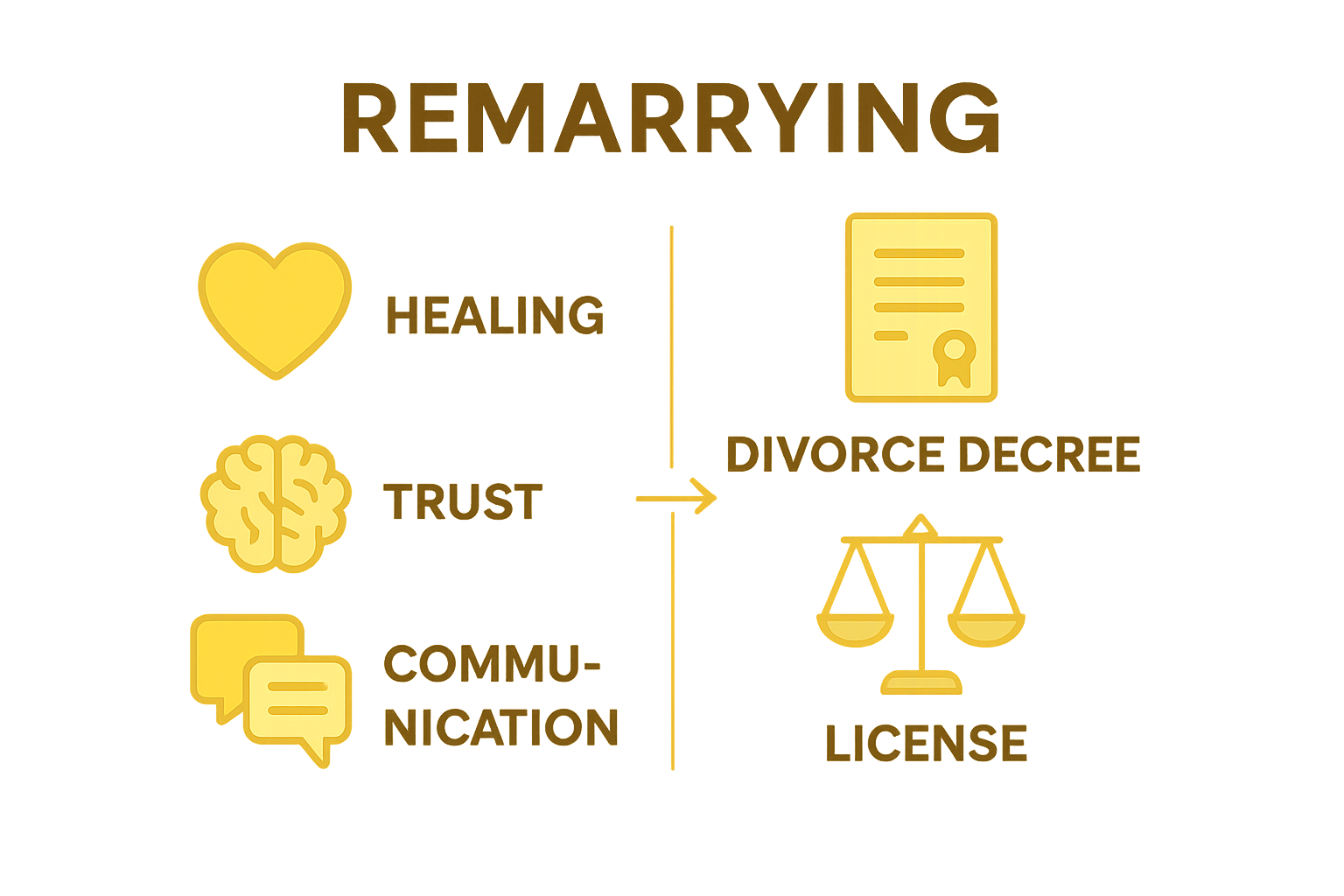
Emotional healing is essential before remarriageAddressing past traumas and developing emotional maturity is crucial for successful new relationships.
Understand legal prerequisites for remarriageBe aware of necessary documentation, including divorce certificates, before planning to remarry.
Children require support during family transitionsBe mindful of the emotional complexities children face adapting to a new family structure.
Cultural norms influence remarriage perceptionsRecognize how cultural attitudes can impact personal decisions and societal expectations around remarriage.
Commit to building healthy relationshipsFocus on clear communication, trust-building, and emotional boundaries to develop strong, lasting partnerships.

What Remarrying After Divorce Means


Remarrying after divorce represents a complex emotional and legal journey that involves rebuilding personal relationships and navigating significant life transitions. Unlike first marriages, remarriages carry unique psychological and practical considerations that require deeper understanding and intentional preparation.


The Emotional Landscape of Remarriage


Remarriage is not simply about finding a new partner but represents a profound process of healing, personal growth, and renewed hope. Research from the National Institutes of Health indicates that individuals who successfully remarry often demonstrate remarkable resilience and emotional maturity.


Key emotional considerations in remarriage include:


  • Processing past relationship trauma

  • Developing healthier communication patterns

  • Building trust after previous relationship challenges

  • Managing potential emotional baggage from previous marriages


Remarrying involves more than emotional readiness. It requires careful navigation of legal and practical challenges. Individuals must consider:


  • Financial implications of merging households

  • Potential complexities with child custody arrangements

  • Updating legal documents and estate planning

  • Establishing new family dynamics with blended families


The decision to remarry is deeply personal and requires comprehensive self-reflection. Economic stability, emotional readiness, and a genuine commitment to building a healthy partnership are critical factors in successful remarriages. Understanding these nuanced dimensions helps individuals approach remarriage with realistic expectations and genuine hope for a fulfilling future.


Below is a table comparing the emotional, legal, and family considerations when remarrying after divorce in Australia. This summary helps clarify the distinct challenges involved in each domain.


AspectKey Considerations
EmotionalHealing from past trauma, developing trust, addressing emotional baggage
LegalSecuring divorce decree, preparing documentation, meeting all legal prerequisites
Family DynamicsSupporting children, redefining roles, blending families, managing loyalty conflicts
CulturalUnderstanding social acceptance, religious views, and community expectations
PracticalFinancial planning, estate updates, custody arrangements, merging households

Ultimately, remarrying after divorce represents a courageous step towards personal healing and potential long-term companionship, acknowledging past experiences while remaining open to new possibilities.


Emotional and Psychological Aspects of Remarrying


Remarrying involves profound psychological transformations that extend far beyond legal and social transitions. Individuals navigating this complex emotional landscape must develop heightened self-awareness and emotional resilience to create successful subsequent partnerships.


Psychological Healing and Personal Growth


Previous relationship experiences significantly shape an individual’s approach to remarriage. Research from the National Institutes of Health indicates that successful remarriage often correlates with substantial personal healing and psychological maturation.


Key psychological considerations include:


  • Recognizing and addressing unresolved emotional trauma

  • Developing healthier attachment styles

  • Learning from previous relationship patterns

  • Cultivating emotional intelligence


Remarriage introduces complex emotional dynamics that require intentional navigation. Emotional baggage from previous marriages can profoundly impact new relationships, necessitating deliberate strategies for emotional management.


Individuals must be prepared to:


  • Manage potential trust issues

  • Communicate transparently about past experiences

  • Establish clear emotional boundaries

  • Practice vulnerability with measured caution


Psychologically, remarriage represents an opportunity for profound personal transformation. Learn more about marriage and mental health to gain deeper insights into emotional resilience and relationship dynamics.


Successful remarriage demands emotional courage, self-reflection, and a genuine commitment to personal growth. By understanding and addressing underlying psychological patterns, individuals can create more meaningful, resilient partnerships that transcend previous relationship limitations.


Remarrying after divorce involves complex legal procedures that extend beyond emotional readiness. Legal compliance is crucial to ensure the validity and recognition of a subsequent marriage, requiring careful navigation of regulatory requirements and documentation.


Divorce Finalization Prerequisites


Legal research from the Centers for Disease Control highlights critical legal steps individuals must complete before remarrying. The fundamental requirement is obtaining a final divorce decree, which legally terminates the previous marriage.


Key legal prerequisites include:


  • Obtaining an official divorce certificate

  • Waiting for mandatory post-divorce waiting periods

  • Ensuring complete legal dissolution of previous marriage

  • Verifying no legal impediments to remarriage


Legal documentation plays a pivotal role in remarriage processes. Individuals must meticulously prepare and present specific documents to validate their eligibility for a new marriage.


Critical documentation requirements involve:


  • Presenting original divorce decree

  • Providing government issued identification

  • Obtaining marriage license from appropriate authorities

  • Ensuring all legal names are consistent across documents


Learn more about understanding marriage legal requirements to comprehensively prepare for your legal remarriage journey.


Successful remarriage demands not just emotional readiness but rigorous legal preparation.


Comparison chart of emotional and legal steps to remarriage By understanding and adhering to legal frameworks, individuals can ensure their new union is recognized, protected, and established on solid legal foundations.


Impact on Children and Family Dynamics


Remarriage introduces complex emotional and structural transformations for children, fundamentally reshaping family relationships and psychological landscapes. Children’s adaptation to new family configurations requires nuanced understanding and strategic emotional support.


Psychological Adjustment Challenges


Research published in the International Journal of Environmental Research and Public Health reveals the intricate psychological dynamics children experience during parental remarriage. The transition involves significant emotional processing and potential developmental challenges.


Key psychological challenges include:


  • Navigating loyalty conflicts between biological and stepparents

  • Processing complex emotional responses to family restructuring

  • Managing potential feelings of displacement or rejection

  • Adapting to new family roles and relationships


Family Relationship Reconfiguration


Remarriage fundamentally transforms family dynamics, requiring intentional relationship building and emotional intelligence from all family members. Successful integration depends on creating supportive, inclusive family environments.


Critical factors in successful family adaptation involve:


  • Establishing clear communication channels

  • Developing mutual respect among family members

  • Creating consistent parenting approaches

  • Acknowledging and validating individual emotional experiences


Explore strategies for understanding family relationship dynamics to help navigate these complex transitions effectively.


Ultimately, children’s emotional well-being during remarriage depends on compassionate, patient, and intentional approaches that prioritize their psychological safety and sense of belonging. By recognizing and addressing the multifaceted challenges, families can transform potential disruption into opportunities for growth and deeper connection.


The table below outlines common psychological and family challenges children may face with parental remarriage, alongside effective support strategies to help mitigate these issues.


ChallengeSupport Strategy
Loyalty conflictsEncourage open communication; avoid forcing allegiances
Emotional displacement/rejectionOffer reassurance and validate feelings
Adapting to new family rolesCreate consistent routines; clarify expectations
Processing family restructuringBe patient; provide opportunities for discussion
Integrating with stepparentsFoster respectful relationships; take gradual steps
Managing change and uncertaintyProvide emotional stability; involve children in transitions

blended family dynamics


Cultural Perspectives on Remarrying After Divorce


Cultural frameworks profoundly shape societal attitudes toward remarriage, influencing individual experiences and perceptions of relationship reconstruction after divorce. Cultural context serves as a critical lens through which remarriage is interpreted, evaluated, and navigated.


Social Normative Influences


Research exploring cultural values and relationship dynamics reveals how deeply embedded cultural norms impact remarriage experiences. Different societies construct unique narratives around divorce, remarriage, and relationship restoration.


Key cultural considerations include:


  • Varying levels of social acceptance for remarriage

  • Religious interpretations of marital dissolution and reconstruction

  • Gender-specific expectations and judgments

  • Intergenerational perspectives on relationship transitions


Psychological and Social Dynamics


Remarriage transcends individual experiences, representing a complex negotiation between personal desires and societal expectations. Cultural scripts significantly mediate how individuals perceive and execute relationship reconstruction after divorce.


Critical cultural factors influencing remarriage involve:


  • Community perceptions and potential stigmatization

  • Family approval and integration mechanisms

  • Traditional versus progressive relationship models

  • Individual autonomy versus collective expectations


Explore deeper insights into relationship dynamics to understand how cultural perspectives shape personal relationship journeys.


Ultimately, cultural perspectives on remarriage are not monolithic but represent nuanced, evolving narratives that reflect broader societal transformations. By recognizing and understanding these complex cultural dynamics, individuals can navigate remarriage with greater self-awareness and contextual understanding.


Ready to Thrive in Your New Chapter?


Men facing remarriage after divorce often struggle with lingering emotional baggage, redefining family dynamics, and building trust after past challenges. If you see yourself in these scenarios and want true change—without gimmicks or shortcuts—WiseHusband.com gives you the practical guidance and intentional support you need. Our resources address real issues like healing from past relationships, developing strong communication, and creating a healthy blended family. This is more than advice. It is a blueprint for becoming resilient and confident, and leading with compassion.


https://wisehusband.com/


Discover targeted marriage and mental health insights to navigate emotional challenges, or dive deeper into essential skills for strong marriages to strengthen your next partnership. Visit WiseHusband.com right now. Take the first step towards building a relationship defined by respect and lasting happiness. The sooner you start, the more prepared you will be for the fulfilling future you deserve.


Frequently Asked Questions


What emotional factors should I consider before remarrying after divorce?


Remarrying involves addressing past relationship trauma, developing healthier communication patterns, and managing emotional baggage. Emotional readiness and resilience are crucial for building a successful second marriage.


Key documentation includes an official divorce decree, a government-issued identification, and a marriage license. It’s important to ensure consistency across all legal documents.


How can remarriage affect children from my previous marriage?


Children may face psychological challenges during remarriage, including loyalty conflicts and feelings of displacement. Supporting them through this transition involves clear communication and validating their emotional experiences.


How do cultural perspectives influence the decision to remarry?


Cultural values shape attitudes towards remarriage, including social acceptance, religious interpretations, and gender-specific expectations. Understanding these cultural dynamics can help navigate the remarriage process with greater awareness.


Get the Wise Husband Book


https://wisehusband.com/understanding-remarrying-after-divorce/?fsp_sid=1070

7 Signs of Unhealthy Relationship You Shouldn't Ignore

Signs of Unhealthy Relationship


You shouldn't ignore these signs of unhealthy relationship. You might think all relationships come with a bit of bickering or the odd silent treatment. Most people assume love can withstand a few bad habits, but the numbers tell a different story. Studies show that over 60 percent of couples cite ongoing negativity and emotional distance as their main relationship stressors. Here is where things get surprising. It is often the small, overlooked patterns like constant criticism or subtle boundary crossing that do the most damage, not the big blow-ups everyone fears.


Table of Contents


Quick Summary


TakeawayExplanation
Constant criticism harms relationshipsPersistent criticism erodes self-esteem and emotional connection, leading to resentment and intimacy issues.
Emotional distance creates barriersLack of communication fosters emotional walls, increasing feelings of loneliness and decreasing relationship satisfaction.
Controlling behaviour undermines trustControlling actions and jealousy damage individual autonomy, creating a toxic environment detrimental to both partners.
Respect personal boundariesViolating boundaries disrupts emotional safety and autonomy, leading to anxiety and trust issues within the relationship.
Balance efforts in the relationshipUnequal emotional investment results in exhaustion and resentment, signalling the need for mutual commitment and care.

1: Constant Criticism and Nagging Behaviour


In the landscape of unhealthy relationships, constant criticism and nagging behaviour stand out as toxic patterns that gradually erode emotional connection and mutual respect. These destructive communication strategies can transform a once loving partnership into a battleground of negativity.


Constant criticism represents more than occasional disagreements or constructive feedback. It becomes a systematic pattern of verbal undermining where one partner consistently points out perceived flaws, mistakes, and shortcomings. According to research from the National Institutes of Health, this form of verbal aggression can cause significant psychological distress and dramatically reduce relationship satisfaction.


The impact of persistent criticism extends far beyond momentary discomfort. When criticism becomes a default communication style, it creates an environment of emotional insecurity where the recipient feels perpetually judged and inadequate. This dynamic can trigger several destructive relationship responses:


  • Decreased self-esteem and personal confidence

  • Emotional withdrawal and reduced intimacy

  • Increased resentment and potential long-term relationship damage

  • Development of defensive communication patterns


Nagging behaviour complements criticism by creating additional relationship tension. It involves repetitive requests, complaints, or demands delivered in a persistent and often accusatory manner. Unlike healthy communication that seeks resolution, nagging is characterized by its cyclic and unproductive nature.


Recognizing these signs requires honest self-reflection. Partners engaging in constant criticism often struggle with their own insecurities, control issues, or unresolved personal challenges. The behaviour says more about the critic’s internal struggles than the recipient’s actual worth.


Healthy relationships thrive on mutual respect, constructive communication, and emotional support. When criticism and nagging become dominant interaction modes, it signals a profound breakdown in understanding and empathy between partners. Addressing these patterns requires commitment from both individuals to develop more compassionate, direct, and supportive communication strategies.


2: Lack of Communication and Emotional Distance


Emotional distance represents a profound disconnection that slowly erodes the foundation of intimate relationships. When partners become emotionally unavailable, they create invisible barriers that prevent genuine understanding and intimacy.


Research from relationship psychology studies reveals that lack of communication is not merely about talking less, but about creating emotional walls that prevent meaningful connection. This phenomenon goes beyond simple silence and manifests through several critical relationship dynamics:


  • Consistent emotional withdrawal

  • Avoiding vulnerable conversations

  • Minimizing shared experiences

  • Reducing physical and emotional intimacy


Emotional distancing typically emerges from unresolved personal traumas, past relationship experiences, or deep-seated insecurities. Partners who struggle with emotional vulnerability often unconsciously protect themselves by creating psychological distance, effectively preventing genuine intimacy.


The consequences of persistent emotional disconnection are significant. Couples experiencing prolonged emotional distance frequently report:


  • Increased feelings of loneliness within the relationship


  • Reduced relationship satisfaction


  • Higher likelihood of considering separation


  • Diminished trust and mutual understanding


Understanding emotional distance requires recognizing that it is not a singular event but a gradual process of disconnection. Partners might initially not even realize they are drifting apart. Small moments of missed connections, unaddressed conflicts, and unexpressed feelings accumulate, creating wider emotional gaps.


Healthy relationships demand continuous emotional investment. This means actively choosing vulnerability, practicing empathetic listening, and creating safe spaces for authentic communication. Partners must consciously work to break down emotional barriers, share genuine feelings, and rebuild connections that may have been compromised over time.


3: Controlling Behaviour and Jealousy


Controlling behaviour and jealousy represent deeply toxic patterns that systematically undermine relationship trust and individual autonomy. These destructive dynamics transform partnerships from collaborative connections into suffocating environments of emotional manipulation.


Controlling partners typically exhibit a range of behaviors designed to limit their partner’s independence and personal freedom. Research exploring relationship dynamics reveals that these behaviors often stem from deep-seated insecurities, past traumas, and unresolved personal anxieties.


The manifestations of controlling behavior can be subtle yet profoundly damaging. Partners might experience these tactics through:


  • Constant monitoring of communication and social interactions

  • Restricting friendships and family connections

  • Demanding detailed explanations for every activity

  • Making unilateral decisions without mutual consultation


Jealousy serves as a powerful catalyst for controlling behaviors, transforming reasonable relationship concerns into pathological patterns of suspicion and restriction. When jealousy becomes excessive, it undermines fundamental relationship principles of trust, respect, and individual autonomy.


Individuals prone to controlling behaviors often display characteristic psychological patterns:


  • Intense fear of abandonment

  • Low self-esteem and personal insecurity

  • Difficulty managing emotional vulnerability

  • Compulsive need for relationship predictability


The psychological impact on the recipient of such behaviors can be devastating. Continuous exposure to controlling dynamics erodes self-confidence, creates chronic stress, and can lead to long-term emotional trauma. Partners subjected to persistent jealousy and control often experience diminished sense of personal agency and increased psychological dependence.


Healthy relationships require mutual respect, trust, and emotional safety. Recognizing and addressing controlling behaviors demands courage, self-awareness, and often professional guidance to understand underlying psychological mechanisms driving such destructive relationship patterns.


4: Disrespect for Personal Boundaries


Personal boundaries represent the invisible yet critical lines that define individual autonomy, safety, and emotional well-being within relationships. When these boundaries are consistently violated, the relationship transforms from a supportive partnership into a suffocating and potentially harmful environment.


Research in psychological dynamics indicates that boundary violations are not accidental occurrences, but deliberate patterns of emotional manipulation and control. These breaches manifest through various destructive behaviors that systematically erode an individual’s sense of personal dignity and self-respect.


Boundary disrespect can take multiple complex forms, including:


  • Invasive questioning about personal activities

  • Ignoring explicit verbal requests for space

  • Dismissing emotional and physical comfort zones

  • Accessing private communications without consent

  • Making unilateral decisions affecting both partners


Psychological implications of boundary violations are profound. Individuals experiencing consistent boundary breaches often develop:


  • Heightened anxiety and emotional distress

  • Reduced self-confidence

  • Increased vulnerability to manipulation

  • Potential long-term trust issues


Understanding boundary violations requires recognizing that they represent more than simple disagreements. These actions demonstrate a fundamental lack of respect for an individual’s autonomy. Partners who consistently disregard boundaries are essentially communicating that they do not value their partner’s emotional safety or personal agency.


Healthy relationships require mutual respect, active listening, and a genuine commitment to understanding and honoring each other’s limits. This means accepting that each partner has unique emotional needs, privacy requirements, and personal comfort thresholds that must be acknowledged and protected.


Recognizing and addressing boundary violations demands courage, self-awareness, and often professional guidance. Partners must be willing to have difficult conversations, establish clear expectations, and demonstrate consistent respect for each other’s individual identities and personal space.


5: Disinterest in Partner’s Life and Wellbeing


Emotional neglect represents a silent relationship killer that goes far beyond mere occasional distraction. When a partner demonstrates consistent disinterest in one’s life and personal wellbeing, it signals a profound breakdown of emotional connection and mutual care.


Research from psychological studies reveals that sustained emotional indifference can be more damaging than overt conflict. This disinterest communicates a fundamental lack of investment in the relationship’s emotional ecosystem.


Disinterest manifests through various behavioral patterns that systematically erode relationship intimacy:


  • Minimal engagement during personal conversations

  • Failing to remember significant personal details

  • Showing no curiosity about partner’s professional achievements

  • Avoiding discussions about emotional experiences

  • Demonstrating mechanical responses to personal sharing


Psychological consequences of persistent emotional neglect are substantial. Partners experiencing continuous disregard often develop:


  • Profound feelings of loneliness


  • Decreased self-worth


  • Increased emotional isolation


  • Potential depression and anxiety


Indifference is not simply about not caring, but represents an active form of emotional withdrawal. It transforms relationships from collaborative partnerships into parallel existences where partners merely coexist without genuine connection.


Healthy relationships require active emotional engagement. This means consistently demonstrating genuine interest in a partner’s experiences, celebrating their successes, providing support during challenges, and maintaining an authentic emotional presence. True connection demands more than physical proximity it requires intentional, empathetic involvement in each other’s inner worlds.


6: Frequent Arguments Without Resolution


Frequent arguments without resolution represent a destructive relationship pattern that slowly erodes emotional connection and mutual respect. These cyclical conflicts transform partnerships into battlegrounds of ongoing tension, where communication becomes a weapon rather than a tool for understanding.


Research in relationship psychology demonstrates that persistent unresolved arguments create a toxic relationship environment that dramatically increases emotional stress and diminishes relationship satisfaction. These arguments are not merely disagreements, but complex interactions revealing deeper underlying relationship dynamics.


The characteristics of unproductive arguments typically include:


  • Repeated discussion of same issues without progress

  • Escalating emotional intensity

  • Personal attacks instead of problem solving

  • Defensiveness and blame shifting

  • Inability to compromise or find middle ground


Psychological consequences of continuous unresolved conflict are profound. Partners experiencing these patterns often develop:


  • Increased relationship anxiety

  • Emotional exhaustion

  • Diminished trust

  • Reduced emotional intimacy

  • Potential long-term relationship damage


Unresolved arguments signal deeper communication breakdowns. They represent more than surface-level disagreements, revealing fundamental issues with emotional intelligence, conflict resolution skills, and mutual respect. Partners trapped in these cycles often struggle to distinguish between addressing genuine concerns and engaging in destructive confrontations.


Healthy relationships require constructive communication strategies that prioritize understanding over winning. This means developing skills to listen actively, validate each other’s perspectives, manage emotional reactions, and collaborate towards mutually beneficial solutions. Effective conflict resolution transforms arguments from potential relationship destroyers into opportunities for deeper connection and mutual growth.


7: Unequal Effort in Maintaining the Relationship


Relationship investment represents the emotional, physical, and psychological energy partners contribute to sustaining their connection. When this investment becomes unbalanced, it signals a critical breakdown in partnership dynamics that can gradually erode the relationship’s foundation.


Research in relationship psychology reveals that unequal effort is more than a surface-level imbalance. It represents a profound disconnection where one partner consistently carries the relational burden while the other remains passive or disengaged.


Significant indicators of unequal relationship effort include:


  • One partner initiating most conversations

  • Disproportionate emotional labor management

  • Uneven distribution of household responsibilities

  • Consistent planning and problem-solving by one partner

  • Minimal reciprocal emotional support


Psychological consequences of persistent relationship inequity are substantial. Partners experiencing continuous imbalance often develop:


  • Profound emotional exhaustion


  • Increased resentment


  • Diminished relationship satisfaction


  • Potential long-term relationship breakdown


Unequal effort transforms partnerships from collaborative relationships into unilateral emotional investments. The partner carrying most responsibilities experiences gradual emotional depletion, while the less engaged partner remains unaware or indifferent to the growing disconnect.


Healthy relationships require mutual commitment and balanced emotional investment. This means both partners actively participating in relationship maintenance, demonstrating consistent care, supporting each other’s growth, and recognizing the emotional labor required to sustain a meaningful connection. True partnership emerges when both individuals view relationship nurturing as a shared responsibility, not a burden assigned to one person.


Below is a comprehensive table summarising the key warning signs of unhealthy relationships as discussed in the article, along with their impacts and underlying explanations.


Warning SignKey CharacteristicsImpact on Relationship
Constant criticism & nagging behaviourPersistent fault-finding, verbal undermining, repetitive complaintsErodes self-esteem, creates resentment
Lack of communication & emotional distanceEmotional withdrawal, avoidance of vulnerable discussions, less intimacyIncreases loneliness, reduces satisfaction
Controlling behaviour & jealousyMonitoring, restricting connections, need for predictability, excessive suspicionUndermines trust, harms autonomy
Disrespect for personal boundariesIgnoring verbal requests for space, invasive questioning, accessing private info without consentCauses anxiety and trust issues
Disinterest in partner’s life & wellbeingMinimal engagement, lack of curiosity or emotional sharingIncreases loneliness, reduces self-worth
Frequent arguments without resolutionRepeat conflicts, defensiveness, no progress or compromiseLeads to emotional exhaustion, loss of trust
Unequal effort in maintaining the relationshipOne partner takes on more responsibility, minimal reciprocal supportCauses resentment, emotional depletion

Reclaim a Healthy Relationship and Lead with Confidence


Are you recognising constant criticism, unresolved arguments, or emotional distance creeping into your marriage? These are clear signs your relationship needs immediate support. Ignoring boundary violations or growing feelings of loneliness can have lasting effects not just on your connection, but your whole identity as a partner. Your willingness to see these warning signs is your first step toward becoming a wiser, more connected husband.


Signs of Unhealthy Relationship | Wise Husband


Take action today before these patterns do more harm. Discover how WiseHusband.com offers real-world solutions and proven strategies to help you rebuild trust, communicate openly, and create lasting change. Visit our home page for expert relationship advice tailored for men, or explore more empowering tips on improving your marriage. Your journey toward a stronger relationship starts now. Don’t wait for tomorrow. Be the husband your marriage deserves with Wise Husband.


Frequently Asked Questions


What are the signs of an unhealthy relationship?


Signs of an unhealthy relationship include constant criticism, lack of communication, controlling behaviour, disrespect for personal boundaries, disinterest in a partner’s life, frequent arguments without resolution, and unequal effort in maintaining the relationship.


How can constant criticism affect a relationship?


Constant criticism can lead to decreased self-esteem, emotional withdrawal, increased resentment, and long-term relationship damage. It creates an environment of emotional insecurity and fosters a lack of mutual respect.


What should I do if I recognise emotional distance in my relationship?


If you notice emotional distance, consider having open and honest conversations with your partner. It may also be beneficial to seek professional support to address unresolved issues and work on rebuilding intimacy.


Why is equal effort important in a relationship?


Equal effort is crucial as it ensures that both partners feel valued and invested in the relationship. Imbalance can lead to emotional exhaustion, resentment, and ultimately, relationship breakdown.


Recommended


Get the Wise Husband Book


https://wisehusband.com/signs-of-unhealthy-relationship-7/?fsp_sid=1058

Wednesday, 24 September 2025

Understanding Why Couples Argue: Key Insights Explained

Why Couples Argue


Do you want to understand why couples argue? Couples everywhere find themselves in heated arguments over things like chores or spending, and it all feels so familiar. Yet in relationships, the reasons people fight are rarely about what they seem. Research shows that communication breakdowns, money issues, and parenting clashes top the list of triggers for most couples, but these arguments are usually just the surface. Dig a bit deeper and you will see arguments can actually help partners grow closer if they know how to handle them right.

Table of Contents

Quick Summary

TakeawayExplanation
Arguments can strengthen relationshipsConflicts, when addressed with empathy, can deepen understanding and strengthen bonds between partners.
Recognise emotional triggers during conflictsBeing aware of personal emotional triggers helps partners respond thoughtfully instead of reactively during disagreements.
Promote healthy communication habitsUsing ‘I’ statements and active listening fosters an environment where both partners feel validated and understood.
Approach disagreements as collaborative problem-solvingViewing conflicts as shared challenges encourages teamwork and solutions rather than competitive battles.
Emotional regulation is essential in conflictManaging emotional responses consciously helps maintain calm and promotes effective communication during disagreements.

What Leads to Arguments in Relationships?

Relationships are complex emotional ecosystems where conflicts are not just inevitable but can actually serve a constructive purpose when handled thoughtfully. Understanding the root causes of arguments is crucial for maintaining healthy, resilient partnerships.

To help clarify the most common sources of conflict in relationships, the table below summarises the five core triggers along with a brief explanation for each.

TriggerExplanation
Communication breakdownsMisunderstandings or lack of clear sharing of thoughts and feelings
Financial disagreementsConflicts over spending, saving, and money management decisions
Differing parenting approachesDisputes about child-rearing styles, discipline, and values
Unequal household responsibilitiesResentment from an imbalanced division of chores and duties
Emotional and mood managementTension from stress, mood swings, or difficulty handling emotions

Core Triggers of Relationship Conflicts

Couples argue for multifaceted reasons that often stem from deeper psychological and emotional dynamics. Read our comprehensive guide on understanding marital conflicts to gain deeper insights into these intricate patterns.

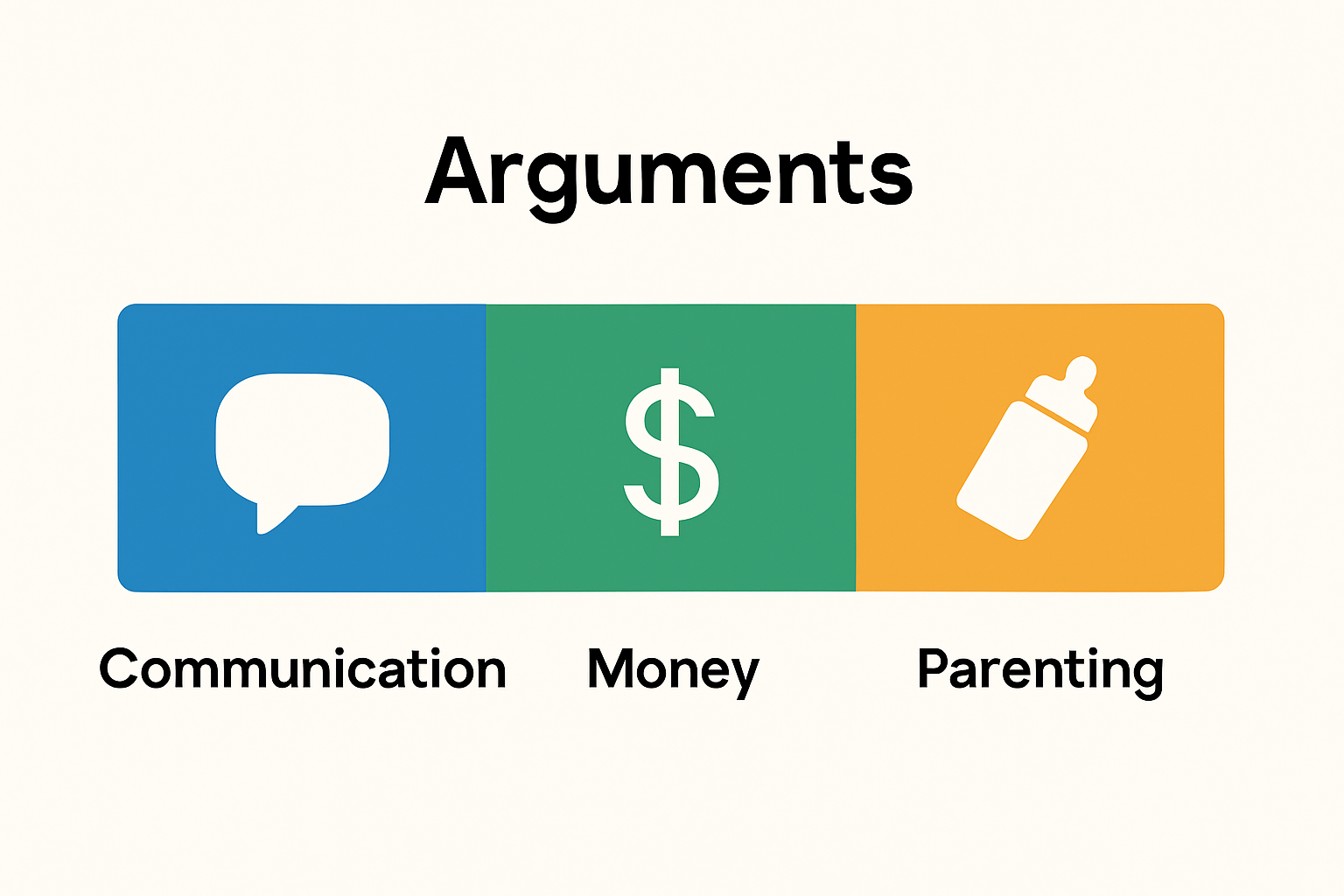
According to research from the University of Illinois Urbana-Champaign, the most significant conflict areas in relationships typically include:

  • Communication breakdowns
  • Financial disagreements
  • Differing parenting approaches
  • Unequal distribution of household responsibilities
  • Emotional and mood management challenges

Psychological Underpinnings of Arguments

Arguments are rarely about the surface-level issue being discussed. They frequently represent deeper unresolved tensions, unmet emotional needs, or fundamental differences in values and expectations. When partners feel unheard, disrespected, or misunderstood, minor disagreements can quickly escalate into heated confrontations.

The biological and psychological mechanisms driving these conflicts are rooted in our evolutionary history. Humans are fundamentally social creatures with complex emotional landscapes. Arguments often emerge when individuals feel their core needs for safety, validation, and connection are threatened.

Understanding Conflict as Relationship Opportunity

Contrary to popular belief, arguments are not inherently destructive. When approached with empathy, active listening, and a genuine desire to understand, conflicts can become powerful opportunities for deepening mutual understanding and strengthening relationship bonds. The key lies in developing emotional intelligence, practicing respectful communication, and viewing disagreements as collaborative problem-solving experiences rather than competitive battles to be won.

The Role of Communication in Conflict

Communication is the foundational bridge that connects partners during challenging interactions, transforming potential relationship ruptures into opportunities for deeper understanding. Learn more about effective communication strategies in marriage to enhance your relationship dynamics.

Communication Patterns and Conflict Escalation

According to research from the American Psychological Association, the way couples communicate during disagreements significantly determines the outcome and long-term relationship health. Effective communication involves more than simply exchanging words it requires emotional intelligence, active listening, and genuine empathy.

This table summarises unhealthy and healthy communication patterns during conflict, highlighting their key characteristics and likely effects on the relationship.

Communication PatternDescriptionLikely Effect on Relationship
Defensive responsesReacting protectively without addressing concernsEscalation of conflict
Criticism and contemptAttacking partner’s character or showing disdainErodes trust and connection
Stonewalling/withdrawalShutting down or refusing to engage emotionallyIntensifies frustration and disconnection
Interrupting or dismissingNot allowing partner to express their feelingsCauses partner to feel unheard
Personal attacksUsing arguments as an opportunity to wound or blameDamages emotional bond
Active listeningGenuinely focusing on partner’s viewpointPromotes understanding and resolution
‘I’ statementsExpressing own feelings without blamingReduces defensiveness and fosters trust

Unhealthy communication patterns that often escalate conflicts include:

  • Defensive responses
  • Criticism and contempt
  • Stonewalling or emotional withdrawal
  • Interrupting or dismissing partner’s feelings
  • Escalating arguments with personal attacks

Psychological Dynamics of Communication

Communication during conflict is not just about verbal exchange but a complex psychological interaction. Partners unconsciously signal emotional safety, respect, and commitment through their communication style. When communication breaks down, individuals often feel unheard, invalidated, and disconnected.

The most constructive communication approach involves creating a safe emotional environment where both partners feel validated, understood, and respected. This requires vulnerability, active listening, and a genuine commitment to understanding each other’s perspectives rather than winning an argument.

Transforming Conflict Through Mindful Communication

Mindful communication during conflicts involves approaching disagreements as collaborative problem solving experiences. Partners who practice emotional regulation, empathy, and constructive dialogue can transform potential relationship fractures into moments of deeper connection and mutual understanding. The goal is not to eliminate conflict but to develop healthier, more compassionate ways of navigating inevitable relationship challenges.

Emotional Triggers and Their Effects on Couples

Every relationship contains an intricate emotional landscape where past experiences, unresolved traumas, and deeply ingrained psychological patterns can unexpectedly surface during conflicts. Learn more about navigating emotional challenges in marriage to better understand these complex dynamics.

Understanding Personal Emotional Triggers

According to research published in Frontiers in Psychology, emotional triggers are psychological responses rooted in past experiences that can instantly transform a minor disagreement into an intense emotional confrontation. These triggers are often unconscious and stem from deep-seated fears, insecurities, and unresolved emotional wounds.

Common emotional triggers in relationships include:

  • Fear of abandonment
  • Feeling disrespected or invalidated
  • Perceived threats to personal autonomy
  • Unresolved childhood trauma
  • Past relationship betrayals

Psychological Mechanisms of Emotional Reactivity

Emotional triggers operate through complex neurological and psychological mechanisms. When activated, they bypass rational thinking and activate our primal survival responses. This means partners can quickly shift from calm discussion to defensive or aggressive states, often without fully understanding the underlying emotional source.

The brain’s limbic system, responsible for emotional processing, can hijack logical reasoning during these moments. This neurological response explains why seemingly minor comments can provoke disproportionate emotional reactions, transforming simple conversations into heated arguments.

Breaking the Cycle of Emotional Triggering

Breaking the cycle of emotional triggering requires self-awareness, empathy, and intentional communication. Partners must develop the ability to recognize their own emotional patterns, communicate vulnerabilities, and create a safe emotional environment where both individuals feel heard and validated. This involves practicing emotional regulation, developing active listening skills, and approaching conflicts with curiosity rather than defensiveness.

Common Disputes: Money, Parenting, and Responsibilities

Relationships are intricate networks of shared expectations, resources, and mutual responsibilities that inevitably generate conflict points. Learn strategies for managing financial challenges in marriage to navigate these complex dynamics more effectively.

Financial Conflict Dynamics

According to research from the University of Illinois Urbana-Champaign, financial disagreements represent a significant source of relationship tension. These conflicts often transcend mere monetary concerns and reflect deeper issues of trust, personal values, and perceived relationship power dynamics.

Key financial conflict areas include:

Infographic showing top 3 reasons couples argue: communication, money, parenting

  • Divergent spending habits
  • Differences in financial goal setting
  • Unequal financial contributions
  • Hidden expenses or undisclosed debts
  • Conflicting investment strategies

Parenting and Responsibility Conflicts

Parenting introduces a complex layer of shared responsibility that frequently becomes a battleground for couples. Disagreements emerge from differences in parenting philosophies, discipline approaches, and unequal distribution of childcare responsibilities. These conflicts can stem from individual childhood experiences, cultural backgrounds, and personal expectations about family roles.

Subtle power struggles often manifest through seemingly mundane parenting decisions, revealing underlying communication and respect challenges within the relationship. The emotional investment in child-rearing makes these disputes particularly intense and potentially divisive.

Successful couples recognize that managing shared responsibilities requires continuous negotiation, mutual respect, and flexible adaptation. This involves developing transparent communication strategies, establishing clear expectations, and creating collaborative approaches to financial management and parenting. The goal is not to eliminate conflicts but to transform them into constructive dialogues that strengthen relationship bonds and mutual understanding.

Strategies for Healthy Conflict Resolution

Conflict resolution is an essential skill that transforms potential relationship fractures into opportunities for deeper understanding and connection. Explore our comprehensive guide to fighting fair in marriage to develop more effective communication strategies.

Foundational Communication Principles

According to research from the American Psychological Association, effective conflict resolution requires a fundamental shift from competitive to collaborative communication. This means moving beyond the desire to win an argument and instead focusing on mutual understanding and shared problem solving.

Key principles of constructive communication include:

  • Using “I” statements to express feelings
  • Active and empathetic listening
  • Avoiding blame and criticism
  • Maintaining emotional regulation
  • Seeking to understand before being understood

Emotional Regulation Techniques

Emotional regulation is the cornerstone of healthy conflict resolution. During heated discussions, partners must learn to manage their physiological and psychological responses. This involves recognizing emotional triggers, practicing self-soothing techniques, and creating psychological space to respond thoughtfully rather than reactively.

Successful couples develop the ability to pause, breathe, and recenter themselves during potentially volatile interactions. This skill allows for more rational, compassionate communication and prevents escalation of conflicts into destructive patterns.

Collaborative Problem Solving

Healthy conflict resolution is ultimately about transforming disagreements into collaborative problem solving experiences. This requires both partners to approach conflicts with curiosity, empathy, and a genuine commitment to finding mutually beneficial solutions. The goal is not to determine who is right, but to understand each other’s perspectives, validate emotions, and work together to address underlying relationship needs.

Why Couples Argue | Wise Husband

Turn Arguments Into Connection With Wise Husband

Struggling with constant arguments and emotional disconnect in your relationship? You are not alone. Many couples find themselves repeating the same conflicts, whether it is about communication issues, emotional triggers, or clashing expectations. If you want practical tools to change how you handle disagreements and create a more loving partnership, our resources are designed for you. Discover how a deeper understanding of yourself and your relationship can help you stop fighting over the same problems.

https://wisehusband.com/

Break the old patterns and ignite real change today. Explore the Awaken the Lover Within section for guidance on transforming conflict into deeper connection. If you are ready to strengthen your marriage and become the man who leads with wisdom and respect, visit WiseHusband.com now for honest advice that you can use straight away.

Frequently Asked Questions

What are the main reasons couples argue?

Couples typically argue due to communication breakdowns, financial disagreements, differing parenting approaches, unequal household responsibilities, and emotional or mood management challenges.

How can communication affect arguments in relationships?

Effective communication is critical in relationships; it can determine the outcome of disagreements. Healthy communication fosters understanding, while poor communication can escalate conflicts and cause emotional distress.

What are emotional triggers, and how do they impact arguments?

Emotional triggers are responses rooted in past experiences that can amplify disagreements. They often lead to disproportionate reactions, transforming minor issues into major conflicts, as unresolved feelings are brought to the surface.

What strategies can help in resolving conflicts in a relationship?

Constructive conflict resolution involves using “I” statements to express feelings, active listening, maintaining emotional regulation, and focusing on collaborative problem-solving rather than competitive arguing.


Get the Wise Husband Book


https://wisehusband.com/understanding-why-couples-argue/?fsp_sid=1046

Tuesday, 23 September 2025

Understanding Trust Issues in Marriage for Better Bonds

Trust Issues in Marriage


Trust issues in marriage are more common than most people realise. In fact, research shows that nearly 50 percent of married couples experience trust difficulties at some stage. It sounds heavy and a bit final, right? Oddly enough, the real surprise is many of these couples never even recognise the slow build-up until the emotional distance is already there. Tackling trust concerns early makes a much bigger difference than you might expect.


Table of Contents


Quick Summary


TakeawayExplanation
Identify your trust issues.Recognize the root causes of your distrust, such as past betrayals or childhood trauma.
Communicate openly with your partner.Create safe spaces to express feelings and discuss trust breaches without fear of judgment.
Practice consistency in actions.Trust is rebuilt through predictable behavior and transparent communication over time.
Acknowledge emotional processing time.Allow yourself and your partner the necessary time to reflect and heal after trust is broken.
Seek professional support when needed.Therapy can provide tools to navigate and resolve deep-seated trust issues effectively.

What Are Trust Issues in Marriage?


Trust issues in marriage represent deep psychological challenges that undermine the foundation of emotional connection and intimacy between partners. At their core, these issues manifest as persistent doubts, suspicions, and emotional barriers that prevent genuine vulnerability and open communication.


Defining Trust Issues in Marriage


In marriage, trust issues are complex emotional patterns where one or both partners struggle to fully believe, rely on, or feel secure with their spouse. Research from the National Institutes of Health indicates these challenges often stem from multiple root causes:


  • Previous relationship betrayals

  • Childhood trauma or attachment wounds

  • Experiences of dishonesty or inconsistent behavior

  • Personal insecurities and unresolved emotional baggage


These experiences create psychological barriers that make genuine emotional intimacy challenging. A partner experiencing trust issues might constantly question their spouse’s intentions, feel anxious about potential betrayal, or maintain emotional distance as a protective mechanism.


Psychological Mechanisms Behind Trust Erosion


Trust erosion occurs through complex psychological processes. When repeated experiences of disappointment, deceit, or inconsistency accumulate, the brain develops protective neural pathways designed to anticipate potential harm. This adaptive response, while initially protective, can transform into a persistent pattern of suspicion and emotional guardedness.


Individuals with significant trust issues often unconsciously create self-fulfilling prophecies. Their heightened vigilance and defensive behaviors can inadvertently push partners away, reinforcing the original fears of abandonment or betrayal. This cyclical pattern becomes a destructive feedback loop that gradually undermines marital connection.


Interested readers can learn more about building trust in marriage to understand strategies for overcoming these challenging emotional dynamics. Understanding these mechanisms is the first critical step towards healing and rebuilding genuine marital trust.


Why Are Trust Issues Important in Relationships?


Trust issues are not merely emotional complications but fundamental barriers that significantly impact relationship quality, psychological well-being, and long-term partnership dynamics. These issues represent profound challenges that can transform intimate connections into environments of constant emotional tension and uncertainty.


Psychological Impact of Trust Erosion


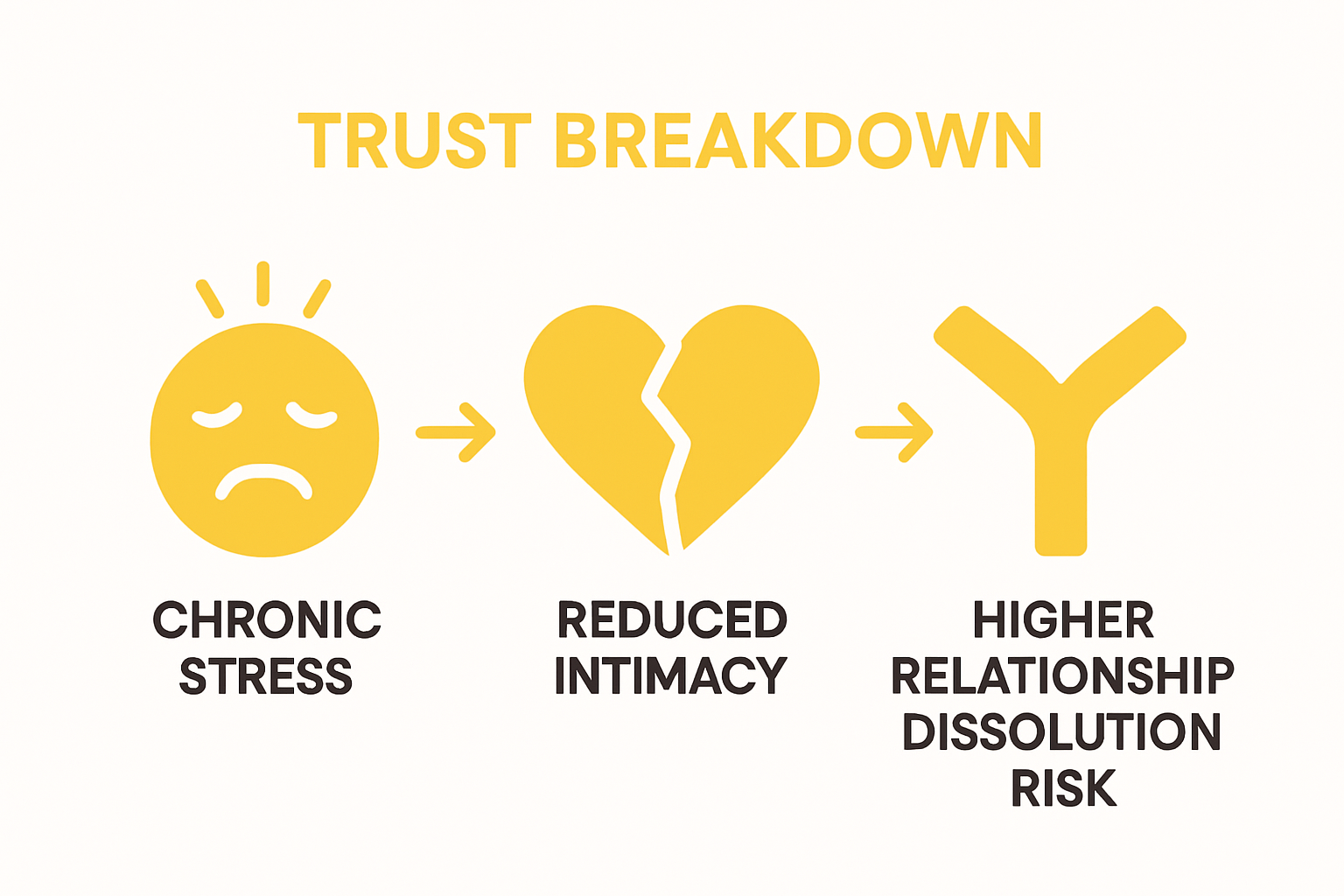
In intimate relationships, trust functions as an invisible emotional infrastructure that supports connection, vulnerability, and mutual understanding. Research from the National Institutes of Health reveals that persistent trust issues create substantial psychological consequences:


  • Chronic emotional stress and anxiety

  • Decreased relationship satisfaction

  • Reduced emotional and physical intimacy

  • Higher likelihood of relationship dissolution


When trust deteriorates, partners experience a progressive emotional disconnection. The constant state of uncertainty generates mental and emotional exhaustion, making genuine communication and conflict resolution increasingly difficult.


Infographic showing three effects of trust issues: stress, less intimacy, breakup risk


Long-Term Relationship Consequences


Trust issues function like slow-acting relationship toxins, gradually undermining partnership foundations. They create destructive patterns where suspicion replaces genuine connection, transforming what should be supportive partnerships into environments of perpetual emotional guardedness.


Individuals experiencing chronic trust issues often develop protective psychological mechanisms that paradoxically increase relationship fragility. These defensive strategies, while seemingly protective, actually prevent authentic emotional engagement and mutual understanding.


If you want to understand potential warning signs in your relationship, check out our guide on unhealthy relationship indicators to gain deeper insights into maintaining healthy emotional connections.


The Emotional and Psychological Impact of Trust Issues


Trust issues extend far beyond simple relationship complications, representing profound psychological experiences that fundamentally reshape an individual’s emotional landscape and interpersonal interactions. These deep-seated challenges create intricate psychological responses that significantly impact mental health, self-perception, and relationship dynamics.


Psychological Trauma and Emotional Responses


Research from the American Psychological Association reveals that persistent trust issues can generate complex emotional responses comparable to psychological trauma. When trust is repeatedly violated, individuals develop intricate defensive mechanisms that profoundly alter their emotional processing:


  • Hypervigilance and constant emotional guardedness

  • Increased anxiety and potential depression

  • Reduced capacity for emotional vulnerability

  • Compromised ability to form authentic connections


These psychological adaptations represent survival mechanisms designed to protect against potential emotional harm, but paradoxically create significant barriers to genuine intimacy and emotional well-being.


Internal Psychological Mechanisms


Trust issues trigger sophisticated neurological and psychological responses. The brain develops protective neural pathways that anticipate potential betrayal, transforming what was initially a survival mechanism into a persistent pattern of emotional distancing. This unconscious protective strategy manifests through heightened emotional sensitivity, reduced trust thresholds, and an internalized narrative of potential emotional threat.


Individuals experiencing chronic trust issues often struggle with profound self-doubt and complex emotional reconstruction. Their internal psychological landscape becomes characterized by ongoing tension between the desire for connection and the fear of potential emotional vulnerability.


The table below summarises the typical emotional and psychological responses to chronic trust issues in marriage, providing a clear overview for readers seeking to recognise these impacts.


Psychological ResponseDescription
Hypervigilance & Emotional GuardednessConstant self-protection, frequently expecting betrayal
Increased Anxiety & DepressionOngoing emotional stress, low mood, worry
Reduced Emotional VulnerabilityDifficulties opening up, reluctance to share feelings
Compromised Authentic ConnectionTrouble forming or maintaining genuine intimacy and closeness
Heightened Sensitivity to ThreatOverreacting or becoming defensive to perceived signs of mistrust
Internalised Self-DoubtQuestioning self-worth, struggling with feelings of inadequacy

If you’re interested in understanding deeper emotional dynamics, explore our insights on emotional intimacy in marriage to gain comprehensive perspectives on rebuilding trust and connection.


Common Causes of Trust Issues in Marriage


Trust issues in marriage emerge from complex psychological and interpersonal dynamics, representing intricate challenges that develop through multiple interconnected factors. Understanding these root causes is crucial for couples seeking to rebuild and strengthen their emotional connection.


Historical and Personal Background Factors


Research from the International Journal of Scientific Multidisciplinary Research highlights several foundational sources of trust issues in marital relationships:


  • Previous experiences of betrayal or infidelity

  • Childhood trauma and attachment disruptions

  • Unresolved emotional wounds from past relationships

  • Generational patterns of relationship dysfunction


These historical experiences create psychological blueprints that significantly influence an individual’s capacity to trust and form genuine emotional connections. Each personal history contributes unique layers of complexity to relationship dynamics.


To help readers quickly compare the historical and modern sources of trust issues in marriage, the table below outlines core factors from each category as highlighted in the article.


Cause TypeExample Factors
Historical & Personal BackgroundPrevious betrayal, childhood trauma, emotional wounds from past relationships, generational dysfunction
Contemporary Relationship DisruptorsDigital communication issues, social media misunderstandings, financial secrecy, inconsistent behaviour

Contemporary Relationship Disruptors


Modern relationship landscapes introduce additional challenges that can erode trust. Digital communication, social media, and changing societal norms create unprecedented opportunities for misunderstandings and potential breaches of confidence. Factors such as hidden digital communications, inconsistent behavior, financial secrecy, and reduced emotional transparency can systematically undermine marital trust.


Individuals may develop protective psychological mechanisms in response to these potential threats, creating barriers that prevent authentic emotional engagement. The constant negotiation between vulnerability and self-protection becomes a delicate emotional dance that requires intentional navigation.


If you want deeper insights into relationship challenges, explore our comprehensive guide on understanding common marriage problems to gain broader perspectives on maintaining healthy partnerships.


Strategies for Building Trust and Repairing Relationships


Rebuilding trust in marriage requires intentional, strategic efforts that address both emotional and behavioral dimensions of relationship dynamics. These strategies represent deliberate interventions designed to reconstruct damaged emotional connections and establish sustainable patterns of mutual understanding and respect.


Foundational Communication Restoration


Research from the University of Minnesota Extension suggests a comprehensive approach to trust reconstruction that involves multiple interconnected steps:


  • Acknowledging the specific breach of trust

  • Creating safe spaces for expressing negative emotions

  • Demonstrating consistent commitment to behavioral change

  • Allowing appropriate time for emotional processing

  • Rebuilding transparent communication channels


These strategies recognize that trust rebuilding is not a linear process but a nuanced journey requiring patience, vulnerability, and genuine emotional investment from both partners.


rebuilding trust couple


Psychological Commitment and Behavioral Alignment


Successful trust restoration demands more than verbal promises. It requires profound psychological commitment manifested through consistent, transparent actions. Partners must develop a mutual understanding that trust is continuously earned through daily interactions, not simply declared.


Individuals must cultivate self-awareness, recognizing personal patterns that contribute to trust erosion. This involves developing emotional intelligence, practicing radical honesty, and creating predictable, reliable relationship dynamics that gradually reconstruct broken confidence.


If you’re seeking deeper insights into navigating complex relationship challenges, explore our comprehensive guide on understanding why marriages fail to gain broader perspectives on maintaining healthy partnerships.


Become the Husband Who Heals and Rebuilds Trust


Struggling with trust issues in your marriage can leave you feeling lost, anxious, or unable to connect with your partner. These challenges cut deep, impacting your confidence and your ability to truly open up at home. If you have noticed yourself caught in cycles of suspicion or feeling emotionally distant, you are not alone. Many men face this silent struggle, but real change is possible.


Awaken the Lover Within and start your journey towards deeper trust and lasting intimacy. Discover practical insights and proven strategies shaped specifically for men who want to lead with love, emotional intelligence, and understanding.


https://wisehusband.com/


Ready to strengthen your marriage and become the trustworthy husband your partner deserves? Visit WiseHusband.com now for clear, real-world guidance and support. Take your first step towards a committed and confident relationship today by exploring our expert resources and joining a community of men dedicated to building lifelong trust.


Frequently Asked Questions


What are common signs of trust issues in a marriage?


Common signs include constant suspicion, emotional distance, anxiety about a partner’s intentions, and difficulty in open communication.


How can childhood experiences contribute to trust issues in adult relationships?


Childhood trauma or attachment wounds can create psychological blueprints that affect one’s ability to trust, leading to emotional barriers in adult relationships.


What strategies can couples use to rebuild trust after infidelity?


Couples can rebuild trust by acknowledging breaches, creating safe spaces for emotions, demonstrating consistent behavioural change, and fostering transparent communication.


Why is trust important in a marriage?


Trust is crucial as it supports emotional connection, vulnerability, and mutual understanding, forming the foundation for a healthy and satisfying relationship.


Get the Wise Husband Book


https://wisehusband.com/understanding-trust-issues-in-marriage/?fsp_sid=1034

Husband Archetypes From Wife’s View: Complete Guide

Did you know that over 60 percent of couples feel their relationship style doesn’t fit traditional husband stereotypes? Understanding husban...