Sunday, 19 October 2025

How to Reconnect with Your Husband: Strengthen Your Bond

How to Reconnect with Your Husband

Trying to reconnect with your husband can feel overwhelming, especially when daily routines seem to pull you further apart. Research shows that couples who consistently invest in quality time together report up to 60 percent higher relationship satisfaction compared to those who do not. Most people think you need grand romantic gestures to revive intimacy, but genuine reconnection often starts with a simple, honest look at your relationship’s emotional patterns. Surprising shifts happen when small steps lead to big changes.

Table of Contents

Quick Summary

Key PointExplanation
1. Self-Reflect on Relationship DynamicsAssess your marriage’s emotional landscape through honest self-reflection to understand connection points and disconnection zones.
2. Identify Shared Interests and GoalsEngage in open conversations to discover mutual passions and align future aspirations, strengthening your partnership.
3. Schedule Intentional Quality TimeDedicate regular, distraction-free time for shared experiences to deepen emotional intimacy and connection.
4. Communicate Openly and HonestlyFoster transparent dialogue through regular emotional check-ins to enhance understanding and vulnerability in your relationship.
5. Reinforce Positive Interactions RegularlyPractice daily expressions of appreciation and acknowledgment to create a nurturing emotional environment and strengthen bonds.

Step 1: Assess Your Current Relationship Dynamics

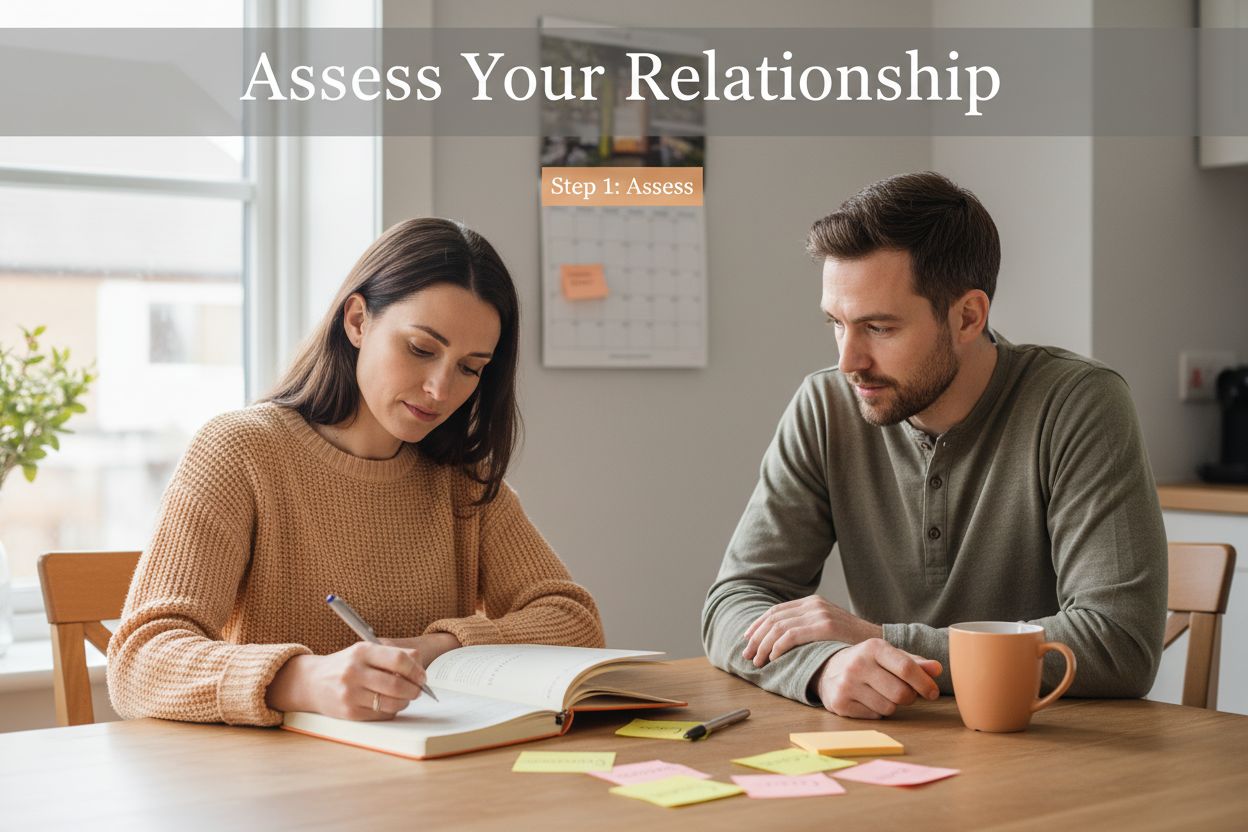
Reconnecting with your husband starts with honest self-reflection and understanding your current relationship landscape. This critical first step involves examining your marriage’s emotional terrain without judgment or defensiveness. Many couples struggle to rebuild intimacy because they skip this foundational assessment.

Mapping Your Relationship Dynamics

Begin by creating a comprehensive emotional inventory of your marriage. Think of this as a relationship diagnostic process where you objectively evaluate connection points, communication patterns, and potential disconnection zones. Ask yourself critical questions: When was the last time you and your husband felt truly connected? What specific interactions trigger distance between you? Are there recurring communication breakdowns that prevent genuine understanding?

Carry out this assessment through intentional self-observation. Notice your emotional reactions during interactions with your husband. Track moments of tension, disconnect, and potential misunderstandings. Read our guide on nurturing your marriage for additional insights into relationship mapping.

Documenting your observations can be transformative. Consider keeping a private journal where you record interaction patterns without blame or criticism. Focus on understanding rather than proving who is right or wrong. Write down specific scenarios that create emotional distance and moments of genuine connection.

Identifying Relationship Roadblocks

Understanding potential roadblocks requires vulnerability and courage. Common barriers include unresolved resentments, different communication styles, unmet emotional needs, and accumulated stress. Recognize that identifying these barriers is not about assigning fault but creating pathways for healing.

As you assess your relationship dynamics, remain compassionate with yourself and your husband. The goal is not perfection but genuine understanding. By carefully mapping your relationship’s emotional landscape, you create a strategic foundation for meaningful reconnection. Your honest self-reflection becomes the first powerful step toward rebuilding intimacy and strengthening your marital bond.

Successful completion of this step means you have:

Here is a checklist table summarizing key completion criteria for each step in reconnecting with your husband.

StepCompletion Criteria
Step 1: Assess Relationship DynamicsDocument interaction patterns, identify triggers and disconnection zones, develop a non-judgmental perspective, create a roadmap for improvement
Step 2: Identify Common Interests and GoalsFind 2-3 mutual interests, create a vision board, understand personal aspirations, set framework for planning together
Step 3: Schedule Quality Time TogetherSet a weekly connection time, rotate planning, create framework for meaningful interactions, protect shared time
Step 4: Communicate Openly and HonestlyHold regular check-ins, practice active listening, express feelings constructively, build safe communication space
Step 5: Reinforce Positive Interactions RegularlyStart gratitude practice, create appreciation rituals, increase positive interactions, acknowledge contributions
  • Objectively documented relationship interaction patterns
  • Identified specific emotional triggers and disconnection zones
  • Developed a compassionate, non-judgmental perspective on your marriage’s current state
  • Created a personal roadmap for potential areas of improvement

Step 2: Identify Common Interests and Goals

Reigniting connection with your husband requires discovering and nurturing shared passions that transcend daily routines. This step transforms disconnected coexistence into intentional partnership by uncovering mutual interests and aligning future aspirations.

Start by scheduling a dedicated conversation outside your normal environment. Choose a neutral setting like a quiet cafe or peaceful park where you can speak without household distractions. Approach this dialogue with genuine curiosity and openness. Your goal is not to compete or debate but to understand and explore.

Exploring Shared Passions

Begin by reflecting on experiences you both enjoyed in the past. What activities made you laugh together? When did you feel most connected? These memories are crucial signposts pointing toward rekindled intimacy. Some couples discover shared interests in unexpected places - perhaps a forgotten hobby, a travel dream, or a mutual skill you could develop together.

Explore our guide on building trust in marriage to understand how shared goals create deeper emotional bonds. Mutual interests act as relationship glue, providing opportunities for joint experiences and meaningful conversation.

Consider creating a shared vision board representing collective dreams. This could include travel destinations, personal development goals, family objectives, or creative projects. Visual representations help transform abstract discussions into tangible, exciting possibilities.

Strategic Goal Alignment

Beyond recreational interests, discuss long-term life goals. Where do you both see yourselves in five or ten years? What personal and collective achievements matter most? Genuine alignment happens when individual aspirations complement rather than compete.

Communicate your individual goals transparently. Listen without judgment. Your objective is discovering intersection points where your personal dreams can harmonize. This might involve career support, financial planning, parenting strategies, or personal growth commitments.

Successful completion of this step means you have:

  • Identified at least 2-3 mutual interests or potential shared activities
  • Created a preliminary vision board representing collective goals
  • Developed a deeper understanding of each other’s personal aspirations
  • Established a framework for future collaborative planning

Remember, reconnection is a journey of continuous discovery. Approach this process with patience, empathy, and genuine enthusiasm for growing together.

Step 3: Schedule Quality Time Together

Reconnecting requires deliberate, structured investment in shared experiences that go beyond routine interactions. Quality time is not about grand gestures but consistent, meaningful engagement that rebuilds emotional intimacy.

Start by creating a dedicated relationship calendar - a strategic planning tool for intentional connection. This isn’t about scheduling every minute but establishing predictable opportunities for genuine interaction. According to research from the National Institutes of Health, consistent quality time significantly enhances relationship satisfaction.
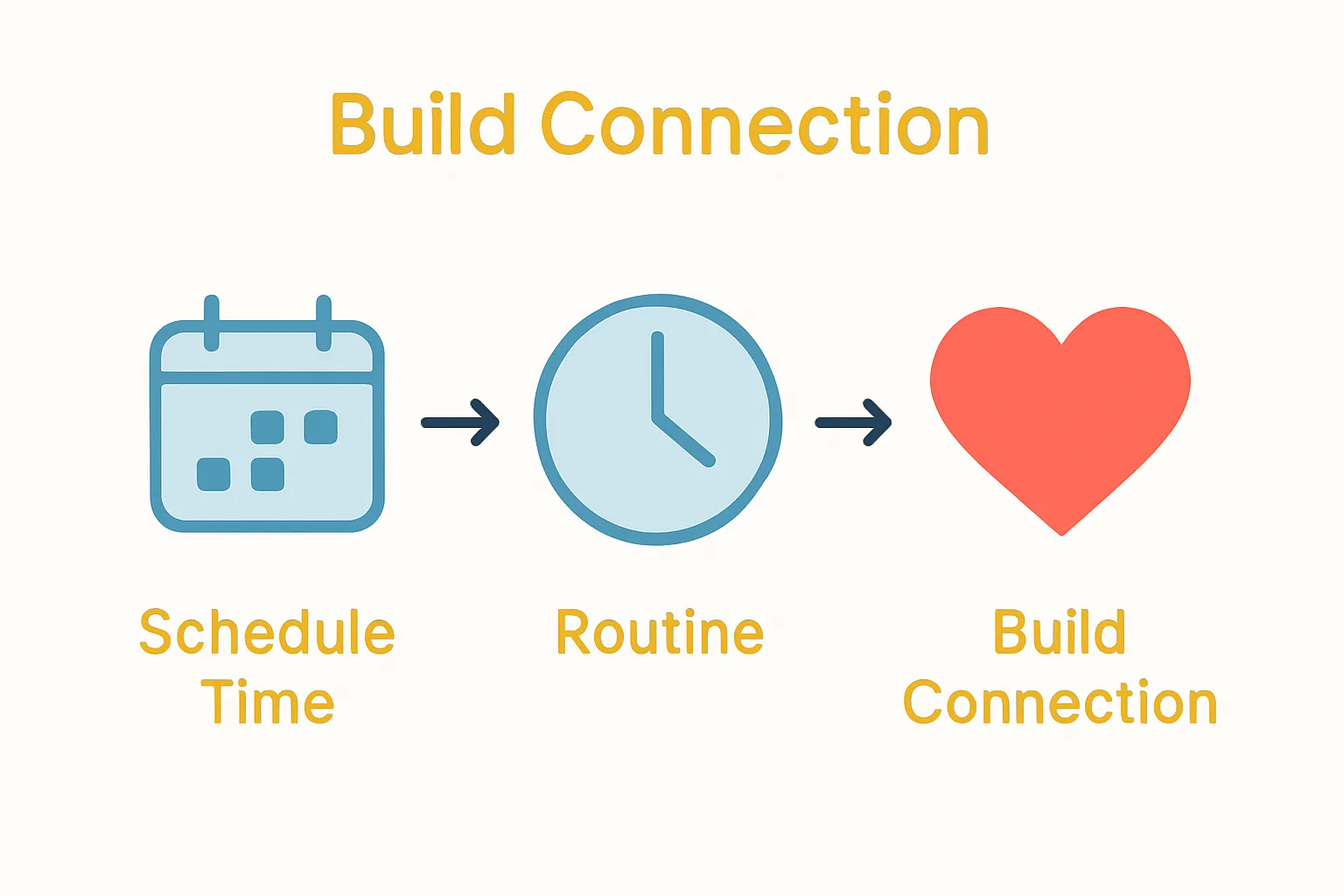
Simple diagram showing routine quality time builds connection

Designing Meaningful Interactions

Implement a weekly “connection date” that alternates planning responsibilities between you and your husband. The planner designs an experience focusing on mutual enjoyment, not just entertainment. These dates can range from low-key activities like cooking together to more elaborate outings. The key is maintaining flexibility and genuine engagement.

Consider creating a framework for your connection dates:

  • One partner plans the activity completely
  • No work or household discussions allowed
  • Electronic devices remain silent or off
  • Focus on enjoying each other’s company

Be creative with your time together. Shared experiences don’t always require leaving home. Some of the most profound connections happen through simple, intentional activities like preparing a meal together, taking an evening walk, or learning a new skill as partners.

Overcoming Common Connection Barriers

Recognize that scheduling quality time might feel awkward initially. Many couples struggle with feeling forced or artificial when first implementing structured connection time. Embrace this discomfort as part of the rebuilding process. The goal is not perfection but consistent effort.

Explore our guide on building trust in marriage for additional strategies in creating meaningful interactions. Remember that quality time is about presence, not performance. Listen actively, share vulnerably, and remain open to spontaneous moments of connection.

Successful completion of this step means you have:

  • Established a weekly dedicated connection time
  • Created a rotating planning system for dates
  • Developed a framework for meaningful interactions
  • Committed to protecting and prioritizing this shared time

Approach these connection opportunities with curiosity, patience, and a genuine desire to rediscover your partner. Consistent, intentional time together becomes the foundation for deeper understanding and renewed intimacy.

Reconnect with Your Husband | Wise Husband

Step 4: Communicate Openly and Honestly

Authentic communication transforms relationship dynamics, turning disconnection into genuine understanding. This step involves creating a safe emotional landscape where vulnerability becomes strength and honest dialogue replaces surface-level interactions.

According to research from the American Psychological Association, effective communication is the cornerstone of relationship health. Begin by establishing a judgment-free dialogue zone where both partners feel secure expressing emotions without fear of criticism or immediate problem-solving.

Creating Safe Communication Spaces

Design intentional communication rituals that move beyond routine conversations. Schedule weekly “emotional check-in” sessions where each partner gets uninterrupted time to share feelings, concerns, and aspirations. The listener’s role is pure reception - no interrupting, defending, or offering immediate solutions.

Learn more about communication techniques for couples to enhance your dialogue skills. Practice active listening techniques: maintain eye contact, use affirming body language, and reflect back what you’ve heard to demonstrate genuine understanding.

Develop a communication framework that prioritizes emotional transparency. Use “I” statements that express personal feelings without accusation. Instead of saying “You never listen,” try “I feel unheard when our conversations seem one-sided.” This approach invites collaboration rather than triggering defensive responses.

Recognize that honest communication includes discussing uncomfortable topics. Challenging conversations are opportunities for growth, not relationship threats. Approach sensitive subjects with compassion, acknowledging that vulnerability requires courage from both partners.

Create ground rules for difficult discussions:

  • Set a specific time and neutral location
  • Commit to respectful dialogue
  • Take breaks if emotions become overwhelming
  • Focus on understanding, not winning

Successful completion of this step means you have:

  • Established regular emotional check-in sessions
  • Practiced active, non-defensive listening
  • Developed skills for expressing feelings constructively
  • Created a safe space for authentic communication

Remember, rebuilding communication is a skill that improves with consistent, patient practice. Approach each conversation as an opportunity to reconnect and understand each other more deeply.

Step 5: Reinforce Positive Interactions Regularly

Rebuilding connection requires intentional celebration of small, meaningful moments. This step transforms relationship dynamics by systematically amplifying positive interactions, creating a nurturing emotional environment that naturally draws partners closer.

According to research from the National Institutes of Health, consistent expressions of appreciation significantly enhance relationship satisfaction. The goal is to create a positive feedback loop that gradually rewires your relationship’s emotional infrastructure.

Designing Intentional Appreciation Strategies

Implement a daily gratitude practice specifically focused on your husband. This goes beyond generic compliments - acknowledge specific actions, character traits, and efforts that often go unrecognized. Notice and verbalize moments of competence, kindness, and support that demonstrate his unique value.

Explore our guide on building trust in marriage to understand how consistent positive reinforcement transforms relationships. Create personalized appreciation rituals that feel authentic to your connection. This might involve morning text messages highlighting something you admire, unexpected notes of recognition, or verbal acknowledgments during shared moments.

Develop a systematic approach to positive reinforcement. Track and celebrate small wins - whether it’s handling a challenging work situation, supporting family needs, or demonstrating emotional intelligence. Your consistent recognition builds emotional safety and motivates continued positive behavior.

Creating Meaningful Positive Interactions

Positive reinforcement extends beyond verbal appreciation. Design physical and experiential ways of showing connection. Unexpected gestures like spontaneous hugs, surprise date nights, or supporting his personal goals communicate deeper levels of commitment.

Establish clear appreciation practices:

  • Daily verbal or written acknowledgment
  • Weekly intentional connection moments
  • Monthly celebration of mutual achievements
  • Consistent physical affection

Successful completion of this step means you have:

  • Developed a consistent gratitude practice
  • Created personalized appreciation rituals
  • Increased frequency of positive interactions
  • Demonstrated tangible recognition of your husband’s contributions

Remember, positive reinforcement is a skill that deepens with practice. Approach this step with genuine curiosity and warmth, allowing your appreciation to become a natural, transformative force in your relationship.

Ready to Rebuild Your Marriage Connection?

If you feel the distance growing between you and your husband, you are not alone. Many readers struggle with emotional disconnect, communication barriers, and the challenges of rebuilding intimacy. The article you just explored gives you real steps for mapping your relationship dynamics, aligning your goals, prioritizing quality time, and learning open communication. But sometimes, knowing how to start is not enough. You need daily encouragement and practical examples to keep moving forward.

Explore Daily Relationship Wisdom for proven insights and strategies specifically designed to help men reconnect with their partners and strengthen lasting bonds.

https://wisehusband.com/

Join the movement at WiseHusband.com and take advantage of our collection of Daily Wisdom articles. Discover actionable tools to reinforce positive interactions, break unhealthy cycles, and become the wise husband your marriage deserves. Do not let another day pass without investing in the connection that means the most. Start your journey to a stronger, more fulfilling partnership now.

Frequently Asked Questions

How can I assess my current relationship dynamics with my husband?

Begin by reflecting on your emotional interactions and evaluating your connection points, communication patterns, and disconnection zones. Keeping a private journal can help document these observations objectively without judgment.

What activities can help rekindle our connection?

Consider exploring shared interests and hobbies that you both enjoyed in the past. Schedule conversations to discuss these mutual passions, and think about creating a shared vision board to visualize your goals together.

How often should we schedule quality time together?

Aim for a weekly dedicated connection time. Establish a routine to engage in meaningful activities that foster genuine interaction, ensuring to alternate planning responsibilities between you and your husband.

What are the best ways to foster open communication with my husband?

Create a safe space for dialogue by scheduling regular emotional check-in sessions. Use active listening techniques and focus on expressing your feelings through ‘I’ statements to promote understanding and connection.


Get the Wise Husband Book


https://wisehusband.com/how-to-reconnect-with-your-husband-naturally/?fsp_sid=1436

Understanding Active Listening in Marriage for Stronger Bonds

Active Listening in Marriage


Active listening in marriage sounds simple, right? After all, everyone thinks they know how to pay attention. Yet the research spells it out plain as day. Most relationship conflicts actually come from partners feeling unheard rather than from real disagreement. That is a shock. It turns out the secret to a happier marriage is not fixing your problems, but learning to listen well enough that the arguments barely even start.


Table of Contents


Quick Summary


TakeawayExplanation
Active listening creates emotional safetyGenuine listening fosters a space where vulnerability can be shared and valued in a marriage.
Engage with full psychological presenceFocus entirely on your partner’s words to enhance emotional understanding and connection.
Practice empathetic understandingAim to comprehend the emotional context behind what your partner expresses during conversations.
Reflect and confirm your understandingSummarise or paraphrase your partner’s thoughts to ensure accurate interpretation and validation.
Develop relational intelligence through practiceRegularly using active listening skills leads to deeper emotional connections and relationship resilience.

What is Active Listening in Marriage?


Active listening in marriage is a profound communication skill that goes far beyond simply hearing words. It represents a deliberate, compassionate approach to understanding your partner’s emotional landscape and underlying messages. More than passive reception of speech, active listening involves a holistic engagement with your spouse’s communication.


The table below outlines the core principles of active listening in marriage, along with concise explanations for each principle to help clarify their significance.


PrincipleExplanation
Full Psychological PresenceGiving your partner undivided attention, avoiding mental distractions and not preparing replies.
Empathetic UnderstandingGenuinely attempting to comprehend the emotional context behind your partner’s words.
Reflective ConfirmationVerifying your understanding by summarising or paraphrasing what you have heard.

The Core Principles of Active Listening


At its heart, active listening involves three fundamental components that transform ordinary conversation into meaningful connection:


Comparison of three core principles of active listening


  • Full Psychological Presence: Giving your partner undivided attention without mental distractions or preparing your response

  • Empathetic Understanding: Genuinely attempting to comprehend the emotional context behind the words

  • Reflective Confirmation: Verifying your understanding by summarizing or paraphrasing what you’ve heard


According to communication researchers at the University of Queensland, active listening is not just a communication technique but a profound act of emotional validation. When practiced consistently, it can significantly reduce misunderstandings and build deeper marital intimacy.


Why Active Listening Matters in Marriage


Marriage introduces complex emotional dynamics where communication can easily break down. Our guide on understanding communication in marriage reveals that most relationship conflicts stem not from disagreement, but from feeling unheard or misunderstood.


Active listening serves as a powerful antidote to these communication barriers. It signals to your partner that their thoughts and feelings are valuable, creating a safe emotional environment where vulnerability becomes possible. By demonstrating genuine interest and commitment to understanding, husbands can transform potentially contentious interactions into opportunities for deeper connection and mutual respect.


In essence, active listening is less about perfect technique and more about cultivating a genuine spirit of openness, curiosity, and compassion within your marriage. It requires continuous practice, self awareness, and a sincere desire to truly understand your partner’s inner world.


The Importance of Active Listening for Couples


Active listening transcends mere conversation technique and emerges as a critical foundation for emotional intimacy and relationship resilience. It represents a transformative approach to communication that can fundamentally reshape how partners understand and support each other.


Emotional Connection and Trust Building


At its core, active listening creates a profound sense of psychological safety within marriage.


When partners genuinely listen without judgment, they establish an environment where vulnerability becomes not just possible, but celebrated. This approach allows couples to move beyond surface level interactions and develop deeper emotional understanding.


Research from the National Institute of Mental Health demonstrates that couples practicing active listening experience significantly reduced relationship stress and improved emotional connectivity. The mechanisms of attentive listening trigger neurochemical responses that enhance bonding and mutual trust.


Preventing Relationship Deterioration


Misunderstandings and unresolved communication gaps are primary catalysts for marital discord. Active listening serves as a powerful preventative strategy against these relationship threats by:


  • Reducing emotional reactivity during difficult conversations

  • Creating space for genuine empathy and perspective taking

  • Minimizing assumptions and misinterpretations

  • Establishing a collaborative problem solving approach


By implementing active listening, couples can transform potential conflicts into opportunities for growth and mutual understanding. Our comprehensive guide on resolving marital conflicts provides additional strategies for maintaining relationship harmony.


Long Term Relationship Benefits


Beyond immediate communication improvements, active listening contributes to long term relationship health. It cultivates a culture of respect, emotional intelligence, and mutual care. Couples who consistently practice these skills develop more resilient partnerships capable of navigating complex life challenges with grace and understanding.


This table compares the immediate and long-term benefits that couples experience by incorporating active listening into their marriage routines.


Benefit TypeDescription
Emotional ConnectionBuilds psychological safety, fosters vulnerability, and leads to deeper understanding.
Trust BuildingStrengthens mutual trust and reduces defensiveness in the relationship.
Conflict PreventionMinimises misunderstandings and emotional reactivity during tense conversations.
Relationship ResilienceCultivates respect, emotional intelligence, and a culture of mutual care.
Long-Term SatisfactionSupports ongoing respect, resilient partnerships, and graceful navigation of challenges.

Ultimately, active listening is not just a communication technique but a profound expression of love a deliberate choice to prioritize your partner’s emotional experience and create a supportive, nurturing marital environment.


How Active Listening Enhances Communication


Active listening is not merely a passive receiving of information but a dynamic, intentional process that fundamentally transforms communication patterns within marriages. It represents a sophisticated approach to dialogue that elevates understanding beyond superficial exchange.


Breaking Down Communication Barriers


Traditional communication often involves participants waiting for their turn to speak, preparing counterarguments, or making hasty judgments. Active listening disrupts this pattern by creating a structured environment of genuine comprehension. Partners learn to suspend immediate reactions and instead focus on truly understanding each other’s perspectives.


Research from the American Psychological Association reveals that active listening significantly reduces communication defensive mechanisms. By demonstrating authentic interest and commitment to understanding, couples can navigate complex emotional landscapes with greater empathy and precision.


The Mechanisms of Enhanced Communication


Active listening operates through several sophisticated psychological mechanisms that transform communication dynamics:


  • Suspending personal judgments and preconceived notions

  • Focusing entirely on the speaker’s verbal and non verbal messages

  • Reflecting back understanding to confirm accurate interpretation

  • Asking clarifying questions that demonstrate genuine curiosity

  • Maintaining open body language that signals receptiveness


Our comprehensive guide on communication exercises for couples provides additional strategies for developing these critical listening skills.


Emotional Intelligence and Communication


Active listening is fundamentally an exercise in emotional intelligence.


marriage communication exercises It requires partners to develop heightened self awareness, regulate emotional reactivity, and cultivate genuine empathy. By practicing these skills consistently, couples create a communication ecosystem characterized by mutual respect, deeper understanding, and emotional safety.

Beyond technical communication skills, active listening represents a profound commitment to valuing your partner’s inner world. It transforms conversations from transactional exchanges into meaningful dialogues that strengthen relational bonds and foster genuine intimacy.


Key Principles of Active Listening in Relationships


Active listening represents a sophisticated communication approach that demands intentional practice and profound psychological awareness. It is not a singular technique but a complex set of interconnected principles designed to foster genuine understanding and emotional connection between partners.


Foundational Psychological Engagement


Psychological presence forms the cornerstone of active listening. This principle requires partners to be fully mentally and emotionally available during conversations, transcending mere physical proximity. It involves creating a judgment free zone where vulnerability can emerge naturally and authentically.


Research from Positive Psychology highlights that effective active listening involves maintaining deliberate eye contact, demonstrating open body language, and creating a safe communicative environment that encourages honest expression.


Critical Listening Components


Active listening comprises several sophisticated psychological mechanisms that transform ordinary communication into meaningful dialogue:


  • Suspending Personal Narrative: Temporarily setting aside personal experiences, judgments, and immediate reactions

  • Empathetic Absorption: Genuinely attempting to understand the emotional landscape behind spoken words

  • Reflective Validation: Confirming understanding by paraphrasing or summarizing the partner’s message

  • Curious Questioning: Asking open ended questions that invite deeper exploration

  • Emotional Neutrality: Maintaining a calm, non reactive stance that allows for nuanced understanding


Developing Relational Intelligence


Active listening is more than a communication skill it is a profound commitment to relational growth. By consistently practicing these principles, couples develop what can be termed relational intelligence a sophisticated emotional capacity that allows for deeper mutual understanding.


This approach transforms communication from transactional exchanges to meaningful interactions where both partners feel genuinely heard, respected, and valued. It requires ongoing practice, self awareness, and a sincere commitment to understanding your partner’s inner world beyond surface level interactions.


Want Deeper Connection Through True Listening?


Many men know that active listening matters in marriage, but struggle to keep defensiveness or distractions from blocking real understanding. If you’ve ever felt like your partner’s words fly past you, or arguments keep repeating without progress, you’re not alone. As this article explains, communication breaks down when you’re not emotionally present, or fail to show you truly hear her feelings.


https://wisehusband.com/


It’s time to learn the habits that wise husbands practice daily. Dive into our Daily Wisdom for focused insights that turn active listening from theory into action. Don’t just read about stronger bonds—build them with conscious intent. Visit Wise Husband now for real solutions, tips, and a community determined to help you create the marriage your partner deserves. Your next confident conversation starts today.


Frequently Asked Questions


What is active listening in marriage?


Active listening in marriage is a communication skill that involves fully engaging with your partner’s thoughts and feelings without distractions. It includes giving undivided attention, empathetic understanding, and reflective confirmation of what has been communicated.


Why is active listening important for couples?


Active listening is crucial for couples as it fosters emotional intimacy, reduces misunderstandings, and creates a safe environment for open communication. It helps partners feel valued and understood, strengthening their emotional connection.


How can I practice active listening with my partner?


To practice active listening, be fully present during conversations by suspending personal judgments, reflecting back what you’ve heard, and asking open-ended questions. Maintain open body language and demonstrate genuine curiosity about your partner’s emotional landscape.


What are the long-term benefits of active listening in a relationship?


The long-term benefits of active listening include improved emotional connectivity, reduced relationship stress, and a culture of respect and care. Consistent practice enhances relational resilience, helping partners navigate challenges more gracefully.


Get the Wise Husband Book


https://wisehusband.com/understanding-active-listening-in-marriage/?fsp_sid=1427

Friday, 17 October 2025

Understanding Your Spouse: Practical Tips for Couples

Understanding Your Spouse


Marriage advice often sounds simple, but real life with your spouse can feel like a minefield of miscommunications and clashing personalities. Surprisingly, research shows that how couples handle differences—rather than how similar they are—predicts long-term satisfaction. Most people think harmony means being the same, but it turns out that recognising and valuing what makes you and your partner different leads to a stronger, more genuine connection.

Table of Contents

Quick Summary

TakeawayExplanation
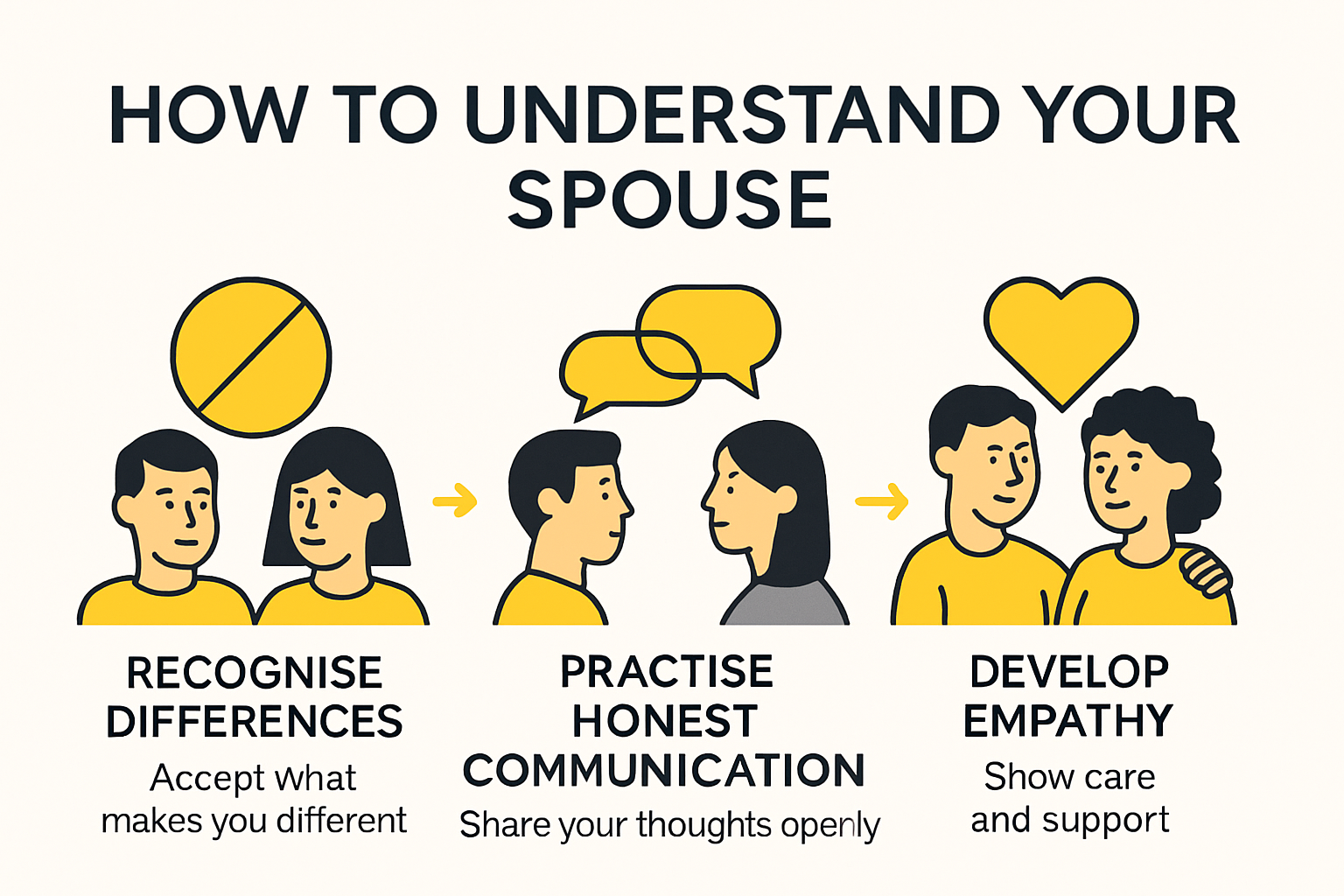
Recognise individual differences in marriageUnderstand that each partner has unique personalities and communication styles that require appreciation for effective relationships.
Practice open and honest communicationCreate a safe environment for both partners to share their true feelings, needs, and aspirations without fear of judgment.
Develop empathy activelyEmpathy is a skill; engage in conversations that prioritize understanding and validating your partner’s emotions.
Collaborate in parenting responsibilitiesShare parenting duties equally, respecting each other’s strengths, and maintain clear communication to prevent misunderstandings.
Commit to continuous growth togetherView challenges as opportunities for personal and relational growth, fostering a dynamic partnership through shared experiences.

Infographic on five practical marriage tips for understanding your spouse

Recognising Differences in Marriage

Understanding your spouse requires recognising that every marriage involves two unique individuals with distinct personalities, backgrounds, and communication styles. What works for one couple might not work for another. This complexity makes understanding your spouse both challenging and fascinating.

The Psychology of Individual Differences

Personality variations are not obstacles but opportunities for deeper connection. Research from the National Institutes of Health highlights that marital satisfaction significantly depends on how couples actively listen and validate each other’s individuality. Successful partnerships aren’t about eliminating differences but learning to appreciate and navigate them constructively.

Every person brings a unique blueprint of experiences, emotional patterns, and communication preferences into a relationship. Some individuals are more emotionally expressive, while others process feelings internally. Some prefer direct communication, others appreciate subtle hints. Recognising these differences doesn’t mean changing your partner but understanding their inherent communication language.

Practical Strategies for Understanding Differences

To truly understand your spouse, you must develop emotional intelligence and active listening skills. This involves moving beyond surface level interactions and genuinely seeking to comprehend your partner’s perspective. Ask open ended questions. Reflect back what you hear to confirm understanding. Show genuine curiosity about their inner world.

Non verbal communication often reveals more than words. Pay attention to tone, body language, and emotional undertones. Sometimes what remains unspoken communicates more powerfully than explicit statements. Marriage counselling for men can provide additional strategies for decoding these subtle communication nuances.

Emotional responsiveness is crucial. When your spouse shares something important, resist the urge to problem solve immediately. Instead, validate their feelings. Acknowledge their emotional experience before offering solutions. This approach demonstrates respect and builds trust.

Recognising differences also means accepting that conflict is normal. Healthy couples don’t avoid disagreements they navigate them with mutual respect. View differences as opportunities for growth rather than threats to your relationship. Each disagreement is a chance to understand each other more deeply.

Here is a summary table highlighting practical strategies suggested in the article for understanding differences in marriage. Use this as a quick reference for applying key actions in your relationship.

StrategyDescription
Ask open-ended questionsEncourage deeper discussions by avoiding yes/no queries.
Reflect back what you hearConfirm your understanding by paraphrasing your partner’s words.
Show curiosity about their inner worldDemonstrate genuine interest in your partner’s feelings and perspectives.
Pay attention to non-verbal cuesNotice tone, body language, and emotional undertones for deeper understanding.
Validate your partner’s feelingsAcknowledge emotions before offering solutions or advice.
Accept conflict as normalRecognise disagreements as opportunities for growth, not threats to the relationship.
Approach differences with empathySeek to understand, not judge, your partner’s unique background and reactions.

Cultural background, family history, and personal experiences shape our relationship expectations. What seems logical to you might feel completely foreign to your spouse. Approach these differences with empathy and a genuine desire to understand rather than judge.

Ultimately, recognising differences in marriage is about creating a safe emotional environment where both partners feel heard, respected, and valued. It requires patience, ongoing communication, and a commitment to seeing your spouse as a complex, evolving individual worthy of continuous discovery.

Communicating Openly and Honestly

Open and honest communication forms the bedrock of a strong marriage. It goes beyond merely exchanging words it involves creating a safe emotional space where both partners feel heard, respected, and validated.

The Foundation of Transparent Communication

Research from the National Communication Association emphasizes that effective communication is not about perfect articulation but genuine vulnerability. Honest communication requires courage to share your true feelings, fears, and aspirations without fear of judgment.

Many men struggle with emotional expression due to societal conditioning that equates vulnerability with weakness. However, true strength in marriage lies in the ability to be authentic. This means acknowledging your emotions, sharing your inner struggles, and being willing to listen without defensiveness.

Practical Strategies for Honest Dialogue

Our guide on strengthening marriages suggests creating dedicated communication time. This doesn’t mean scheduling rigid discussions but establishing regular moments where both partners can speak freely without distractions.

Research published in the National Center for Biotechnology Information highlights that couples who communicate openly are better equipped to manage stress and maintain relationship satisfaction. Some practical strategies include:

  • Active Listening: Focus entirely on your partner when they speak. Put away devices, maintain eye contact, and show genuine interest.
  • Non Defensive Responses: When your partner shares something challenging, resist the urge to become defensive. Validate their feelings first.
  • Emotional Transparency: Share your own feelings honestly. Use statements like “I feel” rather than “You always” to avoid blame.

Communication is not just about talking but understanding. It involves reading between the lines, recognizing non verbal cues, and creating an environment of psychological safety.

Misunderstandings often arise from unspoken expectations. Be clear about your needs, desires, and concerns. Assume your partner wants to understand you, not criticize you. This mindset transforms communication from a potential battleground to a space of mutual growth.

Emotional honesty also means being vulnerable about your weaknesses. Admitting when you are struggling, feeling overwhelmed, or unsure demonstrates authentic strength. It invites your partner to support you and deepens your emotional connection.

Remember that honest communication is a skill that improves with practice. Some conversations will be uncomfortable. Some will reveal painful truths. But each honest dialogue builds trust, understanding, and intimacy.

Ultimately, communicating openly and honestly is about creating a partnership where both individuals feel safe to be their authentic selves. It requires patience, empathy, and a genuine commitment to understanding your spouse beyond surface level interactions.

Building Empathy with Your Partner

Empathy is the cornerstone of deep emotional connection in marriage. It goes beyond simply understanding your spouse’s feelings it involves genuinely experiencing and validating their emotional landscape.

The Science of Emotional Understanding

Research from the Journal of Family Psychology reveals fascinating insights into how stress impacts emotional understanding between partners. The study highlights that acute stress can significantly impair a partner’s ability to accurately perceive and interpret emotional signals, particularly for women.

Understanding empathy requires recognising it as an active skill rather than a passive trait. It demands intentional effort to step outside your own perspective and genuinely connect with your partner’s inner world. This means setting aside personal judgments and creating a compassionate mental space where your spouse’s emotions are valid and important.

Practical Strategies for Developing Empathy

Learn more about supporting your wife’s emotional needs through intentional empathetic practices. Research in the Journal of Sex & Marital Therapy demonstrates that higher levels of dyadic empathy are associated with increased relationship satisfaction and better adjustment during significant life transitions.

Effective empathy involves several key components:

  • Active Listening: Engage fully without interrupting. Focus on understanding, not formulating a response.
  • Emotional Validation: Acknowledge your partner’s feelings without trying to fix or dismiss them.
  • Non Verbal Attunement: Pay attention to body language, tone, and emotional undertones.

Men often struggle with empathy due to societal conditioning that encourages emotional suppression. Breaking this pattern requires conscious effort and vulnerability. It means accepting that emotions are not weaknesses but essential communication tools in a relationship.

A study in the Journal of Family Psychology revealed a critical insight: partners value the perception of empathetic effort more than perfect emotional understanding. This means demonstrating that you are genuinely trying to understand matters more than getting everything exactly right.

Cultivating empathy also involves developing emotional intelligence. This means recognising your own emotional triggers, understanding how past experiences shape your reactions, and being willing to grow. When you become more self aware, you naturally become more attuned to your partner’s emotional experiences.

Stress and external pressures can erode empathetic connections. Intentionally create moments of calm and connection. This might involve setting aside dedicated time for meaningful conversations, practicing mindfulness together, or simply sitting in quiet presence.

Remember that empathy is a skill that improves with practice. Some days you will excel, other days you might struggle. The key is maintaining a consistent commitment to understanding your partner’s emotional world with patience, respect, and genuine curiosity.

Ultimately, building empathy transforms marriage from a transactional partnership to a deeply connected emotional journey. It requires courage, vulnerability, and a willingness to continuously learn and grow together.

Parenthood represents one of the most transformative journeys a couple can undertake. While deeply rewarding, it also introduces unprecedented challenges that can test even the strongest relationships. Successfully navigating these challenges requires intentional collaboration, mutual support, and a shared commitment to your family’s well being.

The Parental Partnership Dynamic

Research from the National Institutes of Health highlights that shared parenting responsibilities and adaptive coping strategies significantly improve both relationship satisfaction and child adjustment. This means moving beyond traditional gender roles and creating a genuine partnership where both parents actively contribute to child rearing and household management.

The transition to parenthood often catches couples unprepared. Suddenly, personal time becomes scarce, sleep deprivation becomes common, and individual needs often take a backseat to the children’s requirements. This radical shift can create tension if not approached with empathy and strategic planning.

Practical Strategies for Collaborative Parenting

Explore our comprehensive guide for marriage advice with kids to develop a more cohesive parenting approach. Effective collaborative parenting involves several critical elements:

  • Unified Decision Making: Develop consistent parenting strategies and present a united front to your children.
  • Equitable Task Distribution: Share responsibilities based on individual strengths and availability, not traditional gender expectations.
  • Mutual Support: Recognize when your partner needs rest, assistance, or emotional support.

Communication becomes even more crucial during parenthood. Regular check ins about parenting challenges, individual stress levels, and emotional well being can prevent resentment from building. These conversations should be judgment free zones where both partners feel safe expressing vulnerabilities.

Stress management is paramount. Parenting introduces complex emotional and logistical challenges that can quickly overwhelm even the most prepared couples. Learning to manage stress together means developing shared coping mechanisms, whether through brief daily check ins, occasional date nights, or seeking external support when needed.

Recognize that parenting styles will naturally differ. You and your partner will approach situations differently, and that’s not just okay it’s beneficial. Children benefit from experiencing diverse parenting perspectives. The key is finding a balance where differences complement rather than conflict.

Financial pressures often intensify during parenthood. Discussing financial strategies, budgeting, and potential career adjustments openly can prevent future conflicts. This might involve reassessing work schedules, exploring flexible employment options, or creating a comprehensive financial plan that accommodates your family’s evolving needs.

Emotional intelligence plays a crucial role in navigating parental challenges. This means recognizing your own emotional triggers, understanding your partner’s stress responses, and creating a supportive environment where both parents feel valued and understood.

Self care is not selfish it’s essential. Encourage each other to maintain individual interests, take breaks, and pursue personal growth. A refreshed, emotionally balanced parent is far more effective than an exhausted, resentful one.

Below is a comparison table outlining the key elements of effective collaborative parenting as described in the article. This can help couples identify areas to strengthen their parental partnership.

ElementDescriptionBenefit
Unified Decision MakingDeveloping consistent parenting approaches and presenting a united front to childrenReduces confusion and builds trust
Equitable Task DistributionSharing tasks based on strengths and availability, not traditional gender rolesPrevents resentment and burnout
Mutual SupportOffering each other rest, assistance, and emotional support as neededEnhances relationship satisfaction
Regular CommunicationHaving judgment-free discussions about parenting, stress, and well-beingPrevents misunderstandings
Stress ManagementDeveloping shared coping mechanisms and seeking external support if neededPromotes emotional resilience
Accepting Parenting DifferencesRecognising each partner’s unique style as beneficial for children’s growthEncourages complementary strengths
Financial CommunicationOpenly discussing financial strategies and adjustments post-parenthoodAvoids future conflicts
Self-care EncouragementSupporting each other in maintaining personal interests and taking breaksIncreases parental well-being

parental partnership teamwork

Ultimately, successfully navigating challenges as parents is about viewing your partnership as a dynamic, evolving team. It requires continuous learning, mutual respect, and a shared commitment to growing together through the beautiful complexity of raising children.

Frequently Asked Questions

How can I better understand my spouse’s personality differences?

Recognising and appreciating individual differences is key. Engage in active listening, ask open-ended questions, and show genuine curiosity about your partner’s feelings and perspectives.

What are effective communication strategies in marriage?

Create a safe space for dialogue by practicing active listening, emotional transparency, and non-defensive responses. Schedule regular check-ins to discuss feelings and needs openly without distractions.

How can I build empathy with my partner?

Develop empathy by actively listening to your spouse, validating their feelings, and being mindful of non-verbal cues. Emotional intelligence is essential; work on understanding your own emotions to connect better with your partner’s experiences.

What are some practical tips for collaborative parenting?

Establish unified decision-making strategies, share parenting tasks based on strengths, and support each other emotionally. Regularly communicate about parenting challenges and practice stress management together.

Ready to Truly Understand Your Partner? Start Your Journey with Wise Husband

Couples often struggle with differences in communication and emotional needs, leading to cycles of frustration and missed connection. If you recognise yourself in the challenges described above, you are not alone. The good news is, gaining stronger understanding in your marriage is possible with the right mindset, tools, and ongoing support. Visit our Daily Wisdom section for fresh, practical advice you can use every day.

https://wisehusband.com/

Transform the way you connect and support your marriage by engaging with resources designed for men who want real change. Join a community that puts genuine growth above empty tricks. Start now by exploring WiseHusband.com. Make the move today and become the wise partner your relationship needs.


Get the Wise Husband Book


https://wisehusband.com/understanding-your-spouse-practical-tips-for-couples/?fsp_sid=1418

Thursday, 16 October 2025

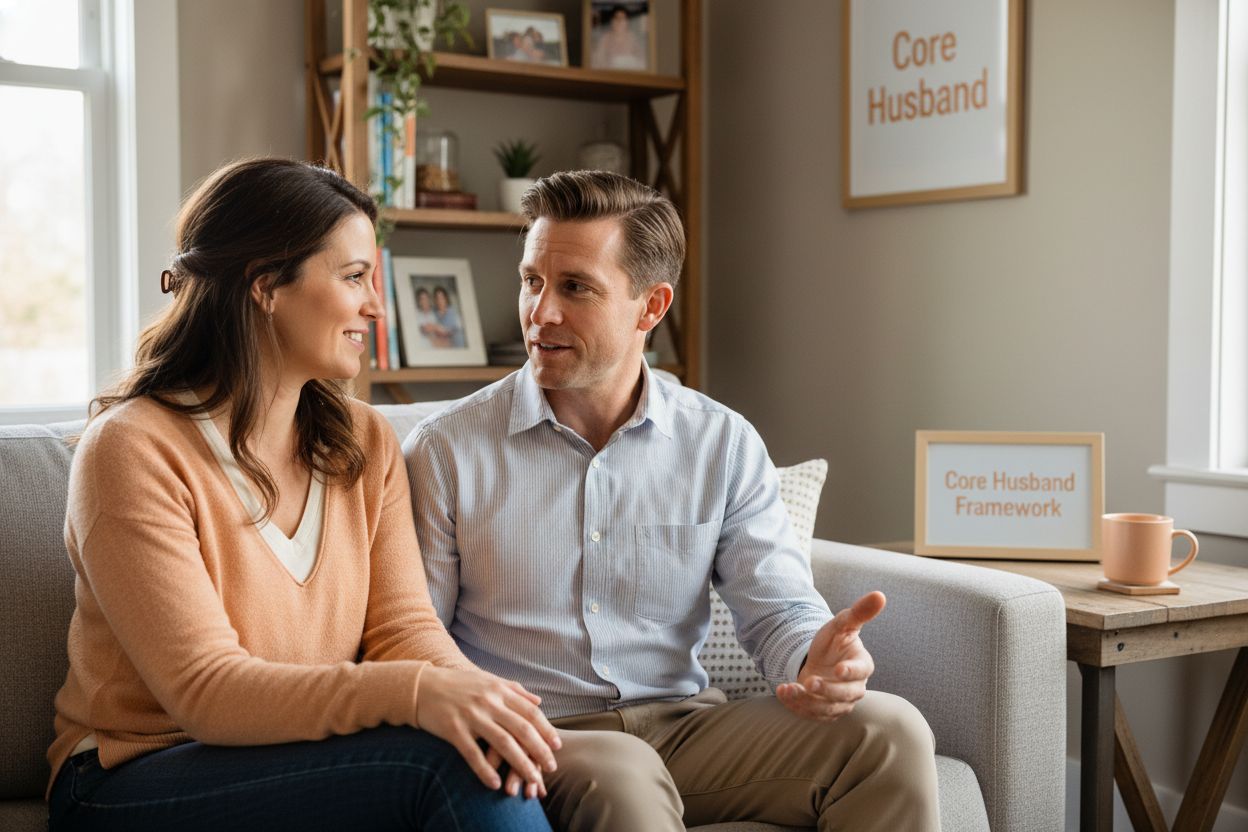
Understanding the Core Husband Framework and Self-Growth

Core Husband Framework


Marriages are not the static contracts people once believed. People think showing up and providing is enough, but studies show that husbands who commit to personal growth report significantly higher relationship satisfaction and emotional stability. Redefining what it means to be a husband is not about perfection at all, because the Core Husband Framework puts self-awareness and adaptability at the center of a truly resilient relationship.


Table of Contents


Quick Summary


TakeawayExplanation
Prioritize emotional responsivenessRecognize and validate your partner’s emotions to improve intimacy.
Embrace intentional leadershipProvide empathetic support while promoting collaborative decision-making in your relationship.
Commit to continuous self-improvementDevelop personal skills that enhance relationship dynamics and emotional intelligence.
Model vulnerability as strengthShow emotional openness to foster authenticity and resilience within family interactions.
Implement proactive communication strategiesMove beyond reactivity to cultivate understanding and connection in family discussions.

Defining the Core Husband Framework: Concepts and Principles


The Core Husband Framework represents a comprehensive approach to understanding and executing marital roles with intentionality, emotional intelligence, and personal growth. Unlike traditional perspectives that view marriage as a static institution, this framework recognizes marriage as a dynamic process requiring continuous self development and relational attunement.


Foundational Principles of the Framework


At its essence, the Core Husband Framework is built upon three fundamental principles that transform how men approach partnership and personal evolution:


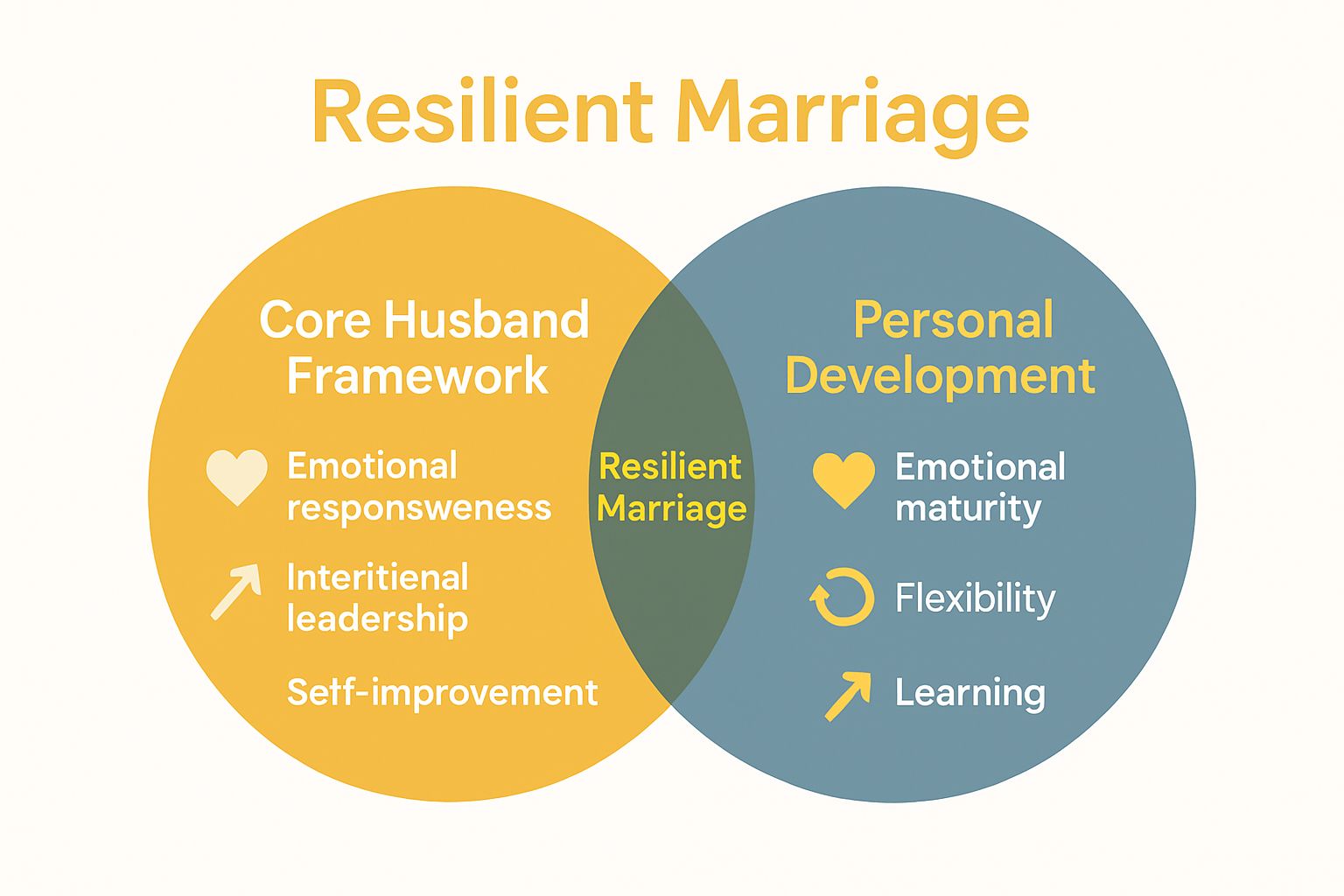
  • Emotional Responsiveness: The ability to consistently recognize, validate, and appropriately respond to a partner’s emotional landscape

  • Intentional Leadership: Providing direction and support while maintaining collaborative and empathetic decision making

  • Continuous Self Improvement: Committing to personal growth that directly enhances relationship quality


According to research from the National Marriage Project, successful marriages are characterized by intentional effort and adaptability. The Core Husband Framework embodies this understanding by positioning husbands as active architects of their relational experience.


The table below organizes the three foundational principles of the Core Husband Framework along with their concise definitions to help clarify their distinct roles within the approach.


PrincipleDefinition
Emotional ResponsivenessConsistently recognizing, validating, and appropriately responding to a partner’s emotions
Intentional LeadershipProviding empathetic direction and support while promoting collaborative decision-making
Continuous Self ImprovementCommitting to personal growth that directly enhances relationship quality and emotional intelligence

Psychological Underpinnings


The framework draws from attachment theory and evolutionary psychology, recognizing that modern husbands must balance traditional protective instincts with contemporary emotional intelligence. This means moving beyond simplistic provider roles to become emotionally available, psychologically present partners.


Read our comprehensive guide on building emotional connection to understand how these principles translate into practical relationship strategies. The Core Husband Framework is not about perfection but consistent, mindful engagement.


By embracing these principles, men can transform their approach from reactive relationship management to proactive partnership cultivation. This framework serves as both a philosophical guide and a practical roadmap for husbands committed to creating meaningful, resilient marriages.


Venn diagram comparing core husband framework and personal development


The Importance of Self-Growth in Marriage and Family Life


Self-growth is not merely a personal journey but a critical component of building and sustaining a healthy marriage and family environment. It represents an ongoing commitment to developing emotional intelligence, communication skills, and personal resilience that directly impacts relationship dynamics.


Understanding Personal Evolution in Marriage


Marriage is a collaborative journey where individual growth profoundly influences collective well-being. Husbands who prioritize self-improvement create a ripple effect that enhances overall family functioning. This means continuously challenging personal limitations, confronting psychological patterns, and developing adaptive strategies.


This table outlines key aspects of marital self-growth and their brief descriptions, providing a quick overview of how personal evolution manifests within marriage.


AspectDescription
Emotional MaturityManaging complex emotions without reactive behaviors
Psychological FlexibilityAdapting to changing family dynamics and personal challenges
Continuous LearningActively seeking knowledge about relationships and personal development

Key aspects of marital self-growth include:


  • Emotional Maturity: Developing capacity to manage complex emotions without reactivity

  • Psychological Flexibility: Adapting to changing family dynamics and personal challenges

  • Continuous Learning: Actively seeking knowledge about relationship dynamics and personal development


Research from the National Institute of Mental Health indicates that individuals committed to personal growth demonstrate significantly higher relationship satisfaction and emotional stability.


Transformative Impact on Family Dynamics


Self-growth extends beyond individual benefit. When husbands invest in personal development, they create a powerful model of resilience and emotional intelligence for their children.


family dynamics self-growth This intergenerational transmission of psychological skills transforms family culture.


Explore our comprehensive guide on understanding teamwork in marriage to see how personal growth translates into stronger partnership. The journey of self-improvement is not about achieving perfection but maintaining a consistent commitment to becoming a better version of oneself.


Ultimately, self-growth in marriage represents a profound commitment to personal and relational excellence. By embracing continuous learning and emotional development, husbands can create more meaningful, resilient, and transformative family experiences.


How the Core Husband Framework Enhances Personal Development


The Core Husband Framework transcends traditional relationship approaches by positioning personal development as a deliberate, strategic process of transformation. It provides men with a structured pathway to evolve beyond societal stereotypes and become more emotionally intelligent, purposeful partners.


Mechanisms of Transformational Growth


Personal development within this framework is not passive but an active, intentional journey of psychological and emotional refinement. The framework introduces systematic approaches that challenge existing behavioral patterns and encourage continuous self reflection.


Key developmental mechanisms include:


  • Conscious Introspection: Systematically examining personal emotional responses and underlying psychological triggers

  • Skill Deliberate Acquisition: Intentionally developing communication, empathy, and emotional regulation skills

  • Vulnerability as Strength: Recognizing emotional openness as a powerful tool for personal and relational growth


Research from the National Institutes of Health demonstrates that structured personal development frameworks significantly enhance individual psychological resilience and relationship satisfaction.


Psychological Empowerment through Structured Approach


The Core Husband Framework transforms personal development from an abstract concept into a concrete, actionable strategy. By providing clear principles and benchmarks, it enables men to track their emotional and relational growth systematically.


Explore our guide on rediscovering true partnership to understand how structured personal development can revolutionize relationship dynamics. This approach is not about achieving perfection but maintaining a committed trajectory of continuous improvement.


Ultimately, the framework serves as a roadmap for men to deconstruct limiting beliefs, develop emotional intelligence, and create more authentic, meaningful connections in their personal and professional lives.


Connecting Self-Growth to Successful Family Dynamics


Self-growth is not an isolated journey but a transformative process that fundamentally reshapes family interactions and generational patterns. By intentionally developing personal skills and emotional intelligence, husbands create a powerful ripple effect that elevates the entire family ecosystem.


Intergenerational Impact of Personal Development


Personal growth transcends individual experience, serving as a critical mechanism for breaking inherited psychological patterns and creating healthier relational frameworks. When husbands commit to continuous self improvement, they effectively interrupt negative generational cycles and model emotional resilience for their children.


Key transformative elements include:


  • Emotional Intelligence Transfer: Demonstrating advanced emotional regulation skills that children unconsciously absorb

  • Conflict Resolution Modeling: Showing constructive approaches to managing disagreements and stress

  • Vulnerability as Strength: Normalizing emotional openness and authentic communication within family dynamics


Research from the National Institutes of Health demonstrates that parents committed to personal development significantly enhance family cohesion and psychological well-being.


Systemic Relationship Transformation


Self-growth fundamentally rewrites relationship dynamics by introducing more sophisticated communication strategies and emotional awareness. This systematic approach creates an environment of mutual respect, understanding, and collaborative growth.


Learn more about relationship rituals that connect families to understand how intentional personal development can create deeper, more meaningful family connections. The journey is not about achieving perfection but maintaining a consistent commitment to emotional evolution.


Ultimately, connecting self-growth to family dynamics represents a profound commitment to collective well-being. By investing in personal development, husbands become catalysts for transformative family experiences that transcend individual limitations and create sustainable emotional health.


Real-World Applications of the Core Husband Framework


The Core Husband Framework transitions from theoretical concept to practical methodology by providing actionable strategies for men to transform their approach to marriage, parenting, and personal development. This framework offers a structured approach to addressing complex relational dynamics with intentionality and emotional intelligence.


Practical Intervention Strategies


Implementing the framework requires systematic approaches that translate emotional awareness into concrete behaviors. Men learn to move beyond reactive patterns and develop proactive relational skills that create meaningful engagement with their partners and children.


Key practical application areas include:


  • Communication Reconstruction: Developing nuanced communication techniques that prioritize understanding over winning arguments

  • Emotional Mapping: Learning to recognize and respond to underlying emotional currents within family interactions

  • Adaptive Leadership: Creating flexible leadership models that balance guidance with collaborative decision making


Research from the American Psychological Association confirms that structured intervention frameworks significantly improve relationship outcomes and individual psychological functioning.


Transforming Relationship Challenges


The framework provides men with a comprehensive toolkit for navigating complex relational challenges. By offering clear principles and actionable strategies, it enables husbands to approach relationship dynamics with greater confidence and emotional sophistication.


Explore our daily wisdom for continuous growth to understand how consistent application of these principles can create lasting positive change. The goal is not instantaneous perfection but continuous, intentional evolution.


Ultimately, the Core Husband Framework serves as a dynamic roadmap for men seeking to create more authentic, supportive, and emotionally intelligent relationships. It represents a paradigm shift from traditional masculinity towards a more nuanced, responsive approach to partnership and personal growth.


Begin Your Real Transformation with Wise Husband


Struggling to break out of old patterns or unsure how to lead and connect with your partner? The Core Husband Framework highlights that lasting growth in marriage starts with self-awareness and intentional action. If you have felt stuck in traditional roles or lacked clear strategies for emotional responsiveness and leadership, you are not alone. Our proven tools and insights are designed to help men like you develop a mindset of emotional intelligence, continuous improvement, and relational strength. Looking for more ways to unlock your inner leader? Explore the Embrace the Warrior Spirit resources for practical, strength-based guidance that helps you show up with purpose in your marriage.


https://wisehusband.com/


Do not let common setbacks or old habits hold your relationship back any longer. Visit Wise Husband and jump into life-changing insights made for men who want to do more than just maintain their marriage. Whether you want to lead with strength, connect more deeply, or discover new relationship wisdom, our Awaken the Lover Within articles offer hands-on steps to build the respect and love your partnership needs right now. Start your breakthrough journey today.


Frequently Asked Questions


What is the Core Husband Framework?


The Core Husband Framework is a comprehensive approach that emphasizes emotional intelligence, intentional leadership, and continuous self-improvement in marriage. To start understanding this framework, reflect on your emotional responsiveness and identify areas where you can develop greater partnership skills.


How can I practice emotional responsiveness in my marriage?


To improve emotional responsiveness, actively listen to your partner and validate their feelings. Set aside time each week to discuss emotions and check in with each other, aiming for genuine two-way communication.


What steps can I take for continuous self-improvement as a husband?


Begin by identifying specific personal growth areas you want to focus on, such as emotional regulation or communication skills. Create a personal development plan that includes setting measurable goals and dedicating at least 30 minutes a week to self-reflection or learning resources to support your growth.


How does self-growth impact family dynamics?


Self-growth positively influences family interactions by modeling emotional intelligence and resilience for your children. Aim to demonstrate healthy conflict resolution strategies in real-time, which can significantly enhance your family’s communication and understanding over time.


Can I use the Core Husband Framework to resolve conflicts in my relationship?


Yes, using the Core Husband Framework can help you approach conflicts with improved emotional intelligence and proactive communication. Practice adaptive leadership by encouraging collaborative decision-making, which can lead to more constructive outcomes during disagreements.


How do I start applying the Core Husband Framework in my daily life?


Begin by integrating the principles of the Core Husband Framework into your daily interactions, focusing on intentional leadership and emotional mapping. Schedule consistent times each week to evaluate your communication styles and emotional responses, setting goals for continuous improvement.


Get the Wise Husband Book


https://wisehusband.com/core-husband-framework-and-self-growth/?fsp_sid=1409

Husband Archetypes From Wife’s View: Complete Guide

Did you know that over 60 percent of couples feel their relationship style doesn’t fit traditional husband stereotypes? Understanding husban...