Tuesday, 28 October 2025

How to Be a Supportive Spouse: Strengthen Your Marriage

How to Be a Supportive Spouse


Keeping a marriage strong takes more than just love and promises. Studies show that couples who communicate openly are twice as likely to report high relationship satisfaction. Sounds simple enough, right? Most couples think talking is easy but few realize that listening deeper, sharing the load, and consistent small gestures are what actually rescue relationships from fading away.


Table of Contents


Quick Summary


Key PointExplanation
1. Practice Active ListeningEngage fully when your spouse speaks, showing that her feelings and thoughts matter to you.
2. Prioritize Quality Time TogetherSchedule distraction-free time to foster emotional connections and strengthen your relationship.
3. Show Daily Affection and AppreciationConsistently express love through small gestures and sincere compliments to enhance emotional intimacy.
4. Share Household and Parenting ResponsibilitiesActively participate in domestic duties to promote teamwork and reduce household tension.
5. Support Each Other in Stressful TimesBe a reliable emotional anchor; listen and provide reassurance when your partner faces challenges.

Step 1: Listen Actively and Encourage Open Communication


Effective communication is the cornerstone of a strong marriage. When you learn to listen actively and create an environment of open dialogue, you transform your relationship from merely coexisting to genuinely connecting. This step is about understanding your spouse not just with your ears, but with your entire being.


Active listening goes beyond hearing words. It requires full presence and genuine emotional engagement. When your wife speaks, put away distractions like smartphones or television. Make direct eye contact, turn your body towards her, and demonstrate through your posture that she has your complete attention. Your physical positioning signals that her words matter.


The art of active listening involves more than just hearing. It means reflecting back what you’ve understood without immediately jumping to solutions or judgment. For instance, if your wife shares a challenging work scenario, resist the impulse to immediately offer advice. Instead, validate her feelings by saying something like, “It sounds like you’re feeling overwhelmed and frustrated by your team’s dynamics. That must be really difficult.”


Learn more advanced communication techniques for couples that can help you refine your listening skills. These techniques can transform how you interact, making your spouse feel truly heard and understood.


Creating space for vulnerable and honest communication requires emotional safety. This means never dismissing her feelings, avoiding defensive responses, and showing genuine curiosity about her experiences. Ask open-ended questions that invite deeper sharing. Questions like “How did that make you feel?” or “What was going through your mind when that happened?” demonstrate that you’re truly interested in understanding her perspective.


Practical verification that you’re successfully implementing this step includes observable changes: your wife will become more relaxed during conversations, share more freely, and feel emotionally supported. She’ll sense that you’re not just hearing her words, but truly comprehending her emotional landscape.


Remember, listening is a skill that improves with consistent practice. Be patient with yourself as you develop this crucial relationship skill. Your commitment to understanding your spouse will gradually create a deeper, more intimate connection that transcends mere communication and builds true emotional intimacy.
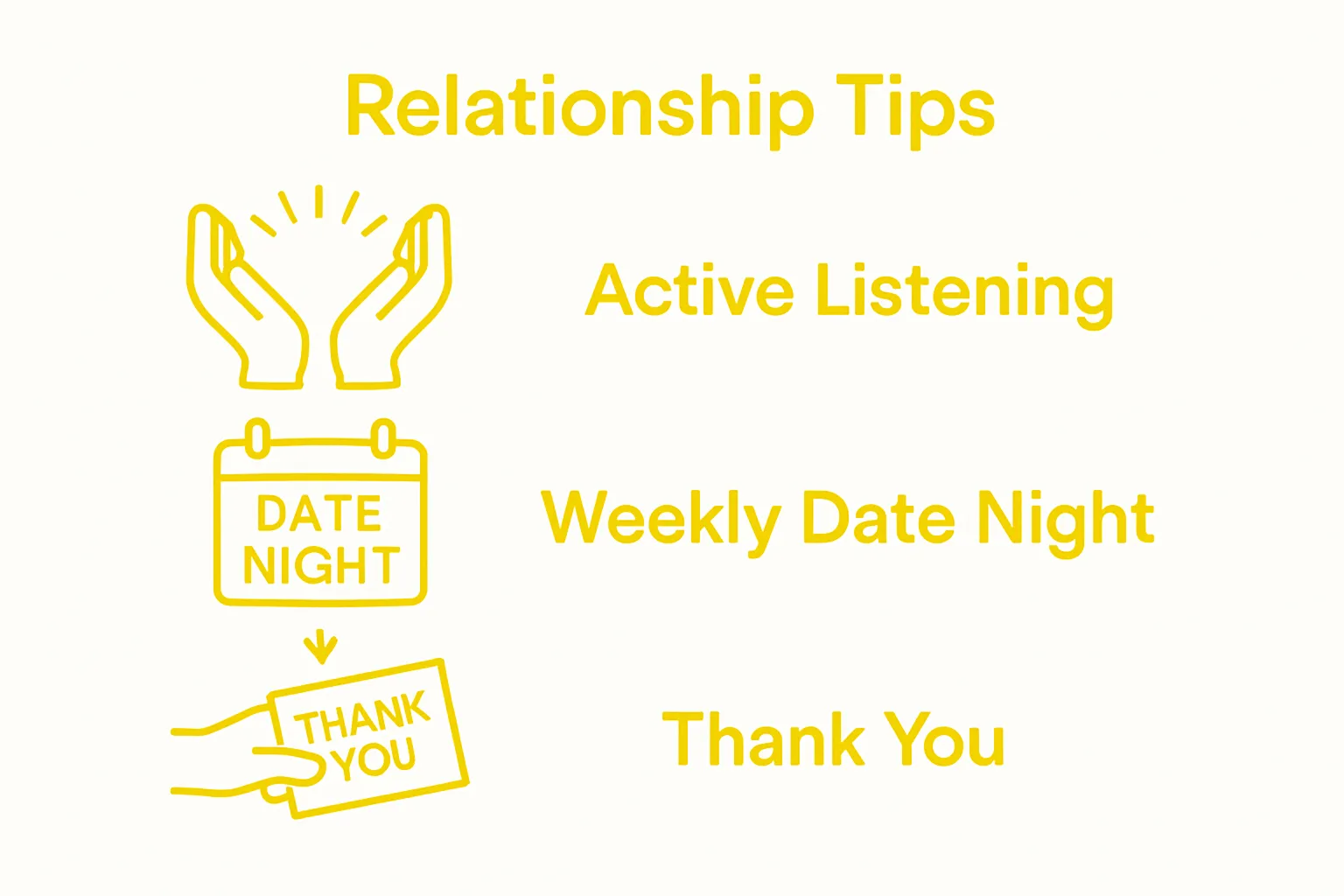

Infographic showing three key steps to being a supportive spouse: listen actively, schedule quality time, show daily appreciation.


Step 2: Prioritize Quality Time Together as a Couple


Quality time is not just about being physically present it is about creating meaningful connections that strengthen your relationship’s emotional foundation. Intentional and distraction-free interactions are the key to rebuilding intimacy and understanding between partners who often get lost in daily responsibilities.


Nurturing your marriage requires strategic bonding moments that go beyond routine interactions. This means scheduling dedicated time together where work emails cell phones and household chores are completely off limits. Consider establishing a weekly date night that becomes a non negotiable commitment. This could be a dinner out a shared activity or simply an evening walk where you reconnect without external interruptions.


The quality of time matters more than quantity. According to research from the American Psychological Association, couples who engage in purposeful shared experiences develop stronger emotional bonds. This doesn’t mean expensive outings or elaborate plans. Simple activities like cooking together playing a board game or watching a movie can create powerful moments of connection.


Creating these moments requires proactive planning. Block out time in your calendar specifically for your relationship just as you would for critical work meetings. Communicate with your spouse about the importance of these dedicated times and make them feel special. Surprise her occasionally by planning something unexpected a spontaneous picnic a weekend getaway or even a surprise date that aligns with her interests.


Address potential challenges head-on. Understand that work family responsibilities and exhaustion can make consistent quality time challenging. Combat this by being flexible and creative. If a traditional date night is difficult try morning coffee together early morning walks or even short midday check-in calls. The goal is consistent emotional engagement not perfection.


Verification that you’re successfully implementing this step includes observable changes: increased emotional intimacy reduced tension improved communication and a sense of mutual excitement about spending time together. Your spouse will begin to look forward to these moments and feel genuinely valued.


Remember quality time is an investment in your relationship’s future. It is not a luxury but a necessary component of maintaining a strong emotional connection. By consistently prioritizing these moments you are actively demonstrating your commitment to your marriage beyond words.


Step 3: Show Affection and Appreciation Daily


Daily affection is the lifeblood of a thriving marriage. It transforms routine interactions into opportunities for emotional connection, making your spouse feel genuinely valued and deeply loved. This step is about consistently demonstrating your appreciation through both verbal and physical expressions of love.


Discover powerful ways to appreciate your partner that go beyond occasional grand gestures. Affection isn’t about expensive gifts or elaborate surprises it is about small consistent actions that communicate your love and respect. Start by incorporating meaningful touch throughout your day. A gentle hand on her shoulder while she works a surprise back rub after a stressful day or a lingering kiss that communicates more than words ever could these moments build emotional intimacy.


Verbal appreciation is equally crucial. According to psychological research, partners who regularly express gratitude experience higher relationship satisfaction. Make it a point to verbalize specific things you admire about your wife. Instead of generic compliments like “you look nice” try “I love how passionate you are when you talk about your work” or “Your kindness towards our children always amazes me.”


Create ritualized moments of connection. This might mean sending a mid-day text telling her something you appreciate a handwritten note left where she will find it or a quick phone call just to say you are thinking of her. These small gestures communicate that she is constantly on your mind even during busy workdays.


Addressing potential challenges means understanding that affection can feel uncomfortable if you are not used to expressing emotions freely. Start small. If verbal expressions feel difficult begin with physical gestures like holding hands or unexpected hugs. If physical touch feels awkward start with sincere verbal appreciations. The key is consistent effort and genuine intention.


Verification that you are successfully implementing this step includes observable changes: your wife will appear more relaxed more emotionally open and visibly appreciate your efforts. She will likely reciprocate these gestures creating a positive feedback loop of affection and appreciation.


Below is a table summarizing practical ways to show daily affection and appreciation in your marriage, as described in the article.


Method of AffectionDescriptionExample Action
Meaningful Physical TouchUse touch to express love and comfortHold hands, offer a back rub, give a gentle shoulder touch
Verbal AppreciationExpress specific praise or gratitude verballyCompliment her passion for work, thank her for kindness
Small GesturesPerform thoughtful acts that show you careLeave a handwritten note, send a thoughtful text
Ritualized Connection MomentsCreate daily routines for expressing affectionMorning kiss, midday check-in call, evening cuddle
Acts of KindnessHelp or support her without being promptedMake her favorite drink, handle a chore unexpectedly

Remember that affection is a skill that improves with practice. Do not get discouraged if it feels awkward initially. Your commitment to showing love consistently will gradually transform your relationship creating deeper emotional intimacy and mutual respect.


Step 4: Assist with Household Responsibilities and Parenting


Shared responsibility is the foundation of a balanced and harmonious marriage. This step transforms household management from a potential source of tension to an opportunity for teamwork and mutual support. It is about actively participating in domestic duties and parenting without being asked or waiting for instructions.


Learn essential tips for effective parenting and household management that go beyond occasional help. True partnership means anticipating needs and proactively addressing them. Do not wait for your wife to create task lists or delegate chores. Instead develop an intuitive understanding of household requirements. This might mean starting a load of laundry when you notice it is needed preparing meals without being prompted or taking initiative with children essential care and homework.


According to research in the Journal of Family Psychology, couples who equitably share domestic labor experience significantly higher relationship satisfaction. Proactive involvement is about understanding that household management is not a favor but a shared responsibility. Develop a system where tasks are naturally distributed based on individual strengths and availability rather than traditional gender roles.


Parenting requires synchronized effort. Engage directly with your children not as a secondary caregiver but as an equally responsible parent. This means being present for bedtime routines participating in school activities understanding each child individual needs and emotional landscape. Communicate openly with your wife about parenting strategies develop a united approach and support each other decision making.


Address potential challenges by recognizing that changing established patterns takes time. If you have historically been less involved you might encounter resistance or skepticism. Stay consistent communicate openly and demonstrate through actions that your commitment is genuine. Be patient with yourself and your family as you develop new interaction patterns.


Verification that you are successfully implementing this step includes observable changes: reduced household tension increased mutual respect and a sense of genuine partnership. Your wife will feel supported not supervised your children will experience a more balanced parental dynamic and you will feel more connected to your family daily rhythms.
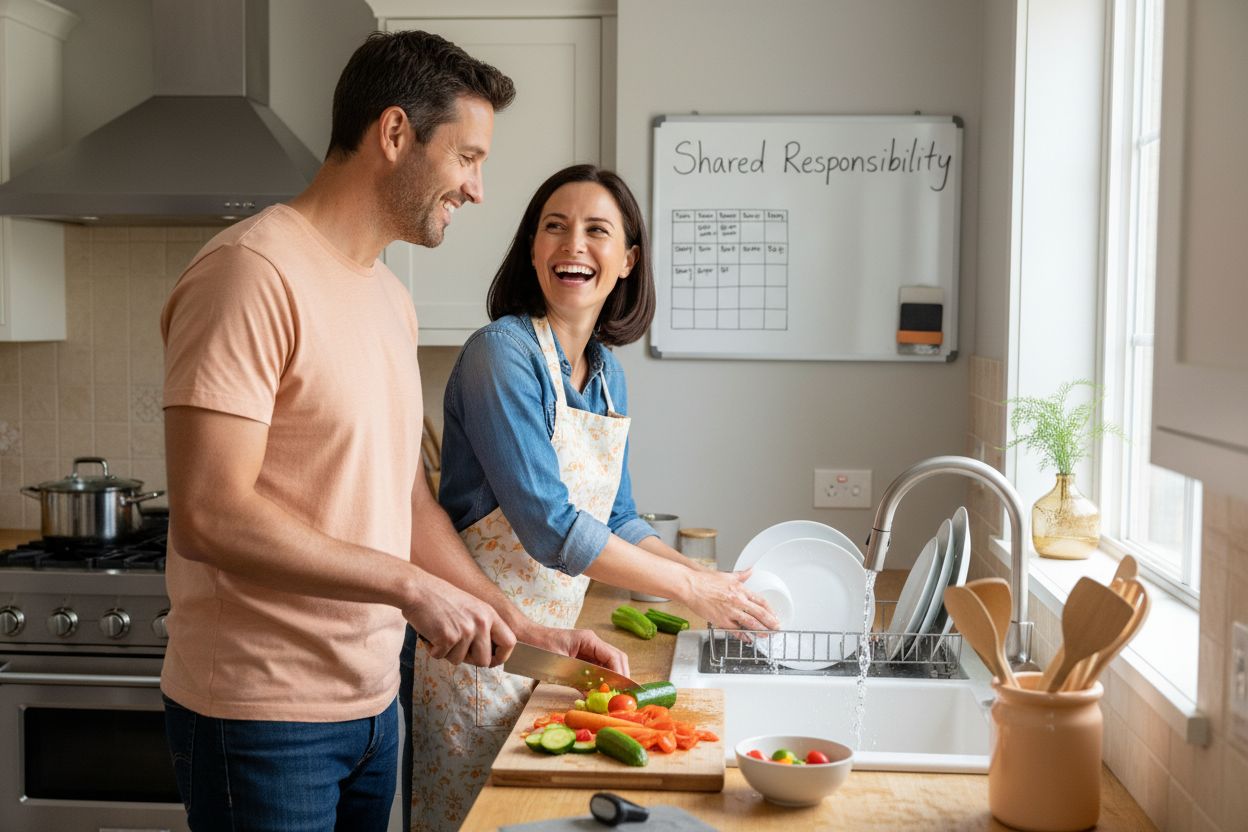

shared responsibility marriage


Remember that household management and parenting are ongoing conversations. Remain flexible adaptable and always willing to learn. Your commitment to shared responsibility will gradually transform your family dynamic creating a more supportive loving environment for everyone.


Step 5: Stand by Your Partner in Times of Stress or Change


Resilience in marriage is defined not by avoiding challenges but by how you navigate them together. This step is about transforming difficult periods from potential relationship fracture points into opportunities for deeper connection and mutual support. When life throws unexpected curveballs stress or significant changes your response can either strengthen or weaken your partnership.


Learn relationship strategies to connect amidst chaos that go beyond mere sympathy. Standing by your partner means being a solid emotional anchor during turbulent times. This requires active listening without attempting to immediately solve problems. Your primary role is to create a safe emotional space where your wife feels validated heard and supported.


According to research from the American Psychological Association, emotional support during major life transitions significantly enhances relationship stability. Your consistent presence matters more than perfect solutions. When your wife experiences professional setbacks personal challenges health issues or family difficulties your unwavering support becomes her emotional lifeline.


Practical support involves both emotional and tangible assistance. This might mean taking on additional household responsibilities during her stressful periods offering to handle logistical challenges or simply being present without pressure to immediately resolve everything. Sometimes the most powerful support is silent companionship a reassuring touch or simply sitting together during difficult moments.


Address potential challenges by recognizing that everyone processes stress differently. Some individuals prefer talking through problems while others need quiet space. Learn and respect your wife individual stress management style. Avoid minimizing her feelings with phrases like “it is not a big deal” or offering unsolicited advice. Instead ask direct questions like “How can I best support you right now?”


Verification that you are successfully implementing this step includes observable changes: your wife will appear more relaxed when discussing challenges she will seek you out as a primary source of comfort and you will notice increased mutual trust. Your relationship will feel like a genuine partnership where both individuals know they can rely on each other unconditionally.


The following table helps you troubleshoot common challenges in supporting your spouse during stressful times by connecting each issue with suggested strategies from the article.


ChallengeCauseSupport Strategy
Partner withdraws during stressNeeds quiet space or time to process emotionsRespect her style; offer silent companionship and patience
Tension increases after offering adviceUnsolicited problem-solving or minimizing feelingsListen actively; validate emotions before proposing solutions
Uncertainty about how to helpNot knowing what support is neededAsk direct questions: “How can I best support you right now?”
Feeling overwhelmed with added dutiesIncreased responsibilities during partner’s stressOffer tangible support; proactively handle extra household tasks

Remember that standing by your partner is an evolving skill. Each challenging experience is an opportunity to deepen your connection. Approach these moments with patience empathy and a genuine commitment to supporting your spouse through whatever life presents.


Ready to Become the Supportive Spouse Your Marriage Needs?


Struggling to truly connect with your wife, build emotional intimacy, or feel confident that you’re making a real difference as a partner? Many men feel lost when it comes to active listening, sharing household responsibilities, or showing daily appreciation. The article “How to Be a Supportive Spouse: Strengthen Your Marriage” shows that these are common challenges, but it also proves you can learn new habits and mindsets to completely transform your marriage. Real change starts when you equip yourself with the right advice, encouragement, and tools for growth. For daily strategies to improve communication, connection, and confidence, explore the actionable guidance on our Daily Wisdom page.


https://wisehusband.com/


Take the next step and join a growing community of men at WiseHusband.com who are committed to building marriages on love, understanding, and respect. Discover practical tips, real-world support, and proven advice that will help you become the partner your wife truly deserves. Start learning today—and give your marriage the strength it needs to thrive. If you want even more inspiration, explore leadership insights and growth tools on our Embrace the Warrior Spirit page. Don’t wait. Transform your relationship by taking action now.


Frequently Asked Questions


How can I improve communication with my spouse?


Effective communication can be improved by practicing active listening, creating an environment for open dialogue, and asking open-ended questions to encourage sharing. It’s important to validate your partner’s feelings and show genuine interest in their thoughts and emotions.


What activities can we do to strengthen our emotional connection?


Engaging in quality time together is crucial. Consider scheduling regular date nights and participating in shared activities like cooking, playing games, or simply enjoying a walk. The key is to ensure these times are distraction-free and intentional.


How do I show affection and appreciation in my marriage?


Daily expressions of affection and appreciation can be shown through both verbal and physical gestures. Compliment your spouse, perform small acts of kindness, and incorporate meaningful touch into your daily interactions to make them feel valued and loved.


What should I do to support my spouse during stressful times?


To support your spouse during challenging times, be present and listen actively without immediately trying to offer solutions. Validate their feelings and provide emotional support, whether through listening, assisting with tasks, or simply being there to share in the moment.


Get the Wise Husband Book


https://wisehusband.com/how-to-be-a-supportive-spouse/?fsp_sid=1481

Sunday, 26 October 2025

Understanding Male Psychology: Insights for Relationships

Male Psychology


Male psychology digs deeper than stereotypes and simple answers. Research shows emotional expression for men is not about volume, but about depth and authenticity. Most people think men are just emotionally reserved or wired for toughness, but that does not even scratch the surface. The real story is that male emotions are rich, complex, and shaped by both biology and social expectation, creating a world far more surprising than you might expect.

Table of Contents

Quick Summary

TakeawayExplanation
Understanding male psychology enhances relationshipsKnowledge of male emotional experiences fosters deeper empathy and communication between partners.
Men communicate emotions through actions, not wordsEmotional expression often manifests through behaviors, requiring partners to recognize non-verbal cues.
Societal norms shape male emotional processingCulturally influenced expectations impact how men express vulnerability and emotions.
Emotional intelligence is crucial in family dynamicsMen must balance traditional roles with emotional engagement for supportive family relationships.
Individual experiences vary, affecting emotional responsesRecognizing the uniqueness of each man’s psychological journey helps avoid stereotypes and enhances understanding.

What is Male Psychology? A Fundamental Overview

Male psychology represents a specialized field of psychological research dedicated to understanding the unique cognitive, emotional, and behavioral patterns specific to men. Contemporary psychological research explores how biological, social, and cultural factors shape male psychological experiences and responses.

Core Components of Male Psychology

Male psychology goes beyond simple stereotypes, examining the intricate ways men process emotions, develop relationships, and navigate social environments. It recognizes that male psychological experiences are complex and multifaceted, influenced by multiple interconnected systems:

  • Biological foundations involving hormonal influences
  • Societal expectations and cultural norms
  • Individual personal experiences and developmental trajectories
  • Neurological processing patterns

Psychological Foundations of Male Behavior

Understanding male psychology requires acknowledging that men’s psychological experiences are not monolithic. While certain patterns emerge, individual variation remains significant. Our guide on understanding men’s emotions explores how emotional processing differs across individual male experiences.

Key psychological principles include:

  • Emotional regulation mechanisms
  • Social adaptation strategies
  • Neurochemical responses to stress and challenge
  • Interpersonal communication patterns

Male psychology seeks to provide nuanced insights into how men think, feel, and interact, moving beyond reductive stereotypes toward a more compassionate, comprehensive understanding of masculine psychological experiences.

Why Understanding Male Psychology Matters in Relationships

Research demonstrates that understanding male psychology is fundamental to building stronger, more resilient romantic relationships. By comprehending the psychological landscape that shapes male emotional experiences, partners can develop deeper empathy, more effective communication strategies, and meaningful connections.

Emotional Intelligence and Relational Dynamics

Male psychology reveals that men often process emotions differently from traditional expectations. Emotional expression for men is not about volume, but about depth and authenticity. Understanding these nuanced psychological patterns helps partners create supportive environments that encourage genuine emotional vulnerability.

Key relational insights include:

  • Men frequently communicate emotions through actions rather than direct verbal expression
  • Psychological safety determines the depth of emotional sharing
  • Stress responses can significantly impact emotional availability
  • Societal conditioning deeply influences emotional processing

Breaking Communication Barriers

Learn more about understanding your partner’s psychology to transform relationship dynamics. Men’s psychological frameworks are often misunderstood, leading to communication breakdowns. Recognizing that male emotional landscapes are complex and multifaceted allows partners to move beyond stereotypical expectations.

Understanding male psychology is not about creating rigid categories, but about developing nuanced appreciation for individual emotional experiences. It represents a compassionate approach to recognizing that every man’s psychological journey is unique, shaped by personal history, cultural influences, and individual temperament.

How Male Psychology Influences Emotions and Actions

Psychological research reveals that male emotional experiences are deeply rooted in complex neurological, hormonal, and sociocultural processes. Understanding these intricate mechanisms helps decode the nuanced ways men experience, process, and express emotions.

Neurological and Hormonal Foundations

Testosterone and emotional processing play a critical role in male psychological experiences. While commonly misunderstood as an emotion suppressor, this hormone actually influences emotional complexity and responsiveness. Men’s neurological structures process emotional stimuli differently, often prioritizing problem solving and action oriented responses.

Key neurological characteristics include:

  • Lower verbal emotional articulation compared to neurological emotional intensity
  • Faster stress response activation
  • Higher tendency towards solution focused emotional management
  • Complex interaction between brain regions during emotional experiences

Sociocultural Influences on Emotional Expression

Learn more about masculinity perspectives that shape emotional landscapes. Cultural expectations significantly impact how men perceive and communicate emotions. Societal norms often discourage vulnerable emotional displays, compelling men to develop alternative emotional communication strategies.

Emotional expression for men frequently manifests through:

  • Physical actions and problem solving
  • Indirect communication techniques
  • Protective and supportive behaviors
  • Non verbal emotional signaling

Understanding male psychology requires recognizing emotions as dynamic, multifaceted experiences that extend beyond traditional verbal articulation. Each man’s emotional journey is unique, influenced by personal experiences, biological predispositions, and social conditioning.

This table breaks down the major sociocultural and biological influences on male emotional expression, providing a quick reference for how different factors shape behavior and communication.

Influencing FactorImpact on Male Emotional Expression
Hormonal FoundationsModulates emotional response intensity and style
Cultural ExpectationsAffects openness to displaying vulnerability
Societal NormsReinforces action-based emotional communication
Neurological ProcessingFavors solution-focused approaches
Personal ExperiencesShapes individual emotional articulation
Family DynamicsInfluences communication style and emotional safety

Key Concepts of Male Psychology: Roles and Expectations

Contemporary psychological research reveals that male psychological roles are complex, multifaceted constructs shaped by biological, social, and cultural influences. Understanding these roles helps decode the intricate expectations men navigate in personal and professional environments.

Traditional Versus Modern Masculine Roles

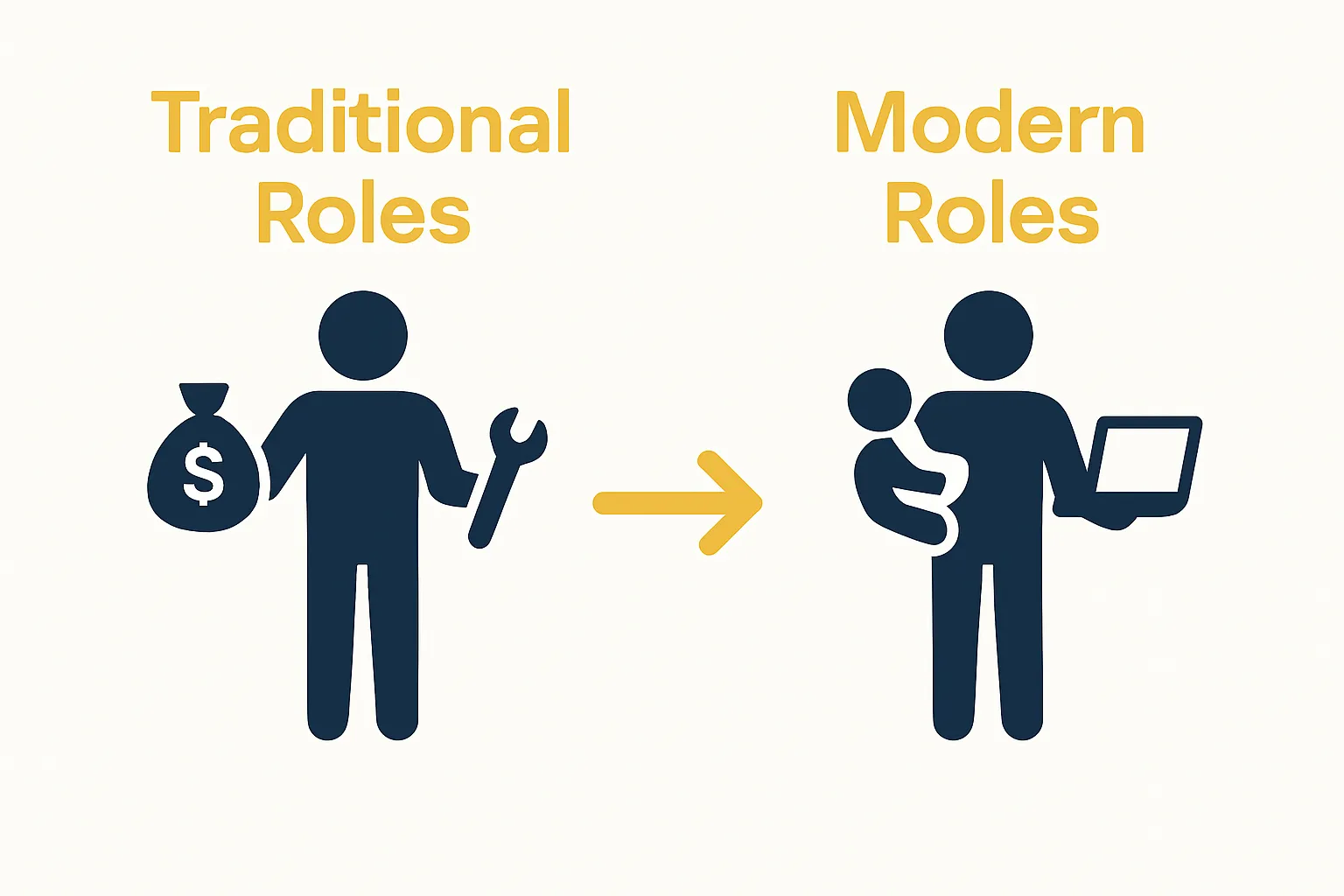
Masculine identity is not static but a dynamic construct continuously evolving with societal changes. Traditional roles emphasized provider and protector archetypes, while modern interpretations demand emotional intelligence, vulnerability, and collaborative partnership.

Infographic comparing traditional and modern masculine roles

Key role transformation characteristics include:

  • Shift from sole financial provider to emotional co-navigator
  • Increasing emphasis on shared domestic responsibilities
  • Recognition of emotional labor as valuable
  • Rejection of rigid gender performance expectations

Psychological Expectations and Identity Formation

Explore mature masculinity roles that transcend simplistic stereotypes. Men experience profound psychological pressure to simultaneously embody strength, sensitivity, competence, and adaptability. These seemingly contradictory expectations create complex internal negotiations about identity and self worth.

Core psychological expectations encompass:

  • Maintaining emotional composure under stress
  • Demonstrating competence without appearing arrogant
  • Balancing assertiveness with empathy
  • Continuously adapting to changing relational dynamics

Understanding male psychology requires acknowledging that roles are not prescriptive blueprints but flexible frameworks allowing individual interpretation and personal growth. Each man’s psychological journey represents a unique navigation of societal expectations and personal authenticity.

To help readers compare how traditional and modern masculine roles differ, the following table highlights the key characteristics of each and the ongoing evolution of masculine identity.

Role AspectTraditional Masculine RoleModern Masculine Role
Primary ResponsibilityFinancial provider and protectorEmotional co-navigator, shared duties
Emotional ExpressionReserved, stoicEncouraged, authentic, vulnerable
Domestic EngagementLimited involvementActive participation
Valued TraitsStrength, self-sufficiencyEmpathy, adaptability
Approach to Gender RolesRigid, clearly definedFlexible, evolving
Role of Emotional LaborOften minimizedActively recognized and shared
Relationship DynamicsHierarchical/authoritativeCollaborative/partnership-oriented

Real-World Context: Applying Male Psychology in Family Life

Research demonstrates that understanding male psychology is critical for creating healthy, supportive family dynamics. Practical application of psychological insights transforms how men engage with family relationships, moving beyond traditional stereotypes.

male psychology family life

Emotional Engagement and Parental Roles

Family involvement requires strategic emotional intelligence. Men must develop nuanced communication strategies that balance traditional provider roles with emotional availability. This means learning to express vulnerability while maintaining a sense of stability and protection for family members.

Key practical engagement strategies include:

  • Active listening without immediately attempting to solve problems
  • Demonstrating emotional presence through consistent actions
  • Creating safe spaces for family members to express feelings
  • Practicing empathetic responsiveness

Explore insights about gender differences in marriage that impact family interactions. Male psychology reveals that emotional intelligence is not about perfection but consistent, intentional practice. Men must learn to recognize and manage their emotional responses, understanding that vulnerability is a strength, not a weakness.

Critical considerations for family relationship management:

  • Recognizing individual family members emotional needs
  • Developing flexible communication approaches
  • Managing personal stress to prevent emotional spillover
  • Creating collaborative problem solving environments

Applying male psychology in family life means embracing complexity, rejecting rigid role definitions, and continuously adapting to the unique emotional landscape of each family relationship.

Ready to Unlock Better Relationships With Real Insights?

Understanding male psychology goes beyond surface-level advice. If you struggle with emotional disconnect, miscommunication, or feeling trapped by expectations, you are not alone. The article you just read explains how the way men process emotions, respond to stress, and build connection is often misunderstood. Now is your chance to use that knowledge to change your relationship dynamic for good. If you want to experience authentic intimacy, start by discovering the emotional depth and relational skills within the Awaken the Lover Within section on Wise Husband. You will find practical guides that help you become more emotionally present, build trust, and communicate clearly in your marriage.

https://wisehusband.com/

Take action today and join a community that is serious about growth, wisdom, and connection. Explore WiseHusband.com for proven tools and advice that empower you to become the husband and partner your marriage deserves. Find out how practical changes can help you nurture real love, overcome challenges, and create a relationship built on understanding. Start your journey now with the supportive insights available in the Awaken the Lover Within category or dive deeper into all areas at WiseHusband.com.

Frequently Asked Questions

What is male psychology?

Male psychology is a specialized field of psychological research that focuses on understanding the cognitive, emotional, and behavioral patterns specific to men, influenced by biological, social, and cultural factors.

How does male psychology affect relationships?

Understanding male psychology can build stronger relationships by fostering empathy, effective communication, and deeper emotional connections through recognizing the unique ways men process emotions and express vulnerability.

What are common emotional processing differences between men and women?

Men often communicate emotions through actions rather than direct verbal expression, and their emotional regulation can involve problem-solving approaches. This differs from typical expectations of emotional expression often associated with women.

Why is emotional intelligence important in understanding male psychology?

Emotional intelligence is crucial because it allows men to navigate their emotional responses and maintain supportive family dynamics while adapting traditional roles to include vulnerability and emotional availability.


Get the Wise Husband Book


https://wisehusband.com/understanding-male-psychology/?fsp_sid=1472

Wednesday, 22 October 2025

Understanding Expressing Love Languages in Relationships

Expressing Love Languages


Love languages have become a hot topic for anyone wanting stronger relationships and better emotional bonds. Most people know there are five types, but less than 40 percent of couples actually know their partner’s main love language. That means most of us are only scratching the surface of what makes connections really work. The real surprise is that learning your partner’s favourite way of receiving love does not just boost romance, it can completely shift everything from family harmony to personal confidence.


Table of Contents


Quick Summary


TakeawayExplanation
Understanding love languages enhances relationshipsRecognizing individual love languages helps partners express love effectively, fostering deeper emotional connections.
Misunderstandings arise from different love languagesWhen partners speak different love languages, unrecognized efforts can lead to emotional distance and conflict.
Intentional communication builds intimacyActively learning and speaking your partner’s love language promotes emotional safety and strengthens bonds.
Love languages apply to family dynamics tooUnderstanding love languages in families nurtures supportive relationships and helps children feel valued.
Regular practice is key to successConsistent effort in expressing affection according to one’s love language leads to more meaningful interactions and connection.

What are Love Languages and Their Importance?


Love languages represent a powerful psychological framework for understanding how individuals express and perceive emotional connection and affection in relationships. Developed by Dr. Gary Chapman in his groundbreaking book, this concept suggests that people communicate love differently and have unique preferences for receiving and giving affection.


The Core Concept of Love Languages


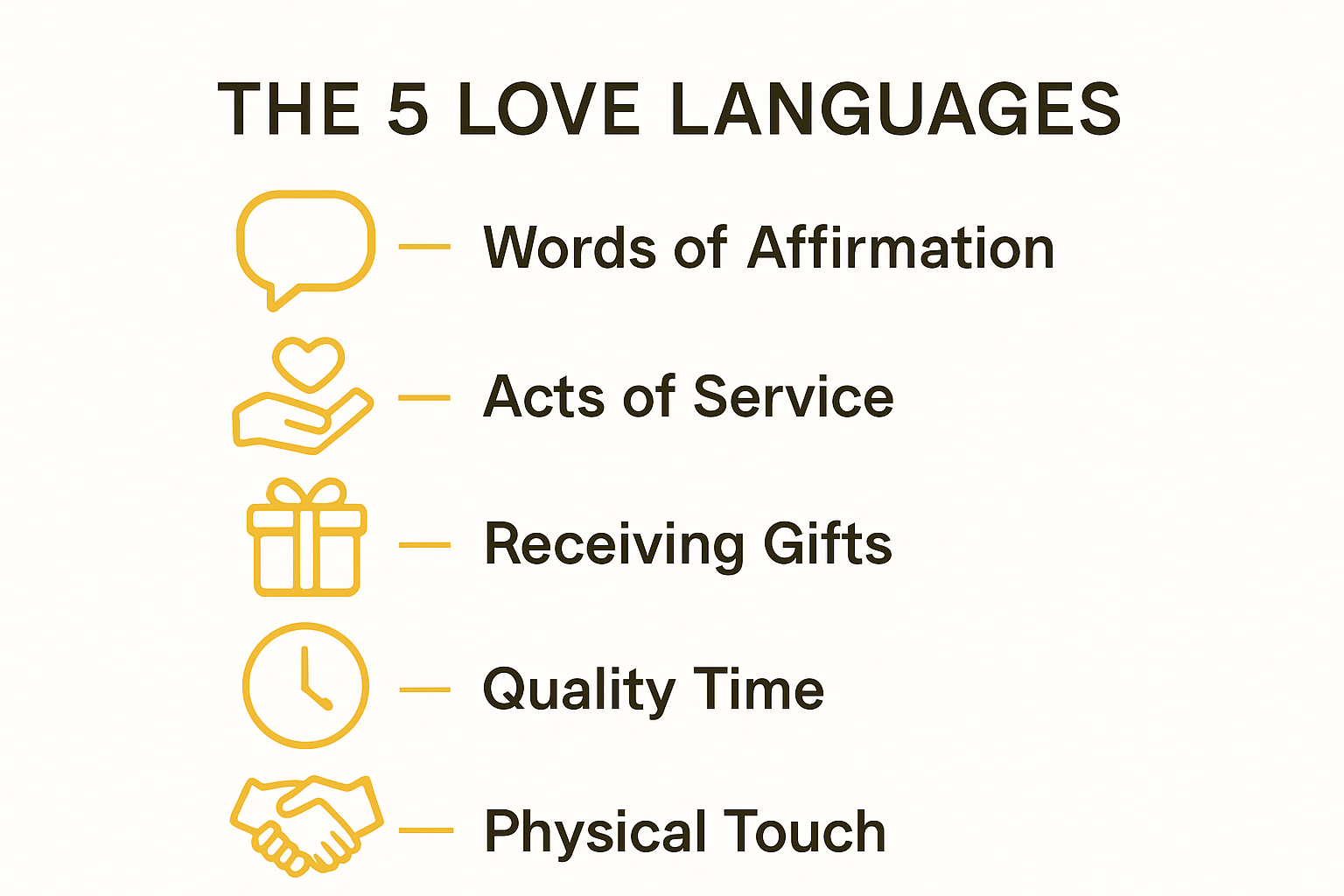
At its essence, love languages describe five distinct ways people experience and communicate emotional love. These are not merely communication styles but fundamental emotional blueprints that shape how we interpret care and connection.


To help clarify each of the five love languages, the following table summarises their core features and what they focus on in relationships.


Love LanguageDescriptionKey Focus
Words of AffirmationVerbal expressions of appreciation, praise, and encouragementValuing spoken and written communication
Acts of ServiceDoing helpful tasks or taking action for the partnerDemonstrating support and reliability
Receiving GiftsGiving or receiving thoughtful and meaningful presentsSymbolic gestures representing affection
Quality TimeSpending undivided, present time togetherPrioritising shared experiences
Physical TouchPhysical closeness through hugs, hand-holding, or cuddlingExpressing affection through touch

The five primary love languages include:


  • Words of Affirmation: Expressing love through verbal appreciation, compliments, and encouraging statements

  • Acts of Service: Demonstrating love by doing helpful tasks or solving problems for your partner

  • Receiving Gifts: Feeling loved through thoughtful, meaningful presents

  • Quality Time: Showing love by giving undivided attention and being fully present

  • Physical Touch: Communicating affection through physical connection like hugs, kisses, and holding hands


Why Understanding Love Languages Matters


Recognizing love languages goes beyond simple communication strategies. According to Cambridge Educational Research, understanding these emotional preferences can dramatically improve interpersonal relationships by creating deeper empathy and more intentional interactions.


When partners speak different love languages, misunderstandings can emerge. One partner might express love through acts of service, while the other craves verbal affirmation. Without understanding these differences, genuine expressions of love can feel unrecognized or undervalued.


By learning to “speak” your partner’s primary love language, you create a more profound emotional connection. This approach transforms relationships from mere coexistence to meaningful, intentional partnership, where both individuals feel genuinely seen, appreciated, and loved in their unique way.


Why Recognizing Love Languages Improves Relationships


Love languages are more than just a communication theory they represent a profound strategy for deepening emotional connections and understanding between partners. By recognizing and responding to individual emotional preferences, couples can transform their relationship dynamics and create more meaningful, fulfilling interactions.


Reducing Emotional Misunderstandings


Misaligned love languages often lead to significant relationship challenges. When partners express affection in different ways, they might unknowingly create emotional distance.


To illustrate how misunderstandings might arise from different love languages, this table outlines common scenarios, typical emotional impacts, and suggested solutions found in the article.


ScenarioEmotional ImpactSuggested Solution
Partner does household chores but other expects verbal praiseFeelings of being unappreciated or misunderstoodCommunicate preferred love languages
One partner gives gifts, the other wants quality timeEfforts go unnoticed, emotional distance buildsSpend more intentional time together
Expressing physical touch instead of affirming wordsDisconnection or lack of validationLearn to offer affirming words as well
Doing acts of service not seen as love by the partnerBoth feel their efforts aren’t recognisedDiscuss and adapt emotional expression

These communication gaps can manifest in various scenarios:


  • One partner consistently performs household tasks as an expression of love

  • The other partner expects verbal praise and emotional validation

  • Neither feels their efforts are genuinely recognized or appreciated


Building Deeper Emotional Intimacy


Understanding love languages enables partners to intentionally communicate care in ways that resonate most deeply with each other. According to research from the National Institutes of Health, personalized expressions of affection contribute significantly to relationship satisfaction and emotional stability.


Key benefits of recognizing love languages include:


  • Enhanced emotional understanding

  • Reduced relationship conflicts

  • More meaningful emotional connections

  • Increased feelings of being genuinely loved and appreciated


Practical Application in Relationships


Implementing love languages requires consistent effort and genuine empathy. Partners must actively learn and practice expressing love in ways that align with their significant other’s primary emotional language. This might mean learning to verbalize appreciation for someone who values words of affirmation or dedicating uninterrupted quality time for a partner who craves connection.


The ultimate goal is not perfect performance but demonstrating a sincere commitment to understanding and meeting your partner’s emotional needs. By approaching relationships with curiosity, compassion, and a willingness to adapt, couples can create deeper, more resilient emotional bonds that withstand life’s inevitable challenges.


How Love Languages Influence Communication and Connection


Love languages serve as a critical framework for understanding the intricate dynamics of emotional communication between partners. They reveal how individuals uniquely perceive, express, and receive love, transforming our approach to interpersonal relationships and emotional understanding.


The Communication Translation Process


Each love language functions like a distinct emotional dialect, requiring partners to learn and adapt their communication style. When partners speak different love languages, misunderstandings can emerge, creating invisible barriers to genuine connection. Emotional translation becomes essential in bridging these communication gaps.


Common communication translation challenges include:


  • Misinterpreting partner’s intentions

  • Feeling emotionally unseen or unappreciated

  • Experiencing disconnection despite genuine efforts

  • Struggling to validate each other’s emotional expressions


Neurological and Emotional Foundations


Love languages are not merely psychological constructs but have deep neurological underpinnings. According to research published in Current Psychology, understanding a partner’s preferred emotional communication style enhances perceived responsiveness and relationship quality.


The neurological impact of love languages involves:


  • Activating brain regions associated with emotional recognition

  • Stimulating oxytocin release during meaningful interactions

  • Creating positive reinforcement cycles in relationship dynamics

  • Developing more nuanced emotional intelligence


Practical Strategies for Connection


Transforming love language understanding into actionable communication requires intentional practice and empathy. Partners must move beyond theoretical knowledge to genuine emotional attunement. This involves actively observing, listening, and adapting to each other’s unique emotional needs.


Successful love language communication demands continuous learning, vulnerability, and a commitment to seeing beyond one’s own emotional preferences. By approaching relationships as ongoing conversations rather than fixed interactions, couples can create more resilient, compassionate, and deeply connected partnerships that evolve alongside their individual and shared emotional landscapes.


Understanding the Five Love Languages in Detail


The five love languages represent distinct emotional communication strategies that reveal how individuals fundamentally experience and express affection. Understanding these nuanced approaches provides profound insights into interpersonal relationships and emotional connection.


Infographic showing the five main love languages and their icons


Decoding Individual Love Language Profiles


Each love language functions as a unique emotional blueprint, reflecting deeply ingrained preferences for giving and receiving affection. Individual variations within these languages mean that no two people experience love exactly the same way, highlighting the complexity of human emotional expression.


Key characteristics of individual love language profiles include:


  • Consistent patterns of emotional communication

  • Unconscious preferences developed through personal experiences

  • Unique combinations of primary and secondary love languages

  • Potential shifts in love language preferences over time


Theoretical and Empirical Perspectives


While widely embraced in relationship counseling, love languages continue to evolve under scientific scrutiny. Contemporary psychological research suggests that the traditional five-language model might benefit from more nuanced exploration, potentially expanding our understanding of emotional communication.


Important research considerations include:


  • Potential cultural variations in love language expression

  • Individual differences in emotional communication

  • Complexity of human emotional experiences

  • Need for ongoing empirical validation


Practical Application and Personal Growth


Mastering love languages requires more than theoretical knowledge it demands emotional intelligence and genuine empathy. Partners must develop the ability to recognize, respect, and respond to each other’s unique emotional communication styles.


Effective love language practice involves:


  • Active listening and observation

  • Willingness to step outside personal comfort zones

  • Consistent practice of alternative expression methods

  • Ongoing communication and mutual understanding


By approaching love languages as dynamic, evolving frameworks rather than rigid categories, individuals can create more flexible, compassionate, and deeply connected relationships that honor each person’s unique emotional landscape.


Practical Applications of Love Languages in Family Life


Love languages transcend romantic relationships, offering profound insights into family dynamics and emotional connections across generations. By understanding and applying these principles, families can create more supportive, empathetic, and nurturing environments that celebrate individual emotional needs.


Parental Love Language Strategies


Parents play a crucial role in establishing emotional communication patterns within the family. Recognizing and responding to children’s unique love languages can dramatically improve parent-child relationships, fostering emotional security and self-worth.


Effective parental love language approaches include:


  • Identifying each child’s primary love language

  • Tailoring emotional support to individual preferences

  • Demonstrating consistent, intentional affection

  • Creating personalized connection strategies


Intergenerational Emotional Communication


Love languages provide a framework for understanding emotional inheritance and communication patterns across family generations. Research from the Center for Family and Community Engagement highlights how understanding these emotional blueprints can help break negative communication cycles and create more supportive family environments.


Key intergenerational love language considerations:


  • Inherited emotional communication patterns

  • Impact of family history on love language expression

  • Potential for healing intergenerational emotional wounds

  • Creating new, healthier emotional connection models


Practical Family Connection Techniques


Implementing love languages requires consistent, intentional practice and a willingness to step outside traditional emotional comfort zones. Families must actively learn, adapt, and create personalized strategies that honor each member’s unique emotional landscape.


Practical family love language techniques involve:


  • Regular family discussions about emotional needs

  • Creating rituals that speak to different love languages

  • Developing empathy and emotional listening skills

  • Celebrating individual emotional expressions


By approaching family relationships as dynamic, evolving emotional ecosystems, individuals can transform communication, build deeper connections, and create resilient, supportive family units that thrive on mutual understanding and genuine appreciation.


family love languages kitchen


Take Real Steps to Master Love Languages in Your Marriage


Feeling misunderstood or disconnected despite your best efforts in your relationship? Many men read about love languages yet struggle to bridge the gap between what they learn and what actually happens at home. If you’ve found that your expressions of care go unnoticed or your partner’s needs still feel like a mystery, you are not alone. The article explored how mismatched love languages can lead to emotional distance and frustration, especially when acts of service or words of affirmation are misunderstood or overlooked.


https://wisehusband.com/


Now is the time to take action and apply what you’ve learned. At WiseHusband.com, you will find direct, practical advice designed for men who want to transform theory into everyday connection. Discover proven tools to become a more attentive husband, improve communication, and build lasting trust. Stop letting miscommunication hold you back. Visit our homepage to start your journey today and find out how you can create real understanding and respect in your marriage. Your next breakthrough is just one click away.


Frequently Asked Questions


What are the five love languages?


The five love languages are Words of Affirmation, Acts of Service, Receiving Gifts, Quality Time, and Physical Touch. Each represents a unique way individuals express and perceive love in relationships.


How can understanding love languages improve my relationship?


Understanding love languages enhances emotional understanding and communication, reduces misunderstandings, and fosters a deeper emotional connection between partners by allowing them to express love in ways that resonate with each other.


What should I do if my partner and I have different love languages?


If you and your partner have different love languages, it’s essential to openly communicate your individual preferences. Make an effort to express love in the language that your partner values while encouraging them to do the same for you. This mutual understanding can bridge emotional gaps.


Can love languages change over time?


Yes, love languages can change over time due to various factors such as life experiences, personal growth, and evolving relationships. It’s important to regularly communicate about your emotional needs to maintain a strong connection.


Get the Wise Husband Book


https://wisehusband.com/understanding-expressing-love-languages/?fsp_sid=1463

Tuesday, 21 October 2025

Understanding Healthy Marriage Boundaries for Lasting Love

Healthy Marriage Boundaries


Every marriage needs clear boundaries, yet many couples never actually talk about what those should look like. Most think boundaries are about walls or rules, making love feel strict. But studies actually show that relationships with strong boundaries see much higher levels of satisfaction and trust. Turns out, healthy boundaries are what let couples protect their own space while building a better connection together.

Table of Contents

Quick Summary

TakeawayExplanation
Establish clear boundaries for emotional safetyHealthy boundaries protect individual identities and foster mutual respect in a partnership.
Communicate needs openly and vulnerablyEffective communication about personal needs reduces misunderstandings and reinforces trust.
Recognise and address boundary violationsIdentifying subtle breaches is crucial to prevent conflicts and maintain relationship integrity.
Engage in regular relationship check-insConsistent communication fosters emotional connection and ensures boundaries evolve with the relationship.
Value mutual respect and trustBuilding a respectful environment enhances emotional security and strengthens the partnership over time.

Defining Healthy Marriage Boundaries and Their Importance

Healthy marriage boundaries represent the foundational guidelines that define acceptable behaviours, emotional limits, and personal respect within an intimate partnership. These boundaries are not rigid walls but flexible frameworks that protect individual identities while nurturing mutual understanding and connection.

Understanding the Core Concept of Marriage Boundaries

At its essence, healthy marriage boundaries are psychological and emotional guidelines that partners establish to maintain individual autonomy while fostering intimacy. Research from the International Journal of Environmental Research and Public Health highlights that effective boundaries contribute significantly to relationship satisfaction and personal well-being.

Key characteristics of healthy marriage boundaries include:

  • Mutual respect for individual needs and personal space
  • Clear communication about comfort levels and expectations
  • Ability to say “no” without feeling guilty or experiencing punishment
  • Protecting emotional and physical personal limits

Why Boundaries Matter in Marriage

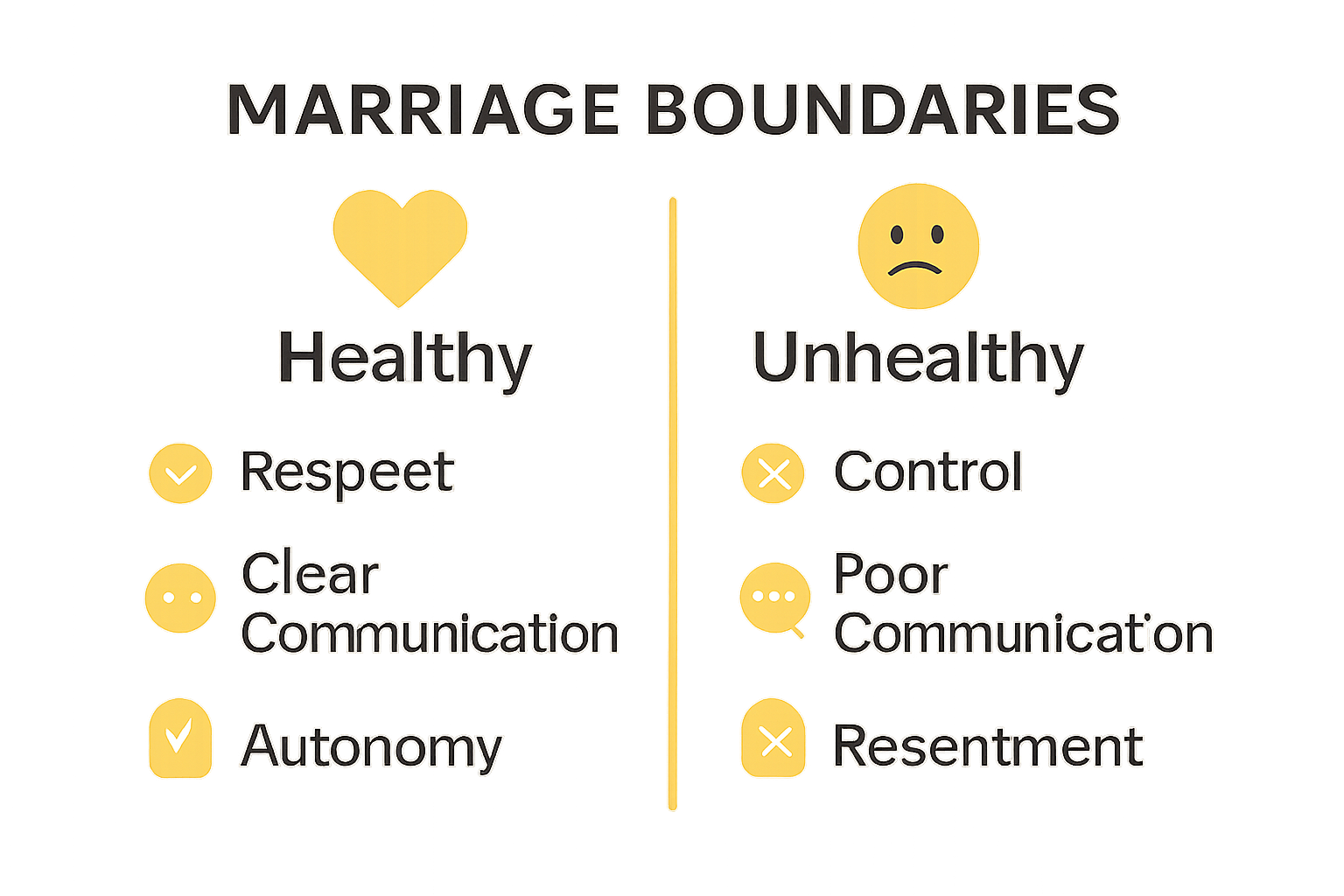
Boundaries are not about creating distance but establishing a framework of mutual respect. They serve multiple crucial functions in maintaining relationship health:

Infographic comparing healthy versus unhealthy marriage boundaries

  • Preventing resentment by ensuring individual needs are acknowledged
  • Promoting personal growth and independence within the relationship
  • Reducing potential conflicts by establishing clear expectations

In practical terms, boundaries might involve agreeing on financial decisions, respecting privacy, managing external relationships, or defining acceptable communication styles. Learn more about building a strong marital foundation with our guide on healthy marriage principles.

Understanding and implementing healthy marriage boundaries requires ongoing dialogue, mutual empathy, and a commitment to preserving both individual and collective well-being. It is not about restricting love but creating a sustainable, respectful partnership where both individuals can thrive.

The Role of Communication in Establishing Boundaries

Communication serves as the fundamental mechanism through which marriage boundaries are negotiated, understood, and maintained. It transforms abstract concepts of personal limits into tangible, shared understanding between partners.

Transparent Communication as a Boundary Foundation

Effective boundary communication requires more than simple dialogue it demands vulnerability, active listening, and genuine mutual respect. Research from the National Institutes of Health emphasises that clear communication about individual needs and expectations prevents misunderstandings and reduces potential relationship conflicts.

Key elements of effective boundary communication include:

  • Expressing personal needs without accusation or blame
  • Using “I” statements that describe feelings and experiences
  • Listening with empathy and genuine curiosity
  • Acknowledging your partner’s perspective without becoming defensive

The Language of Emotional Safety

Boundary communication is fundamentally about creating emotional safety. Partners must develop a shared language that allows them to discuss sensitive topics without triggering defensive reactions. This involves creating an environment where both individuals feel heard, validated, and respected.

Strategic communication approaches involve:

  • Choosing appropriate timing for difficult conversations
  • Maintaining a calm and non-confrontational tone
  • Demonstrating willingness to compromise
  • Recognising and respecting each other’s emotional limits

Explore our comprehensive guide on understanding healthy marriage communication to develop more nuanced communication skills.

Ultimately, communication about boundaries is an ongoing process that requires patience, empathy, and a genuine commitment to mutual understanding. It is not about winning arguments but about creating a partnership where both individuals feel respected, heard, and emotionally secure.

Understanding Emotional and Physical Boundaries

Emotional and physical boundaries represent interconnected layers of personal protection within marriage, defining individual comfort zones and preserving personal autonomy while maintaining intimate connection.

The Essence of Emotional Boundaries

Emotional boundaries protect an individual’s psychological well-being by establishing limits around personal feelings, experiences, and vulnerabilities. Research from the National Institutes of Health highlights that these boundaries are crucial for maintaining individual identity and relationship satisfaction.

Key characteristics of healthy emotional boundaries include:

  • Recognising and communicating personal emotional needs
  • Protecting oneself from manipulation or emotional exploitation
  • Maintaining individual identity within the relationship
  • Respecting partner’s emotional experiences without absorbing them completely

Physical Boundaries in Marital Intimacy

Physical boundaries extend beyond mere physical touch, encompassing personal space, privacy, and bodily autonomy. They represent a critical aspect of mutual respect and consent within marriage.

Important considerations for physical boundaries involve:

  • Establishing comfort levels with physical affection
  • Respecting personal space and privacy
  • Seeking explicit consent for intimate interactions
  • Understanding and honouring individual physical comfort zones

Learn more about developing deeper emotional understanding in marriage to strengthen your connection.

Ultimately, emotional and physical boundaries are dynamic frameworks that evolve with mutual understanding, requiring continuous communication, empathy, and respect. They are not restrictions but protective mechanisms that allow partners to maintain individual integrity while fostering a deeply connected relationship.

The following table compares emotional and physical boundaries in marriage, summarising their definition and key characteristics to clarify the differences and highlight their complementary roles.

Boundary TypeDefinitionKey Characteristics
Emotional BoundariesLimits protecting psychological well-being, feelings, and vulnerabilityRecognising own emotional needs, communicating openly, avoiding manipulation, preserving identity
Physical BoundariesLimits concerning personal space, privacy, and body autonomyRespecting personal space, seeking consent, defining comfort with touch, maintaining privacy

Creating Mutual Respect and Trust through Boundaries

Mutual respect and trust form the cornerstone of successful marriages, emerging organically through intentional boundary establishment and consistent, authentic interactions between partners.

The Trust Architecture in Marriage

Trust is not a static condition but a dynamic process continuously reinforced through predictable, respectful behaviors. Research from the U.S. National Library of Medicine emphasises that establishing clear boundaries is fundamental to cultivating mutual respect and creating a safe relational environment.

Key elements of building trust through boundaries include:

  • Demonstrating consistent reliability and follow-through
  • Maintaining transparency in communication
  • Honoring commitments and promises
  • Showing genuine vulnerability and emotional availability

Respect as a Reciprocal Practice

Respect in marriage transcends superficial politeness it requires active acknowledgment of each partner’s individual worth, autonomy, and unique perspective. This means creating an environment where both individuals feel genuinely heard, validated, and appreciated.

Strategic approaches to fostering mutual respect involve:

  • Active and empathetic listening

  • Validating partner’s feelings without judgment

  • Avoiding dismissive or contemptuous language

  • Celebrating individual differences

Explore our comprehensive guide on building profound trust in marriage to deepen your relational understanding.

Ultimately, mutual respect and trust emerge from a deliberate, compassionate commitment to understanding and supporting each other’s emotional landscapes. It is an ongoing journey of growth, requiring patience, humility, and genuine investment in the partnership.

marriage trust respect

Marriage inevitably presents complex challenges that test relationship boundaries, requiring adaptive strategies, emotional intelligence, and consistent mutual commitment to maintaining respect and individual autonomy.

Identifying Boundary Violations

Boundary violations emerge subtly, often disguised as seemingly innocent interactions. Research from the University of Southern Maine highlights the critical importance of recognising and addressing these potential breaches before they escalate into significant relationship conflicts.

Common boundary violation indicators include:

  • Persistent disregard for expressed personal limits
  • Emotional manipulation or guilt-tripping
  • Unilateral decision-making without partner consultation
  • Invasive questioning or controlling behaviors

Proactive Boundary Reinforcement

Maintaining healthy boundaries requires ongoing, intentional effort from both partners. This involves developing robust communication skills, emotional awareness, and a shared commitment to mutual respect.

Strategic approaches for boundary maintenance involve:

  • Regular, honest relationship check-ins
  • Creating safe spaces for vulnerability
  • Practicing assertive yet compassionate communication
  • Willingness to renegotiate boundaries as relationship evolves

Discover effective strategies for resolving marital conflicts and strengthening your relationship foundations.

Navigating marriage’s complex emotional landscape demands patience, empathy, and a profound understanding that boundaries are not barriers but bridges to deeper intimacy and mutual understanding. They represent a dynamic, evolving framework that protects individual integrity while nurturing collective connection.

This table outlines typical boundary violation indicators and corresponding proactive boundary reinforcement strategies, assisting couples in recognising issues and taking effective action to maintain healthy boundaries.

Boundary Violation IndicatorProactive Boundary Reinforcement Strategy
Disregard for expressed personal limitsRegular, honest relationship check-ins
Emotional manipulation or guilt-trippingCreating safe spaces for vulnerability
Unilateral decision-makingPractising assertive yet compassionate communication
Invasive or controlling behavioursWillingness to renegotiate boundaries as relationship evolves

Start Building Healthy Marriage Boundaries Today

Struggling to keep your marriage strong while protecting your own sense of self? Many men feel lost when it comes to establishing healthy boundaries with their partner. As highlighted in our article, without clear limits and honest conversations, resentment builds and intimacy suffers. It is tough to know where to begin if you have never learned how to set respectful, loving boundaries before.

Explore Daily Wisdom for real-life advice on communication and personal growth.

https://wisehusband.com/

Now is the time to transform your relationship. Wise Husband delivers practical steps you can act on right away. Discover proven tools, mindsets, and strategies tailored for men who are ready to create lasting partnership. Take your next step towards a healthier and more confident marriage by learning how to embody healthy leadership and deeper trust. Get started with Wise Husband and become the husband your relationship deserves.

Frequently Asked Questions

What are healthy marriage boundaries?

Healthy marriage boundaries are the guidelines that define acceptable behaviours, emotional limits, and personal respect within a partnership. They protect individual identities while nurturing mutual understanding and connection.

Why are boundaries important in a marriage?

Boundaries are crucial in a marriage to prevent resentment, promote personal growth, and reduce potential conflicts. They ensure that individual needs are acknowledged and respected, allowing for a healthier relationship.

How can I communicate my boundaries effectively with my partner?

To communicate boundaries effectively, use ‘I’ statements to express your feelings, listen actively, and show empathy. It’s essential to create a safe environment for discussion and avoid defensive reactions.

What are examples of emotional and physical boundaries in marriage?

Emotional boundaries involve recognising and communicating personal emotional needs while preserving individual identity. Physical boundaries encompass personal space, privacy, and consent regarding physical touch and intimacy.


Get the Wise Husband Book


https://wisehusband.com/understanding-healthy-marriage-boundaries/?fsp_sid=1454

Monday, 20 October 2025

7 Key Benefits of Marriage Counselling for Couples

Benefits of Marriage Counselling for Couples


Marriage counselling sounds like something only couples in crisis need. Yet, over 70 percent of couples report improved relationship satisfaction after therapy. Most people are surprised to learn that counselling is not just for fixing broken marriages. It can actually help good relationships get even stronger, reveal hidden patterns, and bring back real closeness before serious issues even start.


Table of Contents


Quick Summary


TakeawayExplanation
Improve communication skills effectivelyDevelop techniques for expressing emotions and practicing active listening to enhance relationship dynamics.
Resolve conflicts with productive strategiesLearn to identify emotional triggers and employ ‘I’ statements to foster understanding and collaboration.
Strengthen emotional intimacy as a coupleCreate safe spaces for vulnerability and consistent engagement to reinforce trust and connection.
Gain insights into relationship patternsRecognize unconscious behaviors and historical influences to improve communication and relational dynamics.
Set and achieve shared relationship goalsCollaboratively create actionable plans that align individual aspirations with mutual values and timelines.

1: Understanding the Role of Marriage Counselling


Marriage counselling is a professional therapeutic intervention designed to help couples navigate complex relationship challenges and strengthen their emotional connection. Professional counsellors provide a safe, neutral environment where partners can openly discuss their concerns, communicate more effectively, and develop healthier relationship dynamics.


At its core, marriage counselling serves multiple critical functions for couples experiencing difficulties. According to American Association for Marriage and Family Therapy, couples therapy can address a wide range of relationship issues with significant success rates.


Key purposes of marriage counselling include:


  • Improving communication skills between partners


  • Resolving persistent conflicts and misunderstandings


  • Rebuilding trust and emotional intimacy


  • Developing strategies for managing stress and external pressures


  • Exploring individual and shared relationship goals


Couples typically seek counselling during various relationship stages when communication breaks down or emotional distance grows. Whether facing minor disagreements or more serious challenges like infidelity, financial stress, or compatibility issues, professional counselling offers a structured approach to understanding and resolving relationship dynamics.


By working with a trained therapist, couples gain insights into their interaction patterns, learn effective communication techniques, and develop tools for maintaining a healthy, resilient partnership. Wise Husband’s comprehensive guide on marriage counselling provides additional context for couples considering this supportive intervention.


2: Improved Communication Skills in Your Relationship


Improved communication represents one of the most transformative benefits of marriage counselling. Effective communication goes beyond simply talking—it involves understanding, active listening, and expressing emotions authentically. Many couples struggle with communication barriers that gradually erode their relationship’s foundation, creating distance and misunderstanding.


Research from the Gottman Institute reveals that couples who communicate effectively are significantly more likely to maintain long-term relationship satisfaction. Marriage counselling provides structured techniques to help partners break negative communication patterns and develop healthier interaction strategies.


Critical communication skills developed through counselling include:


  • Learning to express emotions without blame or defensiveness


  • Understanding nonverbal communication cues


  • Practicing active and empathetic listening


  • Identifying and addressing underlying emotional triggers


Miscommunication often stems from deeply ingrained personal communication styles, which can create recurring conflicts. A professional counsellor helps partners recognize these patterns and develop more constructive ways of expressing their needs and feelings.


By transforming communication dynamics, couples can create a more supportive, understanding relationship environment. Our comprehensive guide on communication in marriage offers additional insights into building stronger connections.


The goal is not to eliminate disagreements but to approach them with mutual respect, empathy, and a genuine desire to understand each other’s perspectives. Marriage counselling equips couples with practical tools to navigate challenging conversations, resolve conflicts more effectively, and ultimately build a more resilient partnership.


3: Conflict Resolution Strategies for Couples


Conflict is an inevitable part of any relationship, but how couples manage disagreements determines their long-term relationship health. Marriage counselling provides essential strategies for transforming destructive conflicts into opportunities for growth and deeper understanding.


According to Psychology Today, effective conflict resolution involves more than simply avoiding arguments—it requires developing emotional intelligence and constructive communication techniques.


Key conflict resolution strategies learned through marriage counselling include:


  • Identifying underlying emotional triggers


  • Practicing active listening without becoming defensive


  • Using “I” statements to express feelings without blaming


  • Developing empathy and understanding your partner’s perspective


Unresolved conflicts can create significant emotional distance between partners, potentially leading to resentment, disconnection, and eventually relationship breakdown. Professional counsellors help couples recognize unhealthy conflict patterns and replace them with more productive approaches.


The goal of conflict resolution is not to determine a “winner” but to find mutual understanding and collaborative solutions. Our comprehensive guide on fighting fair in marriage offers additional insights into maintaining relationship harmony.


By learning these strategies, couples can transform potential arguments into meaningful conversations that strengthen their emotional connection. Marriage counselling provides a supportive environment where partners can practice these skills, gaining tools to navigate future challenges with greater compassion, patience, and mutual respect.


4: Strengthening Emotional Intimacy with Counselling


Emotional intimacy represents the deep, authentic connection that transforms a relationship from merely coexisting to truly thriving. Marriage counselling plays a crucial role in helping couples rebuild and strengthen this fundamental aspect of their partnership, addressing emotional barriers that often develop over time.


Research from the Journal of Marital and Family Therapy indicates that couples who cultivate emotional intimacy experience significantly higher relationship satisfaction and longer-lasting connections.


Key elements of emotional intimacy development through counselling include:


  • Creating safe spaces for vulnerability


  • Understanding personal and partner’s emotional landscapes


  • Rebuilding trust through consistent emotional engagement


  • Learning to express deeper feelings and needs authentically


Emotional distance can emerge from unresolved conflicts, external stressors, and individual psychological patterns. Professional counsellors help partners explore the root causes of emotional disconnection, providing targeted strategies to recreate meaningful emotional bonds.


Couples often discover that emotional intimacy requires more than physical proximity—it demands genuine understanding, empathy, and consistent emotional investment. Our comprehensive guide on emotional intimacy offers deeper insights into nurturing these critical relationship connections.


By engaging in marriage counselling, partners learn to recognize emotional patterns, communicate more transparently, and create a relationship environment where both individuals feel seen, heard, and genuinely valued. The process transforms emotional barriers into bridges of understanding, ultimately reconnecting partners at a profound, meaningful level.


5: Gaining Insight into Relationship Patterns


Understanding relationship patterns represents a critical breakthrough in marriage counselling, offering couples profound insights into recurring dynamics that may unconsciously undermine their connection. These patterns often emerge from individual psychological backgrounds, family histories, and learned behavioral responses.


According to The American Psychological Association, repetitive relationship patterns can significantly impact marital satisfaction and long-term partnership success.


Key relationship pattern insights gained through counselling include:


  • Recognizing unconscious triggers and reactive behaviors


  • Understanding individual attachment styles


  • Identifying generational relationship scripts


  • Mapping emotional response mechanisms


Most couples are unaware of the deep-rooted psychological mechanisms driving their interactions. Professional counsellors help partners deconstruct these complex patterns, revealing underlying motivations, fears, and communication strategies that have developed over time.


Our comprehensive guide on understanding relationship dynamics provides additional context for exploring these intricate interpersonal mechanisms.


By gaining clarity about these patterns, couples can consciously choose more constructive relationship approaches. This self-awareness transforms unconscious reactions into intentional, compassionate interactions, breaking negative cycles and creating space for genuine emotional connection and mutual understanding.


6: Setting and Achieving Relationship Goals Together


Goal setting represents a transformative process in marriage counselling, enabling couples to create a shared vision and collaborative roadmap for their relationship. Many partners struggle to align their individual aspirations, leading to misunderstandings and potential conflicts about future directions.


According to Harvard Business Review, effective goal setting requires mutual understanding, shared values, and consistent communication.


Important relationship goal-setting strategies include:


  • Creating specific, measurable, and achievable objectives


  • Establishing mutual timelines and accountability


  • Balancing individual and collective aspirations


  • Regularly reviewing and adjusting goals together


Professional counsellors provide structured frameworks that help couples transform abstract desires into concrete, actionable plans. These strategies go beyond simple wishful thinking, offering practical methods for turning relationship dreams into reality.


Our comprehensive guide on understanding relationship milestones offers additional insights into effective goal planning.


By working together in counselling, couples learn to communicate more effectively about their hopes, fears, and expectations. This collaborative approach not only helps them set meaningful goals but also strengthens their emotional connection and mutual understanding, creating a more resilient and intentional partnership.


7: Finding Balance and Support as Parents


Parenting presents one of the most challenging and transformative experiences in a marriage, often creating significant stress and potential relationship strain. Marriage counselling provides critical support for couples navigating the complex dynamics of parenthood, helping them maintain a strong partnership while raising children.


Research from the American Psychological Association demonstrates that couples who proactively manage parental stress experience stronger relationships and more stable home environments.


Key strategies for maintaining parental balance include:


  • Sharing emotional and practical parenting responsibilities


  • Developing consistent co-parenting communication


  • Managing individual and collective parental expectations


  • Creating intentional couple time amidst parenting demands


Parental challenges can quickly erode relationship intimacy if not addressed systematically, and professional counselling offers targeted approaches to help partners support each other through this demanding life stage. Counsellors help couples recognize potential conflict zones, develop empathy, and create collaborative parenting strategies.


Our comprehensive guide for dads provides additional parenting insights that complement the therapeutic approaches discussed in marriage counselling.


By investing in marriage counselling, parents can transform potential sources of tension into opportunities for deeper connection, mutual understanding, and shared growth. The process enables couples to approach parenting as a united team, supporting each other’s individual needs while collectively nurturing their children.


Below is a comprehensive table summarizing the seven main benefits of marriage counselling and how each supports healthier, more resilient relationships for couples, as discussed throughout the article.


Key BenefitDescriptionPractical Outcomes
Improved Communication SkillsCounselling helps couples practice authentic expression, active listening, and understanding nonverbal cues.Reduces misunderstandings, fosters empathy, and builds a supportive dialogue.
Effective Conflict Resolution StrategiesPartners learn to identify emotional triggers, listen non-defensively, and use “I” statements amidst disagreements.Minimizes escalation, transforms arguments into collaborative problem-solving.
Strengthened Emotional IntimacyTherapy creates safe spaces for vulnerability and rebuilding trust through consistent emotional engagement.Increases closeness, trust, and authentic connection.
Greater Insight Into Relationship PatternsCouples recognize unconscious behaviors, attachment styles, and historical influences that shape their relationship.Enables intentional change, breaks negative cycles, and improves mutual understanding.
Shared Relationship Goal SettingCounsellors guide couples in establishing specific, measurable goals that reflect shared values and aspirations.Promotes teamwork, clarity about the future, and sustained partnership growth.
Parental Balance and SupportCounselling addresses parenting stressors by improving co-parenting communication and sharing responsibilities.Strengthens the relationship, stabilizes the home environment, and supports both partners as parents.
Professional, Neutral GuidanceTherapists provide a structured, unbiased environment for confronting difficult issues and developing healthy habits.Encourages openness, mutual support, and long-term resilience for couples at any relationship stage.

Ready for a Stronger, More Connected Marriage?


If unresolved conflict, weak communication, or emotional distance are holding your relationship back, you are not alone. This article highlighted how marriage counselling helps you build real skills like honest communication and conflict resolution, while rebuilding trust and emotional intimacy. But insight alone will not transform your marriage—it takes daily action, support, and the right mindset. To take what you have learned further, explore Daily Relationship Wisdom - Wise Husband for advice on healthy patterns, meaningful connection, and real solutions tailored for men who want to lead well at home.


https://wisehusband.com/


Why wait for things to get worse when you can start building the relationship you deserve right now? At WiseHusband.com, everything is designed to give men like you the tools, clarity, and daily inspiration needed to thrive in marriage. Take your first step towards lasting change—visit the site today and join men dedicated to stronger relationships, deeper connection, and becoming the best husband possible.


Frequently Asked Questions


What is the primary purpose of marriage counselling?


Marriage counselling aims to help couples navigate relationship challenges, improve communication, resolve conflicts, and strengthen emotional connections.


How does marriage counselling improve communication skills?


Marriage counselling teaches effective communication techniques such as active listening, expressing emotions without blame, and understanding nonverbal cues to help couples communicate more constructively.


What strategies are used in marriage counselling for conflict resolution?


Counsellors provide strategies such as identifying emotional triggers, using ‘I’ statements, and fostering empathy to transform destructive conflicts into collaborative conversations.


How can marriage counselling help with emotional intimacy?


Marriage counselling fosters emotional intimacy by creating safe spaces for vulnerability, rebuilding trust, and helping couples express deeper feelings and needs authentically.


Get the Wise Husband Book


https://wisehusband.com/7-key-benefits-of-marriage-counselling/?fsp_sid=1445

Husband Archetypes From Wife’s View: Complete Guide

Did you know that over 60 percent of couples feel their relationship style doesn’t fit traditional husband stereotypes? Understanding husban...