Monday, 24 November 2025

Husband Archetypes From Wife’s View: Complete Guide


Did you know that over 60 percent of couples feel their relationship style doesn’t fit traditional husband stereotypes? Understanding husband archetypes helps couples recognize unique strengths and patterns that shape daily interactions. By uncovering these psychological frameworks, partners can move beyond labels and foster deeper connection, empathy, and lasting fulfillment in marriage.


Key Takeaways


PointDetails
Understanding ArchetypesHusband archetypes offer insights into relationship dynamics, providing a framework for men to navigate their interactions with partners.
Diverse Interaction StylesDifferent archetype behaviors shape communication patterns, impacting marital satisfaction and emotional connection.
Growth StrategiesEach archetype has specific growth areas that husbands can focus on to enhance their relationships and personal development.
Wives’ PerspectivesWives interpret husbands’ behaviors through emotional intelligence, emphasizing the importance of sincerity, reliability, and support in relationships.

Table of Contents


What Are Husband Archetypes


Husband archetypes are psychological patterns that describe distinctive relationship styles and behavioral tendencies men adopt in marriage. Archetypal patterns provide a framework for understanding how husbands uniquely interact, communicate, and connect with their partners beyond traditional stereotypes.


According to the Relationship Coaching Institute, these archetypes manifest through universal relationship dynamics such as:


  • The Power Couple (collaborative and achievement-oriented)

  • The Adventurous Couple (spontaneous and exploration-driven)

  • The Co-dependent Couple (emotionally intertwined)


Psychology Today further elaborates that husband archetypes can be understood through four primary personality-based love frameworks rooted in brain chemistry:


  1. Explorer: Passionate, curious, seeking novel experiences

  2. Builder: Stable, traditional, relationship-focused

  3. Director: Goal-oriented, analytical, strategic in relationships

  4. Negotiator: Emotionally intelligent, adaptable, communication-driven


These archetypes aren’t rigid boxes but fluid descriptions helping husbands understand their relational strengths and potential growth areas. Read more about relationship dynamics in our guide on deepening emotional connections.


Common Husband Archetypes ExplainedUnderstanding husband archetypes isn’t about putting men into restrictive categories, but recognizing the nuanced patterns that shape relationship dynamics. Psychology Today reveals four primary husband archetypes that provide profound insights into romantic compatibility and interpersonal behavior.


The Four Core Husband Archetypes


Here’s a comparison of the four core husband archetypes:


ArchetypeKey TraitsRelationship StrengthsGrowth Focus
ExplorerCurious
Adventurous
Spontaneous
Keeps things exciting
Drives growth
Foster stability
Consistent presence
BuilderTraditional
Reliable
Stable
Strong commitment
Security provider
Embrace flexibility
Express vulnerability
DirectorStrategic
Analytical
Goal-oriented
Decisive leadership
Clear direction
Enhance empathy
Collaborate more
NegotiatorEmpathetic
Adaptable
Communicative
Resolves conflict
Nurtures connection
Set boundaries
Assert needs


  1. The Explorer Husband


  • Driven by curiosity and novelty

  • Seeks constant personal and relationship growth

  • Thrives on spontaneity and new experiences

  • Keeps relationship dynamic and exciting


  1. The Builder Husband


  • Prioritizes stability and long-term commitment

  • Strong emphasis on traditional relationship values

  • Creates secure emotional and financial foundations

  • Reliable and consistent partner


  1. The Director Husband


  • Logical and strategic in relationship approach

  • Goal-oriented with clear relationship objectives

  • Strong leadership qualities

  • Makes decisive decisions for family welfare


  1. The Negotiator Husband


  • Emotionally intelligent and adaptable

  • Excellent communication skills

  • Highly empathetic and relationship-focused

  • Skilled at resolving conflicts diplomatically


Psychological research also highlights complex archetypal patterns like the “Good Mother/Bad Boy Type A” dynamic, where career-driven husbands and nurturing wives can experience emotional distance and role strain.


Pro Insight: These archetypes are fluid. Most husbands embody characteristics from multiple types, evolving through different life stages.


src="https://www.youtube.com/embed/ZVuLcySBND0"
title="YouTube Video"
style="position: absolute; left: 0; top: 0; height: 100%; width: 100%; border: none;"
allow="accelerometer; autoplay; clipboard-write; encrypted-media; gyroscope; picture-in-picture"
allowfullscreen
>
Learn more about masculine husband roles to understand your unique relational blueprint.


Wife’s Perspective On Husband Types


Wives observe and interpret their husbands’ behaviors through complex psychological lenses, far beyond surface-level interactions.
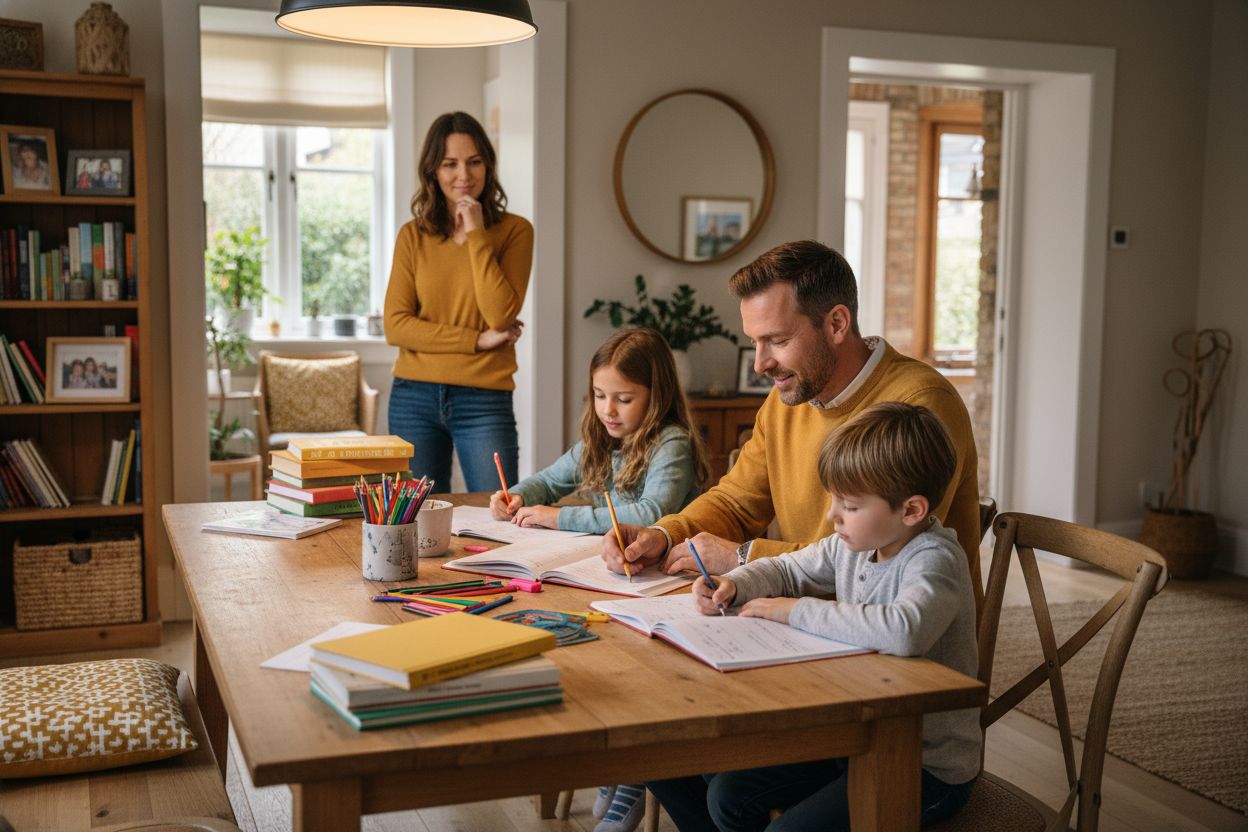

wife observing husband Their perspective is shaped by deep emotional intelligence, relational expectations, and nuanced understanding of masculine behavioral patterns.


Key Dimensions of Wife’s Perception


  • Emotional Responsiveness: How quickly and genuinely a husband responds to emotional needs

  • Reliability Factor: Consistency between promises and actions

  • Support Mechanism: Ability to provide practical and emotional support

  • Communication Quality: Depth and authenticity of shared conversations


A longitudinal study in Taiwan revealed critical insights into how wives evaluate their husbands. The research demonstrated that wives particularly focus on:


  1. Sincerity in addressing relationship challenges

  2. Continued family responsibility

  3. Maintaining provider and protector roles

  4. Demonstrating genuine commitment


Perception Dynamics emerge through multiple interaction layers. Wives don’t just see their husbands as individual personalities but as complex relational partners whose actions reflect deeper psychological commitments.


Discover more about gender differences in marriage dynamics to understand the intricate ways wives interpret and respond to their husbands’ archetypal behaviors. Understanding these perspectives can transform relationship understanding and mutual respect.


Implications For Marriage Dynamics


Husband archetypes profoundly shape marital interactions, creating unique communication patterns and relationship dynamics that can make or break long-term partnership success. Research exploring marital interaction styles reveals how different archetypal behaviors significantly influence relationship stability and emotional connection.


Archetypal Interaction Patterns


Three primary marital interaction styles emerge:


  1. Conflict-Avoiding Style


  • Minimizes confrontation

  • Prioritizes harmony over direct communication

  • Typically associated with Builder and Negotiator husband archetypes

  • Reduces immediate tension but can lead to unexpressed resentment


  1. Validating Style


  • Emphasizes mutual emotional acknowledgment

  • Actively listens and affirms partner’s perspectives

  • Strong with Negotiator and Explorer husband types

  • Builds deeper emotional understanding


  1. Volatile Style


  • Direct, passionate communication

  • High emotional expressiveness

  • Commonly seen in Director and Explorer husband archetypes

  • Creates intense but potentially unstable relationship dynamics


Strategic Relationship Navigation


Understanding these archetypal implications allows couples to:


  • Recognize inherent communication strengths

  • Develop targeted relationship improvement strategies

  • Mitigate potential conflict triggers

  • Leverage individual relational strengths


Learn more about managing common marriage challenges to transform these archetypal insights into actionable relationship growth strategies.


How Husbands Can Grow From Archetypes


Personal transformation begins with self-awareness, and understanding your archetypal relationship patterns provides a powerful roadmap for intentional growth. Research from the Relationship Coaching Institute reveals that recognizing your relational archetype is the first critical step toward developing more balanced and fulfilling marital dynamics.


Growth Strategies for Each Archetype


  1. For the Explorer Husband


  • Channel curiosity into relationship exploration

  • Balance spontaneity with consistent emotional presence

  • Practice grounding techniques to enhance stability

  • Transform adventure-seeking into shared experiences


  1. For the Builder Husband


  • Challenge rigid traditional patterns

  • Develop emotional flexibility

  • Learn to express vulnerability

  • Integrate innovation with established relationship values


  1. For the Director Husband


  • Soften strategic approach with emotional intelligence

  • Practice active listening

  • Balance goal-orientation with relational needs

  • Develop collaborative decision-making skills


  1. For the Negotiator Husband


  • Set clear personal boundaries

  • Avoid over-accommodating

  • Balance empathy with self-preservation

  • Develop assertiveness alongside compassion


Transformational Pathway


Research exploring marital interaction styles suggests husbands can intentionally develop more adaptive relationship patterns by:


  • Recognizing current interaction styles

  • Identifying potential growth areas

  • Practicing targeted communication skills

  • Cultivating emotional responsiveness


Explore the four roles of mature masculinity to further enhance your relational growth and understanding.


Discover Your Archetype and Transform Your Marriage


Navigating husband archetypes from a wife’s perspective is eye-opening, and understanding where you fit can make all the difference for your marriage. If you find yourself struggling with communication gaps, emotional disconnect, or uncertainty about how your behavior affects your partner, you’re not alone. The article explores how different archetypes shape harmony, trust, and intimacy. But awareness is only the first step.


Explore the Lover Within to shift from old patterns and bring deeper passion and connection to your relationship.

https://wisehusband.com/


Don’t wait for conflict or distance to define your marriage. Start building a new foundation today with practical tools and mindset shifts at WiseHusband.com. Discover supportive resources and real guidance to help you become the man your marriage deserves. Your new chapter starts now.


Frequently Asked Questions


What are the core husband archetypes?


The core husband archetypes include the Explorer, Builder, Director, and Negotiator. Each archetype has distinct traits and relationship strengths, such as curiosity, stability, strategic thinking, and emotional intelligence, respectively.


How do wives perceive their husbands’ archetypes?


Wives observe their husbands through psychological lenses that emphasize emotional responsiveness, reliability, support, and communication quality, impacting how they interpret their husbands’ behaviors in the context of marriage.


What relationship strengths does each husband archetype bring?


Each husband archetype offers unique strengths; for example, Explorers keep relationships exciting, Builders provide stability, Directors offer clear direction, and Negotiators nurture communication and resolve conflicts effectively.
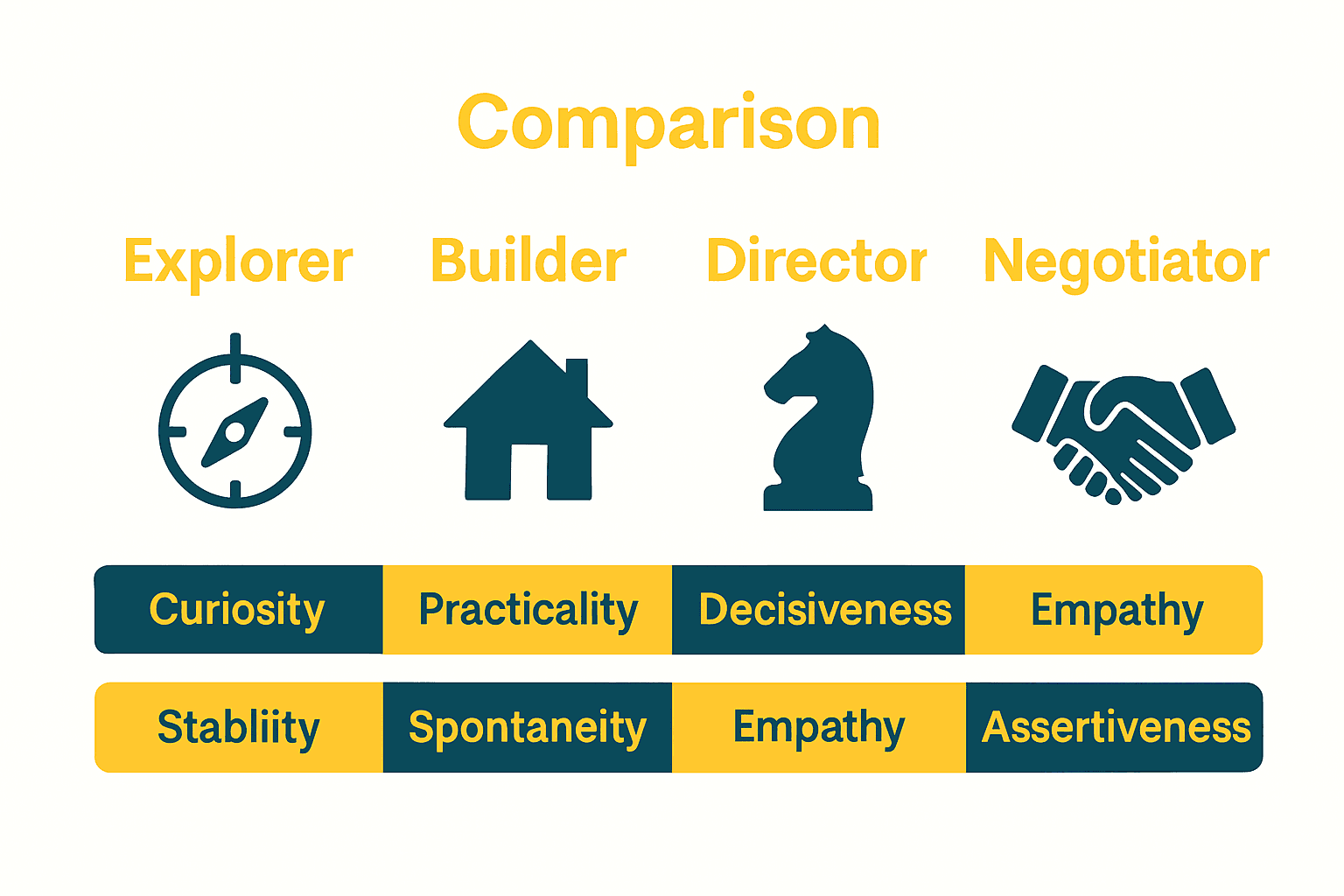

Infographic comparing four husband archetypes with icons and key traits.


How can husbands grow and improve based on their archetype?


Husbands can grow by recognizing their archetypal patterns and focusing on specific growth strategies, such as balancing spontaneity with consistency for Explorers or integrating emotional flexibility for Builders.


Get the Wise Husband Book


https://wisehusband.com/husband-archetypes-wifes-view/?fsp_sid=1508

Understanding Traditional Marriage Values: Core Concepts


Traditional marriage values sound like old news to plenty of people, but this way of thinking still pulls a lot of weight today. Research shows that these classic frameworks are linked to stronger emotional security and family stability, shaping the way people connect and raise their kids. You might assume these values are relics from the past, but the real surprise is how they keep getting reworked and used in modern relationships. Turns out, it is not about hanging onto history. It is about finding ideas that still help people build stronger partnerships right now.

Table of Contents

Quick Summary

TakeawayExplanation
Traditional marriage values promote lifelong commitment.Lifelong dedication to the partnership supports stability during challenges and boosts relationship resilience.
Mutual respect is foundational in marital relationships.Recognising each partner’s dignity fosters a healthy, supportive environment in which both individuals can thrive.
Traditional marriage values ensure shared responsibilities.Clearly defined roles help couples collaborate effectively in family management and emotional support.
These values provide security and predictability.Structured expectations strengthen emotional bonds, creating a stable environment for family and personal growth.
Cultural transmission of marriage values shapes future relationships.Children learn relational strategies from their parents, influencing how they engage in their own partnerships.

What are Traditional Marriage Values and Their Significance?

Traditional marriage values represent a foundational framework of principles and expectations that have historically guided marital relationships. These values encompass more than legal arrangements, serving as a complex social construct that defines mutual commitment, roles, and reciprocal responsibilities between partners.

Core Philosophical Foundations

At their essence, traditional marriage values emphasize several fundamental principles that transcend cultural boundaries. These include:

  • Lifelong Commitment: A dedication to maintaining the marriage relationship through challenges and transformations
  • Mutual Respect: Recognizing each partner’s inherent dignity and individual worth
  • Shared Responsibility: Collaborative approach to family management, economic stability, and emotional support

According to research from the National Institutes of Health, these values are not merely abstract concepts but practical frameworks that contribute significantly to individual and societal well-being. They provide structured expectations that help couples navigate complex interpersonal dynamics.

Societal and Psychological Significance

Traditional marriage values function as critical social mechanisms that extend beyond individual relationships. They create stability by establishing clear expectations about partnership, child-rearing, and interpersonal obligations. Psychologically, these values offer a sense of security and predictability, which are fundamental human needs in intimate relationships.

The significance of these values lies in their ability to provide:

  • A reliable framework for emotional and economic partnership
  • Intergenerational transmission of cultural and familial knowledge
  • Structured support systems for personal and collective growth

While contemporary perspectives continue to evolve, traditional marriage values remain a powerful lens through which many individuals understand and construct meaningful, long-lasting partnerships.

The Historical Context of Traditional Marriage Values

The historical evolution of traditional marriage values reveals a complex narrative of social, economic, and cultural transformations. Marriage has never been a static institution but a dynamic social construct continuously reshaped by societal needs, power structures, and human relationships.

Ancient Roots and Social Arrangements

In ancient civilizations, marriage was fundamentally an economic and political arrangement rather than a romantic partnership. Families viewed marriages as strategic alliances that secured economic stability, expanded social networks, and preserved lineage. Economic considerations often superseded personal affection, with marriages serving broader communal interests.

  • Inheritance Mechanisms: Marriages ensured orderly transfer of property and social status
  • Social Hierarchy Maintenance: Marriages reinforced existing power structures and social class boundaries
  • Reproductive Continuity: Marriages were primarily focused on producing legitimate heirs

Cultural Variations and Evolving Perspectives

Different cultures developed unique marriage value systems reflecting their specific social contexts. Research from the National Institutes of Health demonstrates how marriage practices varied dramatically across societies, from polygamous arrangements in some cultures to strictly monogamous systems in others.

Transition to Modern Conceptualizations

The industrial revolution and subsequent social movements dramatically transformed traditional marriage values. Emerging concepts of individual autonomy, gender equality, and personal choice began challenging centuries-old marriage paradigms. This transition marked a profound shift from marriages as economic contracts to partnerships based on mutual emotional connection and personal fulfillment.

Key transformative elements included:

  • Recognition of women’s independent legal and economic rights
  • Increased emphasis on romantic love as a marriage foundation
  • Gradual decoupling of marriage from strict religious and social prescriptions

Understanding this historical trajectory helps contextualize contemporary marriage values, revealing them as dynamic frameworks continuously adapting to changing social landscapes.

The following table compares how traditional marriage values were understood in different historical periods, highlighting the key focus of each era.

EraMain FocusCharacteristics
Ancient CivilisationsEconomic & Political ArrangementsStrategic alliances, inheritance, maintaining social hierarchy
Early Modern PeriodSocial & Familial StabilityDefined gender roles, family reputation, property transmission
Industrial RevolutionTransition to Individual AutonomyGradual focus on personal choice, increased legal rights for women
Contemporary EraEmotional Fulfilment & PartnershipMutual respect, flexible roles, emphasis on love & companionship

Key Principles of Traditional Marriage Values

Traditional marriage values represent a comprehensive philosophical and practical framework that extends far beyond simple legal recognition. These principles form a holistic approach to understanding partnership, commitment, and shared life experiences.

Foundational Commitment Principles

At the core of traditional marriage values lie several fundamental principles that define the relationship’s depth and significance. Lifelong commitment emerges as the primary cornerstone, signifying a profound dedication that transcends temporary challenges and momentary emotional fluctuations.

  • Unconditional Support: Providing consistent emotional and practical assistance
  • Mutual Growth: Developing together through shared experiences
  • Shared Decision Making: Collaborative approach to life challenges

Roles and Responsibilities

Traditional marriage values historically defined specific roles and responsibilities for each partner. While contemporary interpretations have become more flexible, these principles originally established clear expectations about familial contributions. Research from the National Institutes of Health demonstrates how these role definitions provided structured frameworks for managing household dynamics and raising children.

Ethical and Spiritual Dimensions

Beyond practical considerations, traditional marriage values incorporate profound ethical and spiritual dimensions. These principles emphasize moral integrity, mutual respect, and a commitment to maintaining the relationship’s sanctity. Key ethical standards include:

  • Maintaining absolute fidelity
  • Prioritizing family welfare over individual desires
  • Practicing continuous emotional and spiritual investment

These principles collectively create a robust framework for understanding marriage as more than a legal contract—presenting it as a deeply meaningful, transformative human connection that requires ongoing nurturing, understanding, and personal growth.

This table outlines the core principles of traditional marriage values and gives a brief explanation of each, summarising their key features for quick reference.

PrincipleExplanation
Lifelong CommitmentOngoing dedication to the relationship through all challenges
Mutual RespectRecognising and valuing each partner’s dignity
Shared ResponsibilityBoth partners collaborate and contribute to family life
Ethical IntegrityPrioritising honesty, loyalty, and moral conduct
Spiritual/Emotional InvestmentNurturing the relationship on deeper levels

How Traditional Marriage Values Influence Family Dynamics

Traditional marriage values serve as a profound architectural blueprint for family structure, influencing every aspect of interpersonal relationships and household functioning. These deeply ingrained principles shape not just marital interactions but the entire ecosystem of familial communication and emotional development.

Structural Family Foundations

Traditional marriage values establish clear structural frameworks that define roles, responsibilities, and expectations within the family unit. Predictability and stability emerge as critical outcomes of these well-defined relational parameters. Partners understand their respective contributions, creating a harmonious environment where each member knows their place and purpose.

  • Defined Parental Roles: Clear demarcation of nurturing and providing responsibilities
  • Hierarchical Understanding: Establishing respectful family leadership dynamics
  • Collaborative Decision Making: Unified approach to family challenges

Emotional and Psychological Impact

The influence of traditional marriage values extends beyond observable behaviors, profoundly affecting family members’ psychological landscapes. Research from the National Institutes of Health indicates that consistent marital values create environments of emotional security and predictable interpersonal interactions.

Intergenerational Transmission

Traditional marriage values function as powerful mechanisms for cultural and behavioral inheritance. Children raised in environments with consistent marital principles internalize complex relational strategies, communication patterns, and emotional management techniques. These learned behaviors become foundational scripts for their future relationships.

Key intergenerational transmission mechanisms include:

  • Modeling conflict resolution strategies
  • Demonstrating commitment and loyalty
  • Establishing healthy emotional boundaries

Through these intricate processes, traditional marriage values serve as more than simple relationship guidelines—they become transformative social technologies that shape familial experiences across generations.

family teamwork values

The Relevance of Traditional Marriage Values in Modern Society

Despite significant social transformations, traditional marriage values continue to provide critical frameworks for understanding human relationships. Their relevance persists not as rigid historical artifacts but as adaptable principles that offer meaningful guidance in an increasingly complex social landscape.

Adaptation and Resilience

Modern interpretations of traditional marriage values demonstrate remarkable flexibility. Core principles like mutual respect, commitment, and shared responsibility have evolved to accommodate changing social dynamics while maintaining their fundamental essence. These values now represent dynamic guidelines rather than prescriptive rules, allowing couples to customize their approach while preserving essential relational foundations.

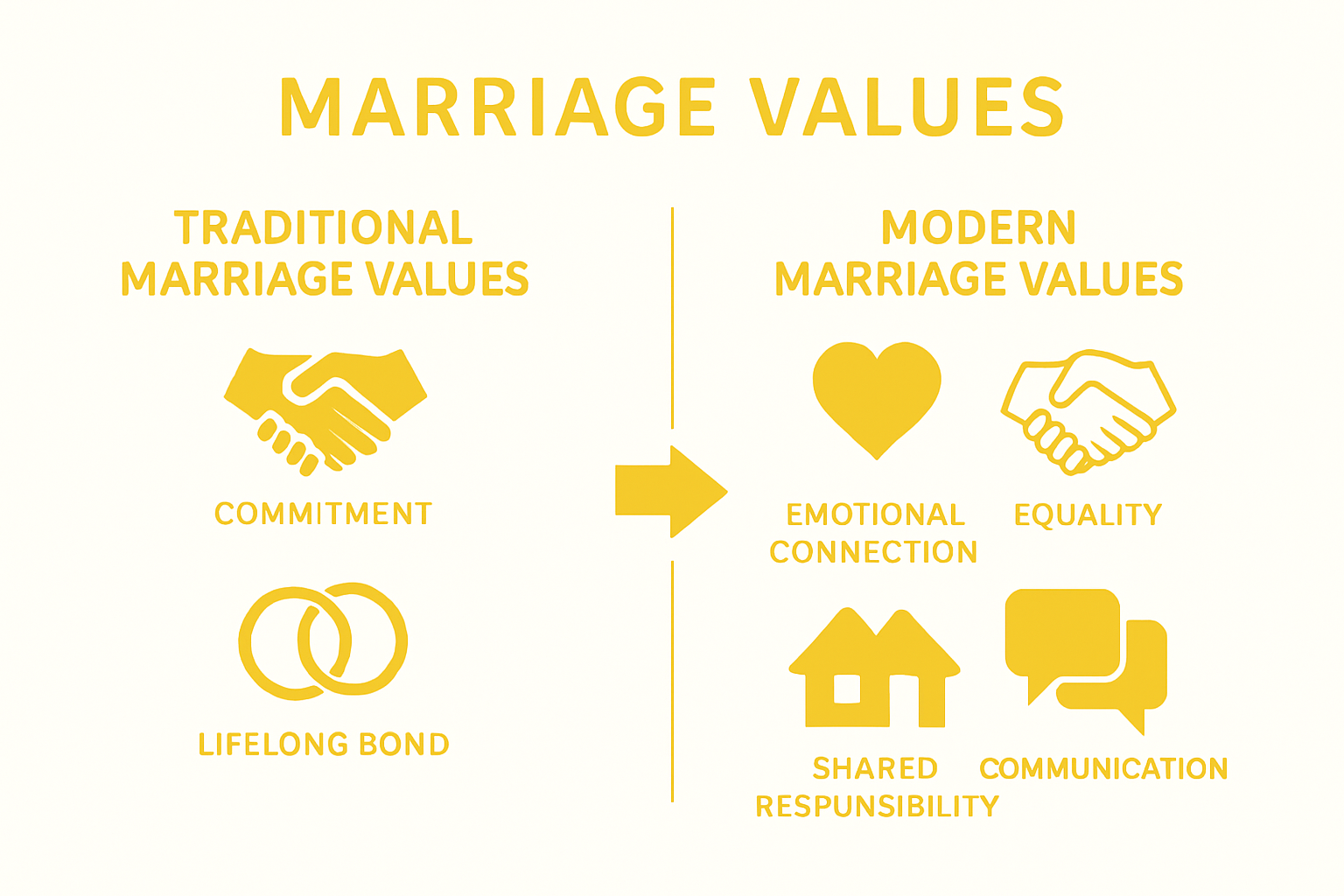
Comparison chart of traditional vs modern marriage values icons

  • Emotional Intelligence: Emphasizing mutual understanding over strict role definitions
  • Collaborative Partnership: Promoting equality and shared decision making
  • Flexible Commitment: Maintaining core values while allowing individual expression

Social Stability and Psychological Well-being

Research from the National Institutes of Health reveals that traditional marriage values continue to contribute significantly to individual and societal psychological health. These principles provide psychological anchors that help individuals navigate complex interpersonal challenges, offering structured approaches to maintaining relationship integrity.

Traditional marriage values offer valuable frameworks for addressing modern relationship complexities. They provide philosophical foundations that help couples:

  • Maintain long-term relationship commitment
  • Develop effective communication strategies
  • Create supportive family environments

Rather than becoming obsolete, traditional marriage values have demonstrated remarkable capacity for reinterpretation, proving themselves adaptable philosophical tools for understanding human connection in an ever-changing social landscape.

Want Stronger Marriage Foundations? Discover How to Apply Traditional Values as a Modern Husband

Do you ever feel lost trying to meet the expectations and responsibilities highlighted in traditional marriage values? Many men want to build a relationship rooted in commitment, respect, and real partnership just as described in our article. Yet, applying these enduring principles while facing modern pressures or unclear roles can be overwhelming. You are not alone in aiming for a marriage where you both thrive and grow. At Wise Husband, we turn core concepts like lifelong dedication, mutual respect, and shared responsibility into actionable steps for the Australian man.

https://wisehusband.com/

Take the next step to become the man your marriage deserves. Visit our homepage for practical insights, proven strategies, and community support focused on strengthening your foundation through understanding and action. Embrace the values that last and start building a better marriage today—do not wait to invest in your most important relationship.

Frequently Asked Questions

What are traditional marriage values?

Traditional marriage values are foundational principles that guide marital relationships, focusing on commitment, mutual respect, and shared responsibilities between partners.

Why are traditional marriage values important?

These values create stability in relationships and families, provide structured expectations, and contribute to individual and societal well-being by promoting commitment and emotional support.

How have traditional marriage values evolved over time?

Historically, traditional marriage values were often rooted in economic and political arrangements, but have evolved to prioritise romantic love, individual autonomy, and gender equality alongside core principles like mutual commitment and respect.

How do traditional marriage values influence family dynamics?

These values establish frameworks for roles and responsibilities within the family, support emotional security, and facilitate the intergenerational transmission of relational behaviours and cultural knowledge.


Get the Wise Husband Book


https://wisehusband.com/understanding-traditional-marriage-values/?fsp_sid=1499

Understanding Wife’s Role in Supporting Husband’s Growth


Marriages succeed—or struggle—based on the quality of support between partners. Studies show that emotional and psychological support directly influence relationship satisfaction and even the resilience of each spouse. Yet most people think of support as just being a good listener or solving a few problems. The real surprise is that authentic spousal support is much more than comfort. It acts as a powerful engine for personal growth, unlocking hidden strengths and potential neither partner may even realize exists.


Table of Contents


Quick Summary


TakeawayExplanation
Support fosters personal growth.Marital support is crucial for nurturing each partner’s potential, enhancing overall well-being and resilience.
Effective communication is key.Transparent and empathetic dialogue enables couples to understand each other and promote growth in their relationship.
Emotional support reduces self-doubt.Genuine emotional validation helps partners feel secure, increasing self-confidence and encouraging risk-taking.
Create a safe environment for exploration.Establishing psychological safety allows individuals to challenge their limits and pursue personal aspirations without fear of judgment.
Mutual respect is essential.Respecting individual autonomy while providing support strengthens the partnership and encourages collective development.

The Concept of Support in Marriage


Support in marriage represents a fundamental psychological and emotional dynamic where partners actively contribute to each other’s personal growth, resilience, and overall well-being.


Here is a comparison of the four primary types of marital support described in the article to clarify how each one uniquely contributes to a supportive partnership.


Type of SupportDescriptionExample in Marriage
Emotional SupportProviding empathy, validation, and a safe space for vulnerabilityListening to concerns without judgment
Instrumental SupportOffering practical help and tangible assistanceHelping with chores during stressful periods
Informational SupportSharing advice, feedback, or relevant informationOffering suggestions during problem-solving
Appraisal SupportProviding constructive feedback and encouragementValidating efforts and celebrating achievements

Defining Marital Support


At its core, marital support involves a deliberate and consistent effort by spouses to nurture each other’s individual potential while maintaining a strong relational foundation. This concept transcends basic relationship maintenance and enters the realm of intentional partnership. Support is not about solving every problem for your partner but creating an environment where personal development can flourish.


Key characteristics of meaningful marital support include:


  • Emotional availability and genuine listening

  • Providing constructive feedback without judgment

  • Encouraging individual aspirations and goals

  • Offering practical assistance during challenging periods

  • Maintaining respect for individual autonomy


Psychological Foundations of Spousal Support


Research from the National Institutes of Health underscores that perceived partner support directly correlates with psychological health and relationship satisfaction. When husbands understand support as a nuanced, multifaceted concept, they can more effectively contribute to their wife’s growth and their collective marital strength.


Support in marriage is not about creating dependency but fostering interdependence.


It involves recognizing your spouse’s unique journey while providing a stable, nurturing environment that allows individual potential to emerge. Learn more about building a supportive marriage dynamic.


Why Wife Support is Crucial for Husband’s Growth


Research from the Journal of Family Issues demonstrates that spousal support plays a transformative role in a husband’s personal and professional development. The support from a wife extends far beyond emotional comfort, serving as a critical catalyst for comprehensive male growth and self-actualization.


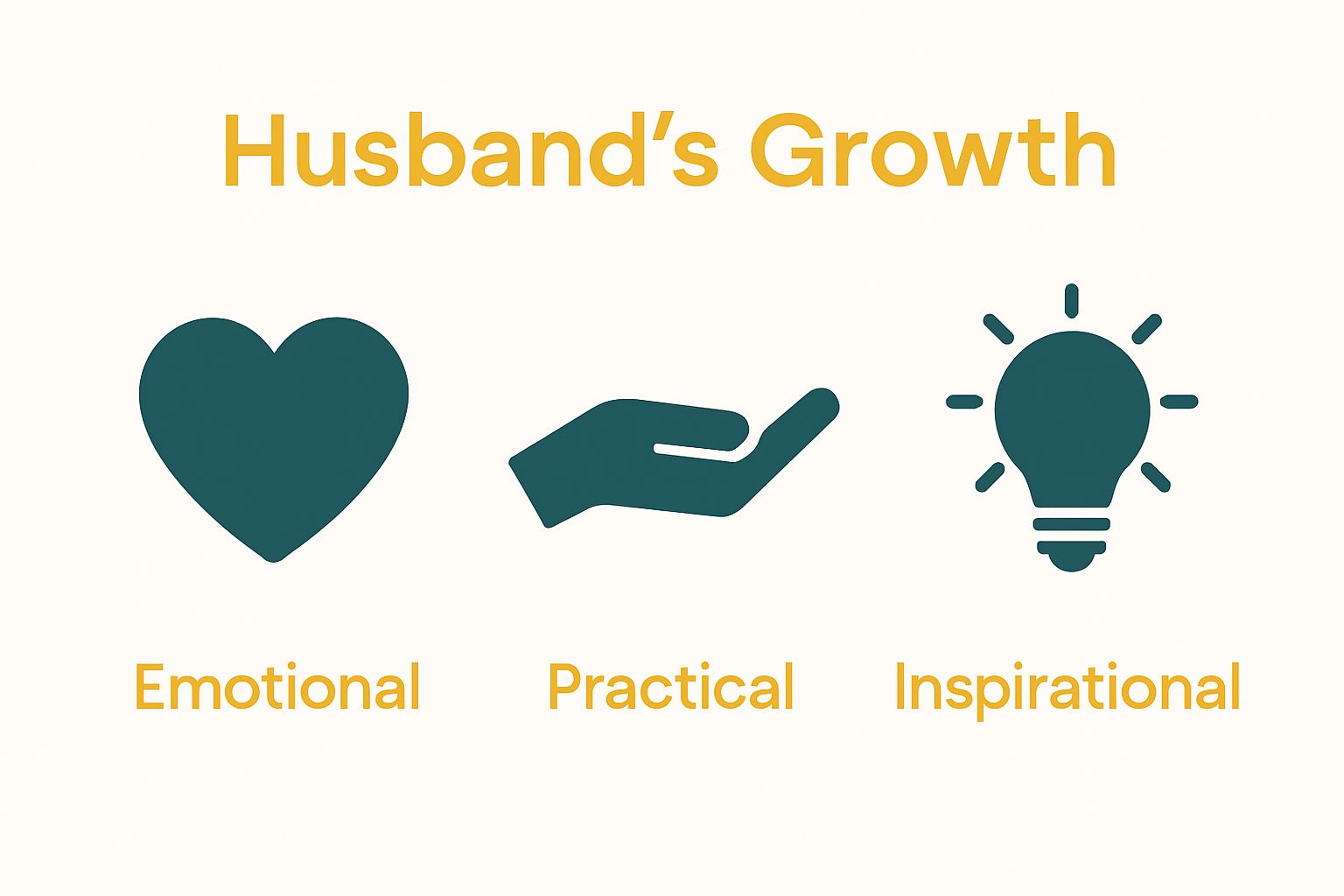
Infographic showing three categories of wife’s support: Emotional, Practical, Inspirational.


Psychological Dimensions of Spousal Support


Wife support fundamentally operates through complex psychological mechanisms that stimulate a husband’s potential. This support is not passive encouragement but an active, strategic engagement that helps men overcome internal barriers, challenge self-imposed limitations, and pursue ambitious personal objectives.


This table summarizes the key psychological mechanisms through which wife support impacts a husband’s personal growth, helping to underscore their distinct contributions.


Psychological MechanismHow It Supports Husband’s Growth
Safe emotional environmentEncourages vulnerability and open communication
Constructive challenge and accountabilityMotivates progress and goal setting
Perspective during uncertaintyHelps navigate professional or personal challenges
Recognition and validation of strengthsBuilds confidence and self-worth
Consistent affirmation to mitigate self-doubtReduces anxiety, enabling risk-taking and ambition

Key psychological mechanisms of wife support include:


  • Creating a safe emotional environment for vulnerability

  • Providing constructive challenge and accountability

  • Offering perspective during moments of professional or personal uncertainty

  • Recognizing and validating emerging personal strengths

  • Mitigating self-doubt through consistent affirmation


Evolutionary and Neurological Foundations


Research from the National Institutes of Health reveals that spousal support significantly enhances male resilience and goal achievement. This support triggers neurological responses that reduce stress, increase motivation, and promote adaptive behavioral patterns.


The wife’s role transcends traditional relationship dynamics, emerging as a strategic partnership where mutual growth becomes the primary objective. Discover strategies for motivating your spouse and creating a relationship centered on collective advancement and individual potential.


How Emotional Support Affects Personal Development


Research from Frontiers in Psychology reveals that emotional support represents a profound catalyst for transformative personal growth. Beyond mere psychological comfort, emotional support functions as a sophisticated mechanism that directly influences an individual’s capacity for self-improvement, resilience, and achievement.


The Psychological Mechanism of Emotional Support


Emotional support operates through intricate neurological and psychological pathways that fundamentally reshape an individual’s self-perception and potential. When a spouse provides genuine, consistent emotional validation, they create a neurological environment that reduces stress, increases cognitive flexibility, and enhances personal motivation.


Key components of emotional support’s developmental impact include:


  • Reducing performance anxiety and fear of failure

  • Enhancing self-confidence through consistent validation

  • Creating a psychological safety net for risk-taking

  • Providing perspective during challenging life transitions

  • Normalizing vulnerability as a strength, not a weakness


Neurobiological Foundations of Supportive Interactions


The brain responds to emotional support through complex neurochemical processes.


wife supporting husband learning Consistent supportive interactions trigger the release of oxytocin and reduce cortisol levels, creating a physiological state more conducive to personal growth and psychological resilience. Learn more about understanding male emotional landscapes and how emotional support transforms personal development trajectories.


The Role of Communication in Strengthening Growth


Research from the National Institutes of Health demonstrates that communication is not merely an exchange of words, but a sophisticated mechanism for mutual understanding, personal development, and relationship evolution. Effective communication serves as the primary conduit through which couples navigate complex emotional landscapes and facilitate individual and collective growth.


Communication as a Developmental Catalyst


Communication in marriage transcends simple information transfer. It represents a nuanced psychological process where verbal and non-verbal interactions create opportunities for personal transformation. By establishing transparent, empathetic dialogue, spouses can unlock deeper levels of mutual understanding and challenge each other’s limiting beliefs.


Key communication strategies that promote growth include:


  • Active listening without immediate judgment

  • Expressing vulnerability and emotional authenticity

  • Providing constructive, compassionate feedback

  • Creating safe spaces for discussing personal aspirations

  • Normalizing conversations about personal challenges


Psychological Mechanisms of Supportive Communication


Effective communication operates through intricate psychological mechanisms that directly influence personal development. When communication is rooted in genuine respect, curiosity, and emotional intelligence, it becomes a powerful tool for breaking down internal barriers, challenging self-imposed limitations, and fostering a supportive environment for individual growth. Learn more about communication dynamics in marriage and how intentional dialogue can transform relationship potential.


Creating a Supportive Environment for Growth


Research from the National Institutes of Health demonstrates that a supportive marital environment is more than a passive backdrop. It is an intentionally crafted ecosystem that actively nurtures individual potential, encourages personal exploration, and provides the psychological safety necessary for transformative personal development.


Architectural Elements of a Growth-Oriented Environment


Creating a supportive environment requires deliberate psychological architecture that balances emotional nurturing with intellectual challenge. This environment functions as a dynamic space where personal limitations are gently challenged, individual aspirations are validated, and continuous self-improvement is normalized as a shared value.


Key structural components of a growth-supportive environment include:


  • Establishing psychological safety through unconditional acceptance

  • Maintaining a non judgmental stance toward personal exploration

  • Celebrating individual achievements and milestone progression

  • Providing constructive feedback without diminishing self-worth

  • Encouraging calculated risk-taking and learning from setbacks


Psychological Dynamics of Supportive Spaces


The most effective growth environments operate through subtle psychological mechanisms that transform potential barriers into opportunities for development. By creating a context of trust, curiosity, and mutual respect, spouses can generate a transformative relational dynamic that propels both partners toward continuous personal evolution. Explore deeper insights into building a supportive marriage and learn how intentional relationship design can unlock unprecedented personal growth.


Ready to Strengthen Your Role as a Supportive Husband?


Many men struggle to understand what genuine support looks like in marriage. This article shows how critical a wife’s encouragement is to a husband’s growth, but the reality is both partners need to step up for lasting change. If you want to inspire trust, improve communication, and become the partner your wife truly deserves, the Awaken the Lover Within section is filled with practical advice on building connection and emotional support with your spouse.


https://wisehusband.com/


Start your personal growth journey at WiseHusband.com today. Learn essential habits and mindsets that transform you from a passive participant to an active, loving husband. Make the commitment now to become a more confident leader, a more attentive lover, and the man your marriage needs. For focused guidance on building inner strength and resilience, explore the Embrace the Warrior Spirit resources as your next step.


Frequently Asked Questions


How can a wife effectively support her husband’s growth?


To effectively support your husband’s growth, focus on creating a safe emotional environment where he feels comfortable sharing his vulnerabilities. Encourage open communication by actively listening to his thoughts and feelings, and provide constructive feedback that aligns with his personal goals.


What specific actions can I take to encourage my husband’s aspirations?


You can encourage your husband’s aspirations by regularly discussing his ambitions and validating his efforts. Celebrate small achievements together and offer practical assistance when he faces challenges, whether it’s brainstorming solutions or simply being a sounding board for his ideas.


How does emotional support contribute to a husband’s personal development?


Emotional support fosters an atmosphere of safety that encourages personal growth and resilience. By consistently validating your husband’s feelings and providing encouragement during difficult times, you create a nurturing space where he can take risks and pursue new opportunities without fear of judgment.


What communication strategies can strengthen the support I provide?


Use active listening, avoid judgment, and express vulnerability when communicating with your husband. Creating a dialogue that includes honest discussions about his challenges and aspirations reinforces your support and deepens your connection, making growth a shared goal.


How can I create a supportive environment for my husband’s growth?


To create a supportive environment, establish psychological safety by accepting him unconditionally and allowing space for personal exploration. Reinforce this environment by celebrating his milestones and encouraging healthy risk-taking, ensuring he feels empowered to pursue his goals without fear of setback.


Get the Wise Husband Book


https://wisehusband.com/wifes-role-in-supporting-husbands-growth/?fsp_sid=1490

Husband Archetypes From Wife’s View: Complete Guide

Did you know that over 60 percent of couples feel their relationship style doesn’t fit traditional husband stereotypes? Understanding husban...